

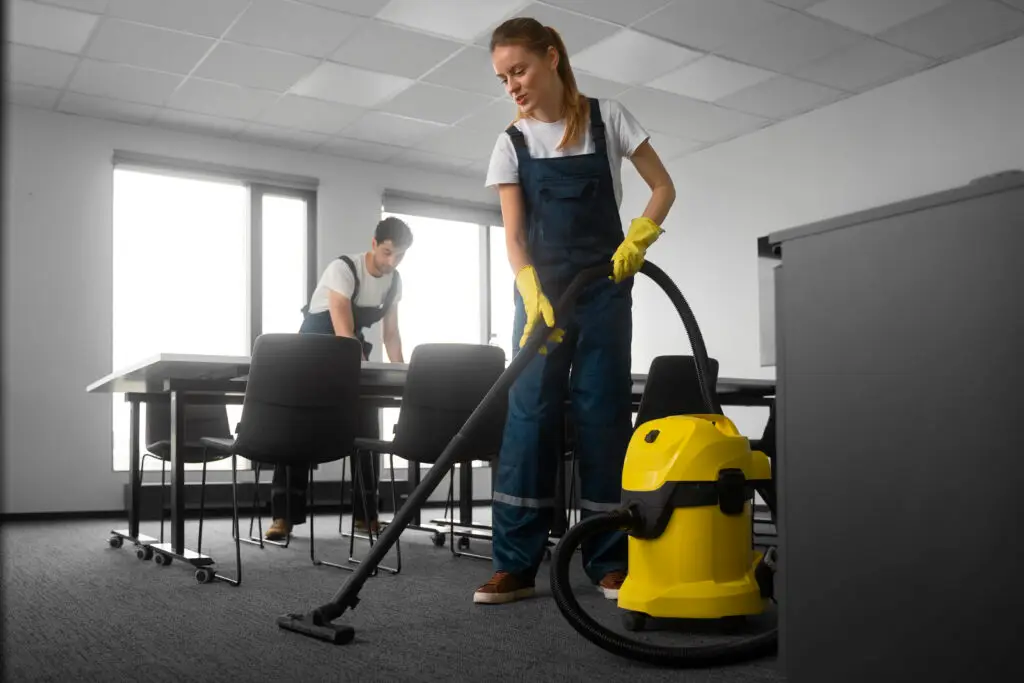
Commercial business carpet cleaning is not just about making the floor look better before a client walks in. In a workplace, carpet collects soil, dust, spills, moisture, odors, and daily wear from employees, visitors, carts, shoes, deliveries, and office traffic.
For business owners, office managers, property managers, and local teams in South Florida, the real question is not whether the carpet should be cleaned. The better question is when, how often, and what signs show that regular vacuuming is no longer enough.
Commercial business carpet cleaning in one clear answer
Commercial business carpet cleaning is a specialized cleaning process for carpeted areas in offices, retail stores, medical offices, professional suites, shared workspaces, and other business environments. It focuses on removing embedded soil, visible stains, odors, and buildup that routine vacuuming cannot fully address.
For most businesses, carpet should be vacuumed frequently and professionally cleaned on a schedule based on foot traffic, visible wear, spills, moisture risk, and the type of business. High-traffic commercial spaces usually need more frequent attention than private offices or low-use meeting rooms.
This guide explains how to evaluate your carpet, what problems to watch for, how to plan cleaning without disrupting operations, and when a business should call a professional team.
Why commercial business carpet cleaning needs a different approach
Commercial carpet is exposed to a different level of use than residential carpet. A home may have a few people walking through the same rooms each day. A business may have employees, clients, vendors, delivery teams, maintenance workers, and visitors crossing the same carpeted paths for hours.
That difference changes the cleaning strategy.
In commercial spaces, carpet often becomes a working surface. People roll chairs over it. Visitors track in soil from parking lots. Coffee spills happen near desks and conference rooms. Reception areas collect debris from shoes. Hallways develop dark traffic lanes. Break rooms can hold food particles, moisture, and odor.
A basic cleaning routine may keep the space presentable for a while, but commercial business carpet cleaning is needed when soil begins to settle deeper into the fibers.
Common commercial carpet problems include:
- Dark lanes near entrances, hallways, and desk areas
- Spots that return after surface cleaning
- Odors near break rooms, reception areas, and waiting rooms
- Flattened carpet fibers in busy walkways
- Dust buildup along edges and corners
- Stains from drinks, food, ink, soil, or tracked-in moisture
- A general dull look, even after vacuuming
The goal is not to make the carpet look new with one visit. The goal is to protect the appearance, improve the workplace experience, and help the carpet stay cleaner between scheduled services.
How carpet affects the look and feel of a business
Carpet is one of the first surfaces people notice, even when they do not mention it. A clean reception area feels more professional. A fresh-smelling conference room feels better prepared for meetings. A well-maintained hallway makes the whole space feel cared for.
When carpet looks stained, dull, or uneven, it can affect how clients and employees perceive the business.
This matters in many B2B settings, including:
- Professional offices
- Medical and wellness offices
- Real estate offices
- Law firms
- Accounting firms
- Retail showrooms
- Coworking spaces
- Training rooms
- Property management offices
- Business suites
- Sales offices
Commercial business carpet cleaning supports a cleaner first impression without turning this post into a general commercial cleaning service page. The focus here is specific: carpeted business areas, floor appearance, traffic patterns, odor control, and maintenance planning.
For broader workplace cleaning needs, Maid Cleaning For You also provides professional office cleaning services in South Florida. That service covers the wider office environment, while this guide focuses specifically on carpet care for businesses.
Signs your business carpet needs professional cleaning
A business does not need to wait until carpet looks terrible to schedule service. In most workplaces, carpet gives early warning signs before the problem becomes harder to manage.
Commercial business carpet cleaning may be the right next step when the carpet still looks dull after routine maintenance or when stains, odors, and traffic lanes keep returning.
The carpet has visible traffic lanes
Traffic lanes are the dark paths that appear where people walk most often. They are common near entrances, reception desks, shared printers, hallways, and break rooms.
These lanes usually mean soil has settled into the carpet fibers. Vacuuming may improve the surface, but it may not remove deeper buildup.
The space smells stale after cleaning
If an office smells musty, dusty, or stale even after routine cleaning, the carpet may be holding odor. This can happen when moisture, spills, food particles, or old soil remain in the fibers.
Odor is especially common in:
- Break rooms
- Waiting rooms
- Closed offices with limited airflow
- Conference rooms
- Carpeted areas near restrooms
- Entryways exposed to rain and humidity
South Florida humidity can make odor control more important because damp carpet or slow drying can create bigger problems.
Spots keep coming back
A stain that returns after cleaning may be caused by residue, moisture movement, or material that has settled below the surface. This is common with coffee, soda, tracked-in soil, and some food spills.
Professional commercial business carpet cleaning can help address the area more thoroughly, but some stains may not disappear completely if they have been left untreated for too long.
Employees or visitors mention dust or odor
Feedback from people inside the space matters. If employees mention a dusty smell, allergy-like discomfort, or a carpet odor, the issue should be checked.
This does not mean the carpet is the only cause. Indoor air quality can involve many factors, including ventilation, moisture, cleaning products, HVAC maintenance, and outdoor pollutants. Still, carpet can hold particles and should be part of the inspection.
The EPA explains that carpet can act as a reservoir for dust, dirt, pollen, mold spores, pesticides, and other materials if it is not properly maintained. That is why routine care and proper cleaning matter in indoor spaces.
External reference: EPA guidance on indoor air quality and carpet maintenance
The carpet looks clean only right after vacuuming
If the carpet looks dull again a few hours after vacuuming, the issue may be deeper than surface debris. Embedded soil can make carpet fibers look gray, flat, or worn.
At that point, the business may need a deeper service instead of more frequent surface cleaning.
Recommended cleaning frequency for business carpets
There is no single schedule that fits every business. The EPA does not issue one universal carpet cleaning frequency for every building type. Instead, businesses should follow manufacturer guidance, industry standards, carpet condition, and real use patterns.
A practical commercial business carpet cleaning schedule should consider traffic, moisture, business type, and the areas that clients see most often.
Low-traffic business areas
Examples include private offices, small administrative rooms, and low-use conference rooms.
Recommended approach:
- Vacuum regularly.
- Spot clean spills quickly.
- Schedule professional carpet cleaning when the carpet begins to look dull, hold odor, or show traffic patterns.
- Inspect edges and under furniture during routine office cleaning.
Moderate-traffic business areas
Examples include standard offices, team workspaces, waiting areas, and shared hallways.
Recommended approach:
- Vacuum high-use paths often.
- Treat stains quickly.
- Plan periodic commercial business carpet cleaning before traffic lanes become permanent.
- Review the schedule after busy seasons, office changes, or increased visitor volume.
High-traffic business areas
Examples include reception areas, retail spaces, medical offices, showrooms, building entrances, shared office buildings, and customer-facing rooms.
Recommended approach:
- Vacuum frequently.
- Use entrance mats to reduce tracked-in soil.
- Address spills the same day when possible.
- Schedule professional carpet cleaning more often than low-use spaces.
- Monitor drying time carefully to avoid moisture problems.
High-traffic businesses should not rely only on visual appearance. By the time the carpet looks heavily soiled, embedded soil may already be harder to remove.
What professional commercial business carpet cleaning should include
A good carpet cleaning process starts before the equipment is turned on. The cleaning team should understand how the space is used, where the heaviest traffic occurs, and which areas need extra attention.
A practical process may include:
- Walkthrough of carpeted areas
- Identification of stains, odors, traffic lanes, and moisture concerns
- Pre-vacuuming or debris removal when needed
- Spot treatment for visible stains
- Cleaning method selected for the carpet type and business schedule
- Careful work around furniture, walls, and office equipment
- Drying guidance after cleaning
- Final review of high-priority areas
The best results happen when the cleaning plan fits the business environment. A quiet office, a medical waiting room, and a busy retail showroom should not be treated exactly the same way.
Common mistakes businesses make with carpet care
Many carpet problems become worse because small issues are ignored for too long. A business may think the carpet is fine because it is vacuumed regularly, but vacuuming does not solve every carpet problem.
Waiting until stains become permanent
Fresh spills are easier to manage than old stains. Coffee, soda, food, soil, ink, and moisture should be addressed quickly.
A delay can allow the stain to move deeper into the fibers or backing.
Using too much product on spots
Overusing cleaning product can leave residue. That residue can attract more soil, making the spot look dirty again.
This is why some stains seem to return quickly after being cleaned.
Ignoring entry areas
Entrances collect the highest amount of tracked-in debris. If mats are too small, dirty, or missing, the carpet absorbs more soil.
A simple matting strategy can reduce how much dirt reaches the carpet.
Cleaning without enough drying time
Carpet should not remain damp for too long. Moisture can create odor and may contribute to microbial growth if the conditions are right.
For business spaces, drying matters because people often return to the area quickly. Scheduling commercial business carpet cleaning after hours can help reduce disruption and allow better drying time.
Treating all carpeted areas the same
A reception area usually needs more attention than a private office. A hallway needs a different plan than a conference room. Break rooms may need odor and spill control.
The right plan separates carpet zones by use.
How to prepare your business before carpet cleaning
Preparation helps the cleaning visit go faster and reduces disruption.
Before commercial business carpet cleaning, a business can:
- Remove small items from the floor
- Clear loose papers, cords, boxes, and personal items
- Identify stain locations for the cleaning team
- Share any known spill history
- Move light furniture if requested
- Protect sensitive documents and electronics
- Plan access to water or power if needed
- Schedule service outside peak business hours
- Tell employees when the area will be cleaned
- Allow drying time before normal use resumes
Preparation also helps the cleaning team focus on the carpeted areas that matter most, including entryways, client-facing rooms, hallways, and shared workspaces.
Commercial carpet cleaning by business type
Different businesses have different carpet risks. A useful carpet plan should match the real situation inside the space.
Professional offices
Professional offices often need carpet cleaning for traffic lanes, desk areas, meeting rooms, and reception spaces. These areas may not have heavy spills every day, but they collect dust, shoe soil, and chair movement over time.
Commercial business carpet cleaning helps preserve a polished look for clients and employees.
Medical and wellness offices
Medical and wellness offices often have waiting rooms, treatment rooms, and administrative spaces with frequent visitors. Carpet can collect outdoor debris, dust, and moisture from daily foot traffic.
These businesses should focus on entry areas, waiting rooms, and odor prevention.
Retail and showroom spaces
Retail spaces and showrooms depend heavily on appearance. Carpet that looks dull can make the entire space feel less maintained.
For these businesses, visible carpet condition can affect customer perception. Regular inspection is important because traffic lanes may form quickly.
Property management and shared office buildings
Shared buildings may have common areas, leasing offices, hallways, and tenant-facing rooms. Carpet care may need to be coordinated around multiple users.
A zone-based schedule helps prioritize the most visible and most used spaces first.
Businesses after renovation or construction
Construction dust can settle into carpet fibers and continue appearing after the visible work is finished. If your business recently completed remodeling, painting, repairs, or build-out work, carpet may need special attention.
For renovation-related dust, see this guide on cleaning construction dust after renovation.
How carpet cleaning supports workplace cleanliness
Commercial business carpet cleaning should be seen as one part of a broader workplace maintenance plan. It does not replace office cleaning, restroom cleaning, surface wiping, trash removal, or sanitizing. It supports those services by addressing one specific area that can hold dust, soil, stains, and odor.
A cleaner carpet can support:
- Better first impressions
- More consistent office appearance
- Reduced visible soil in common areas
- Fresher-smelling rooms
- Better maintenance of carpeted zones
- A more comfortable workplace for employees and visitors
This is especially useful for businesses that host clients, patients, tenants, or vendors in person.
For additional workplace hygiene tips, Maid Cleaning For You also shares guidance in this workplace sanitizing guide.
When vacuuming is enough and when it is not
Vacuuming is essential, but it has limits.
Vacuuming is usually enough when:
- The carpet has only light surface debris
- There are no visible stains
- Odor is not present
- Traffic lanes are not forming
- The carpet still looks even after cleaning
- There has been no recent moisture issue
Professional commercial business carpet cleaning may be needed when:
- Carpet looks dull after vacuuming
- Stains keep returning
- Odor remains in the room
- High-traffic paths look darker
- Employees notice dust or smell
- Visitors regularly enter from outdoor areas
- The business recently had construction, repairs, or water exposure
- The carpet has not been professionally cleaned in a long time
The decision should be based on condition, not only on the calendar.
How to choose the right carpet cleaning schedule
A smart schedule starts with a walkthrough. Instead of choosing a generic frequency, review each carpeted area and assign it a priority.
Use this simple process:
- List all carpeted rooms and areas.
- Mark each area as low, moderate, or high traffic.
- Identify client-facing spaces.
- Note stains, odors, and traffic lanes.
- Check moisture-prone areas near entrances or restrooms.
- Decide which areas need immediate attention.
- Create a recurring review schedule.
- Adjust based on season, weather, and business volume.
This approach helps avoid overcleaning low-use spaces and undercleaning areas that matter most.
Frequently asked questions about commercial business carpet cleaning
How often should a business schedule commercial business carpet cleaning?
The best frequency depends on foot traffic, carpet type, moisture exposure, visible stains, and how the space is used. A low-traffic private office may need less frequent service than a busy reception area, showroom, or medical waiting room.
The safest approach is to inspect carpet condition regularly and schedule professional cleaning before stains, traffic lanes, and odors become difficult to manage.
Is commercial business carpet cleaning different from regular office cleaning?
Yes. Office cleaning covers the wider workplace, including desks, restrooms, break rooms, trash, surfaces, floors, and high-touch areas. Commercial business carpet cleaning focuses specifically on carpeted areas, stains, odor, traffic patterns, embedded soil, and carpet maintenance.
The two services can work together, but they serve different purposes.
Can carpet cleaning remove every stain?
Not always. Many stains can improve, but results depend on the type of stain, how long it has been there, what products were used before, and whether the stain reached the backing. Fresh stains usually respond better than old or repeatedly treated spots.
A professional team can inspect the stain and set realistic expectations.
What are the signs of a moisture problem in carpet?
Warning signs include musty odor, dampness, recurring spots, discoloration, soft areas, or carpet that takes too long to dry. Businesses should take moisture seriously because damp carpet can lead to odor and other indoor concerns.
If there was a leak, flood, or water intrusion, the carpet should be inspected quickly.
Should carpet cleaning be scheduled during business hours?
It depends on the business. Many offices prefer after-hours or weekend service to reduce disruption and allow drying time. Spaces with clients, patients, or retail customers may need a schedule that avoids peak traffic.
The cleaning plan should fit the business schedule, not interrupt it.
Can commercial business carpet cleaning help with odor?
Yes, in many cases. Carpet can hold odor from spills, moisture, food, soil, and daily use. Professional cleaning can help reduce many common carpet odors, but persistent odor may require identifying the source.
If the odor comes from moisture, leaks, or mold, cleaning alone may not solve the issue.
What should employees do before carpet cleaning?
Employees should remove personal items, boxes, bags, cords, and loose papers from the floor. They should also point out spills or stains if they know where they happened.
A little preparation helps the cleaning team work more efficiently.
Keep your business carpet ready for clients, employees, and daily traffic
Commercial business carpet cleaning is a practical part of maintaining a professional workplace. It helps address the carpet problems that routine vacuuming cannot always solve, including embedded soil, dull traffic lanes, recurring spots, and odor.
For businesses in South Florida, the best plan is simple: inspect carpeted areas regularly, respond quickly to spills, give high-traffic zones extra attention, and schedule professional carpet cleaning before the carpet starts affecting the look and feel of the space.
If your office, showroom, waiting room, or business suite has carpet that looks dull, smells stale, or no longer feels ready for clients, Maid Cleaning For You can help you review the space and plan the right cleaning approach.
Request a free quote for commercial business carpet cleaning and keep your office, showroom, waiting room, or business suite ready for clients and daily foot traffic.