

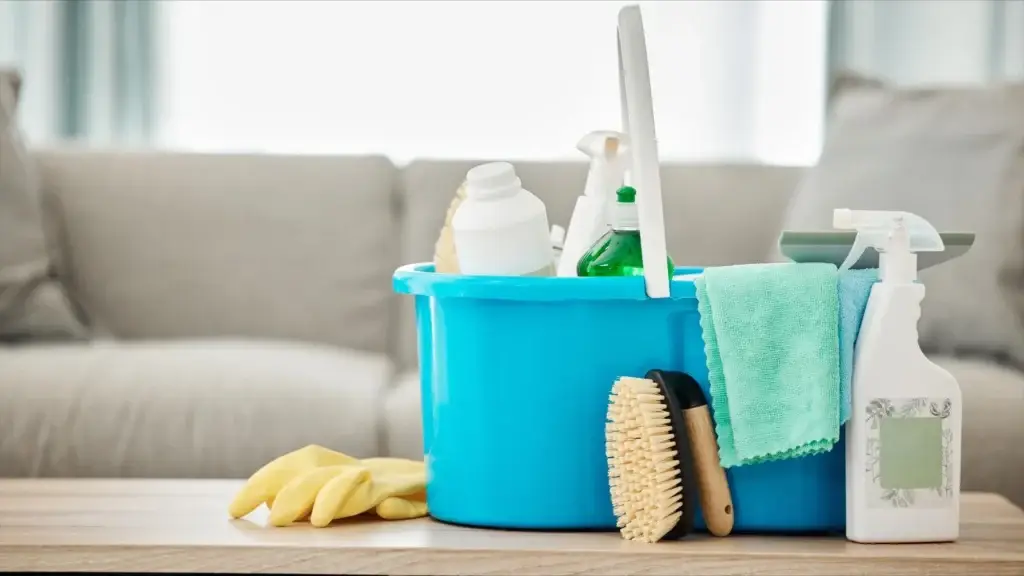
A clean office looks professional. A sanitized office actually protects the people who work in it. These are not the same thing. Surface cleaning removes visible dirt. Sanitizing eliminates the bacteria, viruses, and pathogens that cause illness — and in a shared workplace, those microorganisms spread fast.
For office managers and business owners in South Florida, regular workplace sanitizing is not optional. It is a foundational commitment to your team’s health, your business continuity, and the environment you are asking people to work in every day.
The business case for workplace sanitizing is compelling. Research from the Harvard T.H. Chan School of Public Health has linked better indoor environments — including cleanliness standards — to significantly higher cognitive function scores among workers. Beyond individual performance, absenteeism from preventable workplace illness costs US businesses hundreds of billions of dollars each year. Therefore, investing in a consistent sanitizing program is not just an ethical responsibility to your team — it is a measurable business decision with a clear return.
The difference between cleaning, disinfecting, and sanitizing
These three terms are often used interchangeably, but they describe different actions with different outcomes.
Cleaning removes dirt, dust, and debris from a surface. It makes the surface visibly clean. However, it does not necessarily kill pathogens.
Disinfecting uses EPA-approved chemicals to kill bacteria and viruses on a surface. It is more effective than cleaning alone but requires adequate contact time to work.
Sanitizing reduces the number of germs on a surface to a level considered safe by public health standards. It is the standard applied to food contact surfaces and high-touch areas in shared environments.
In a workplace setting, effective hygiene requires all three. Therefore, a professional office cleaning service that includes proper sanitizing provides a fundamentally different level of protection than basic janitorial cleaning.
Why illness spreads quickly in office environments
The average employee touches their face more than 20 times per hour. Door handles, keyboards, phones, and shared surfaces are touched by dozens of hands throughout the day. In a shared office, a single sick employee can expose the entire team to pathogens before symptoms even appear.
Studies on workplace hygiene consistently show that desks harbor significantly more bacteria per square inch than most bathroom surfaces. Moreover, common office items — keyboards, phones, and mice — are among the highest-bacteria surfaces in any building.
Regular workplace sanitizing disrupts this transmission chain. Consequently, it reduces absenteeism, protects vulnerable team members, and keeps your business running efficiently.
6 workplace sanitizing tips every office manager should know
These practical strategies form the foundation of an effective workplace sanitizing program — applicable to South Florida small businesses and larger commercial offices alike.
Tip 1: prioritize high-touch surfaces for daily disinfection
High-touch surfaces are the most critical targets for daily sanitizing. These are the points of contact that accumulate pathogens fastest because they are used repeatedly throughout the day by multiple people.
High-touch surfaces that require daily disinfecting:
- Door handles and push plates on all entry and exit points
- Light switches throughout the office
- Elevator buttons and handrails
- Shared keyboards, mice, and computer peripherals
- Office phones and headsets
- Kitchen appliances including coffee machine controls, microwave buttons, and refrigerator handles
- Printer and copier touchscreens and buttons
- Conference room chairs, table surfaces, and presentation remotes
- Reception desk surfaces and waiting area chairs
Using an EPA-approved disinfectant and allowing adequate dwell time — the time the surface must remain visibly wet — is essential for effective pathogen elimination. Wiping a surface immediately after applying disinfectant significantly reduces its effectiveness.
Tip 2: disinfect restrooms multiple times daily in high-traffic offices
Office restrooms are a primary transmission point for illness in the workplace. Surfaces including toilet handles, faucet controls, door handles, and soap dispensers are touched by every employee throughout the day.
In offices with more than ten employees, a single morning clean is insufficient. Restrooms should be sanitized at least twice daily — morning and midday — with a focus on:
- Toilet handles and flush mechanisms
- Faucet handles and soap dispenser pumps
- Door handles inside and outside
- Paper towel dispenser handles
- Hand dryer buttons
Additionally, restocking supplies mid-day ensures employees can maintain proper hand hygiene throughout the afternoon, which is one of the most effective ways to reduce pathogen transmission.
Tip 3: implement a kitchen and break room sanitizing protocol
The office kitchen is the second highest-risk area for pathogen transmission after restrooms. Because it involves food preparation and eating, the sanitizing standard here directly affects whether contamination is ingested.
Daily kitchen sanitizing should include:
- Wiping down all countertops with a food-safe disinfectant
- Sanitizing the sink and faucet handles
- Disinfecting the coffee machine exterior and controls
- Cleaning the microwave interior and exterior, including the door handle
- Wiping down the refrigerator handle and exterior
- Sanitizing table surfaces in dining areas
Furthermore, shared utensils, mugs, and kitchen equipment should be washed after every use rather than left for a single daily cleaning session. A clearly communicated kitchen hygiene policy reinforces this standard with all team members.
Tip 4: make hand hygiene accessible and visible
Individual hand hygiene is the most effective workplace sanitizing practice available. However, it only happens consistently when hand sanitizer and handwashing facilities are conveniently located and visibly encouraged.
Practical steps for improving hand hygiene access:
- Place hand sanitizer dispensers at every entry point, reception desk, and meeting room
- Ensure soap dispensers in all restrooms are always stocked
- Place reminders near handwashing stations during illness season or flu outbreaks
- Provide personal hand sanitizer for employees who work at shared workstations
Moreover, a culture of hand hygiene starts from the top. When management visibly practices and encourages it, team adoption increases significantly.
Research consistently shows that handwashing compliance in shared environments increases substantially when sanitizing stations are placed within arm’s reach of high-traffic areas rather than requiring a detour to a restroom. The friction of walking ten steps to wash hands is enough to reduce compliance meaningfully. Therefore, the physical placement of sanitizing resources is a genuine hygiene strategy, not just a convenience feature. Positioning dispensers at workstation entrances, conference room doors, and building entry points removes that friction entirely and makes correct hygiene behavior the path of least resistance for every employee.
Tip 5: schedule a professional deep sanitizing quarterly
Daily sanitizing maintains a baseline level of workplace hygiene. However, a quarterly professional deep sanitizing goes further — addressing the areas that daily cleaning does not cover, including upholstered seating, carpet, HVAC vents, and hard-to-reach surfaces.
A professional quarterly sanitizing session should include:
- Steam cleaning or disinfecting all upholstered chairs and sofas
- Carpet shampooing or steam cleaning to remove embedded allergens and bacteria
- Cleaning all air vents and replacing filters
- Sanitizing behind and beneath all furniture
- Treating any identified mold or mildew, particularly in South Florida’s humid climate
- A comprehensive wipe-down of all surfaces including walls, baseboards, and fixtures
Additionally, following illness outbreaks or periods of high absenteeism, a professional enhanced sanitizing is recommended to reset the workplace environment.
The quarterly deep sanitizing session is also a good opportunity to review and update your sanitizing protocols. Products change, team sizes change, office layouts change — and the sanitizing program should evolve accordingly. Use the quarterly session as a checkpoint to confirm that daily sanitizing practices are being followed correctly, that supplies are being replenished consistently, and that any new high-touch surfaces introduced by office changes are included in the daily protocol. A sanitizing program that is reviewed and updated quarterly is significantly more effective than one that is set once and forgotten.
Tip 6: document your sanitizing schedule and communicate it to staff
An undocumented sanitizing schedule is difficult to manage and impossible to verify. Creating a simple log — recording what was sanitized, when, and by whom — creates accountability and provides documentation that can be valuable for liability purposes.
Furthermore, communicating your sanitizing practices to staff reinforces confidence in the workplace environment. When employees know the office is being professionally sanitized regularly, it positively affects their comfort, their sense of being valued, and ultimately their willingness to come into the office.
For client-facing businesses, the same applies to visitors and customers. Visible sanitizing stations and communicated hygiene practices signal that your business takes its responsibilities seriously.
Documentation also creates an evidentiary record that can matter in employment or public health contexts. If an employee raises a health concern, a documented sanitizing log demonstrates that the organization has consistently met its obligations. This record is far more credible than an informal assurance that the office is regularly cleaned — and in a litigious business environment, that distinction can be meaningful.
Office restroom sanitizing for South Florida small businesses
South Florida’s climate adds a specific layer of concern to workplace sanitizing. The combination of heat and humidity creates conditions that accelerate bacterial growth — particularly in restrooms, kitchens, and any area with moisture. Additionally, offices near the coast deal with salt air, which can affect surfaces and contribute to corrosion and mold.
For small businesses in Boynton Beach and across South Florida, partnering with a professional commercial cleaning service that understands the region’s specific challenges makes a significant difference in the standard achievable.
Maid Cleaning for You provides professional office and commercial cleaning services throughout South Florida, including disinfecting phones, thorough restroom sanitizing, kitchen hygiene protocols, and regular deep sanitizing programs. Their team works around your business hours to maintain a consistently clean and sanitized workplace without disrupting operations.
South Florida offices also face a year-round air conditioning challenge that offices in cooler climates do not. Because AC systems run continuously, they recirculate air — and whatever pathogens or allergens are in that air — constantly throughout the building. Regular vent cleaning and filter replacement, combined with thorough surface sanitizing, is the combination that genuinely improves air quality in this climate. A professional sanitizing service that addresses both is far more effective than surface cleaning alone.
A sanitized workplace is a statement of values
The effort you put into workplace sanitizing communicates something important to your team: that their health matters, that their work environment is taken seriously, and that your business operates to a professional standard.
Reduced absenteeism, improved morale, stronger team performance — these are the measurable outcomes of a consistently sanitized workplace. But beyond the metrics, there is a simpler truth: people do their best work when they feel safe and cared for.
The workplace is where your team spends the majority of their waking hours. The quality of that environment — its cleanliness, its air quality, its hygiene standards — shapes how they feel while they work, how often they get sick, and how they perceive the organization they work for. A sanitized workplace is, in this sense, one of the most tangible expressions of respect a business can offer its people.
Regular workplace sanitizing is how you make that possible.