

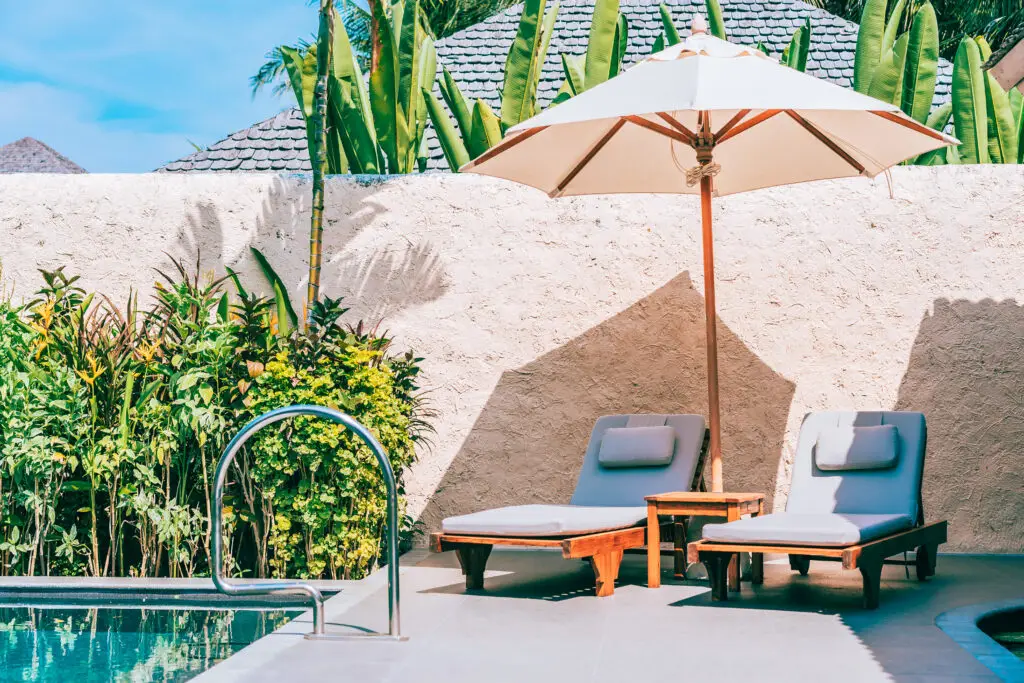
South Florida is hard on outdoor furniture. UV intensity, daily summer rain, salt air near the coast, and year-round humidity above 60% degrade materials faster than most care instructions assume.
The most common mistake is not skipping maintenance. It is using the wrong method for the material. Pressure washing wicker, using bleach on teak, or scrubbing aluminum with abrasive pads cause damage that cannot be reversed without refinishing or replacement. Quick answer: dish soap and warm water handles most routine outdoor furniture cleaning across all materials. The real differences are what to add, what to avoid, and which protective treatments each material needs.
How to clean aluminum patio furniture
Aluminum does not rust, which makes it one of the most practical materials for South Florida patios. Over time, it oxidizes and develops a white, chalky deposit that dulls the surface even when the structure is sound.
For routine outdoor furniture cleaning:
- Mix a few drops of dish soap in a bucket of warm water.
- Wipe all surfaces with a soft cloth or sponge, including joints and welds where water pools.
- Rinse with a garden hose.
- Dry with a clean cloth rather than air-drying. In South Florida, air-drying leaves mineral spots, especially near salt air.
For oxidation and chalky buildup: apply a paste of cream of tartar and water with a soft cloth in small circular motions. For heavier oxidation, an aluminum-specific cleaner or Bar Keepers Friend (used with a soft cloth, not a scrubber) works without scratching.
After cleaning, apply paste wax or an aluminum protectant to slow future oxidation. Near the coast, do this twice per year rather than waiting for visible deterioration.
What to avoid: steel wool, abrasive pads, and acid-based cleaners not formulated for aluminum. They scratch the surface and accelerate oxidation.
How to get teak and hardwood outdoor furniture clean
Teak contains natural oils that resist rot, insects, and moisture, which makes getting it outdoor furniture clean straightforward compared to other wood types. It is one of the best materials for South Florida outdoor use. New teak is warm honey-brown. Left untreated, it weathers to silver-gray. Both are structurally fine. Which you prefer determines the maintenance approach.
To keep the original brown color:
- Apply a specialized teak cleaner with a medium-bristle brush.
- Scrub in the direction of the grain.
- Rinse thoroughly.
- Allow to dry completely (minimum 48 hours in humid conditions).
- Apply teak oil or sealer to restore color and protection.
- Repeat every six months in South Florida’s climate.
To allow natural silver weathering: clean with mild soap and water when visibly dirty. No oil or sealer needed. This is the lower-maintenance approach and looks intentional once fully weathered.
What to avoid: pressure washers and bleach-based cleaners. Pressure washing raises the wood grain permanently. Bleach strips the natural oils that give teak its weather resistance.
How to get wicker and rattan outdoor furniture clean
Natural wicker and rattan are the most moisture-sensitive outdoor materials. Water absorbed into the weave causes warping, internal mold, and fiber breakdown.
For natural wicker:
- Vacuum first with a soft brush attachment to remove debris from between the weaves.
- Wipe with a cloth barely dampened in mild soapy water.
- Work in small sections and dry each area immediately with a clean towel.
- Never soak, never leave wet.
In South Florida’s climate, natural wicker is a poor choice for furniture that stays outside year-round. The humidity means it rarely dries fully between uses, which accelerates degradation. It performs better on covered patios or in screened enclosures.
For synthetic resin wicker (HDPE): this material is waterproof, UV-resistant, and mold-resistant, making it significantly better suited to South Florida conditions. Clean with soapy water, a soft brush, and a thorough hose rinse. It handles frequent cleaning without risk of damage.
How to get outdoor cushions and fabric clean
Most outdoor cushion fabrics are solution-dyed acrylic (Sunbrella is the most recognized brand). Getting these fabrics outdoor furniture clean is possible with routine methods, but mold requires specific treatment. They resist UV and moisture but are not immune to mold, especially in South Florida’s rainy season.
For routine outdoor furniture cushion cleaning:
- Mix one teaspoon of dish soap and one teaspoon of borax per quart of warm water.
- Apply with a soft brush in gentle circular motions.
- Rinse thoroughly with a hose.
- Dry completely in direct sunlight before storing or covering.
Placing wet cushions in storage is the most common cause of mold on otherwise clean fabric.
For mold on fabric: a solution of one cup of bleach and one quarter cup of dish soap per gallon of water works on white or light-colored Sunbrella fabric. For colored fabric, use undiluted white vinegar instead to avoid color loss. According to Sunbrella’s care guidelines, their solution-dyed acrylic fabrics can handle diluted bleach without fading, but always confirm your fabric type before applying.
Between cleanings: stand cushions vertically after rain so they drain and dry faster. Store in a ventilated box rather than a sealed container during the rainy season.
How to get cast iron and steel outdoor furniture clean
Steel and cast iron furniture rusts in South Florida’s coastal humidity, sometimes within months if left unprotected.
Routine cleaning: warm water, dish soap, and a soft cloth. Dry thoroughly after every exposure to water, including rain. Never let water sit at joints or in scratched areas.
Surface rust treatment:
- Use a wire brush or fine steel wool to remove loose rust.
- Clean the bare metal with white vinegar on a cloth.
- Let dry completely.
- Apply rust-inhibiting primer.
- Finish with exterior-grade paint matched to the original color.
Address rust spots immediately. Steel rust spreads outward from each point of origin. Small spots caught early take minutes to treat. Large patches require refinishing.
After painting: apply paste wax over the painted surface to create a moisture barrier that extends the protection between repaints.
Seasonal outdoor furniture clean schedule for South Florida
South Florida’s seasonal pattern demands a structured approach rather than cleaning only when furniture looks dirty.
| Season | Action |
|---|---|
| May to June (pre-hurricane season) | Full clean, apply all protective treatments, inspect hardware and fasteners |
| During summer storm season | Rinse with fresh water after heavy rain, stand cushions to dry |
| October to November (post-peak season) | Deep clean before covering or storing for cooler months |
Following a seasonal outdoor furniture clean schedule prevents the accumulation that makes each cleaning session harder than the last. Protective treatments applied before damage occurs are far more effective than treatments applied after oxidation, rust, or mold have already taken hold.
Rinsing with fresh water after storm events is particularly important for furniture near the coast. Salt deposits from tropical rain are invisible when dry but accelerate corrosion on aluminum and steel significantly.
Common outdoor furniture clean mistakes
Professional cleaners working in South Florida homes see the same errors repeatedly, and most of them are easy to avoid once you know what causes the damage.
- Using a pressure washer on teak or wicker: permanent damage to both
- Storing cushions in sealed containers while still damp: the most common cause of mold on outdoor fabric
- Skipping protective treatments until visible damage is already present: oxidation and rust are much easier to prevent than to reverse
- Using all-purpose cleaners with bleach on aluminum: accelerates surface oxidation rather than slowing it
- Air-drying metal furniture in salt air without wiping it dry first: leaves mineral and salt deposits that corrode over time
Avoiding these errors extends the useful life of outdoor furniture more than any specific outdoor furniture cleaning product does. The method matters more than the brand.
How to build an outdoor furniture clean routine that sticks
Most patio furniture deteriorates not because it was neglected entirely, but because maintenance happened reactively rather than on a schedule.
A simple outdoor furniture clean routine works better than waiting until the furniture looks bad:
- Weekly (during rainy season): wipe down surfaces after significant rain events. Stand cushions to dry vertically.
- Monthly: inspect all pieces for early signs of rust, mold, or oxidation. Spot-clean as needed. Check cushion storage for moisture.
- Every six months: full outdoor furniture clean for all pieces. Apply protective treatments (teak oil, aluminum wax, cushion fabric treatment) before the next seasonal stress period begins.
- Annually: deep clean including underside of cushions, hardware inspection, and replacement of any weatherstripping or hardware showing corrosion.
Building this into a home maintenance calendar prevents the cycle of neglect and expensive correction that most patio furniture owners experience within three to five years.
Frequently asked questions
What is the best way to get patio furniture clean quickly? For most materials, the fastest way to get outdoor furniture clean is a bucket of warm water with a few drops of dish soap and a soft brush. Routine cleaning takes under 15 minutes. Rinse with a hose and dry with a cloth. Material-specific treatments (teak oil, aluminum protectant, mold treatment for fabric) are added on a seasonal schedule, not at every cleaning.
How do I clean outdoor furniture cushions with mold? For Sunbrella and similar acrylic fabrics, mix one cup of bleach and one quarter cup of dish soap per gallon of water. Apply, let sit 15 minutes, scrub, and rinse thoroughly. For colored fabric, use undiluted white vinegar instead. Dry completely in direct sunlight before replacing.
How often should outdoor furniture be cleaned in South Florida? Routine cleaning once a month during the dry season and after significant rain events during the wet season. Protective treatments (teak oil, aluminum wax) every six months. Full deep clean before and after hurricane season.
Does aluminum outdoor furniture need special cleaner? For routine cleaning, dish soap and water work well. For oxidation and chalky buildup, use cream of tartar paste or an aluminum-specific product. Avoid acidic cleaners not formulated for aluminum and any abrasive scrubbing surface.
Can I use a pressure washer to clean outdoor furniture? On plastic, resin, and sealed concrete furniture, yes. On teak, natural wicker, rattan, and aluminum with powder coating, no. Pressure washing raises wood grain permanently, destroys wicker weave structure, and chips powder coating on aluminum.
Keep the rest of the home as maintained as your outdoor furniture
Getting outdoor furniture clean on a regular schedule is one of the most effective ways to protect patio furniture in South Florida. Keeping the interior of the home at the same level requires consistency too.
For South Florida homeowners who want indoor spaces maintained without adding it to their own schedule, regular house cleaning services provide the consistent upkeep that prevents buildup from becoming a larger project. When the full home needs a reset, including areas behind and beneath furniture and inside appliances, professional deep cleaning in South Florida addresses the scope that routine maintenance cannot.
The same discipline that keeps outdoor furniture clean year after year, consistent schedule, right product, protective treatments applied proactively, , consistent schedule, right product for each material, protective treatments applied proactively , applies to indoor spaces too.
Patio sorted and ready to tackle the inside too? Schedule a house cleaning in South Florida and keep every room as clean as your outdoor space, without adding it to your own list.