

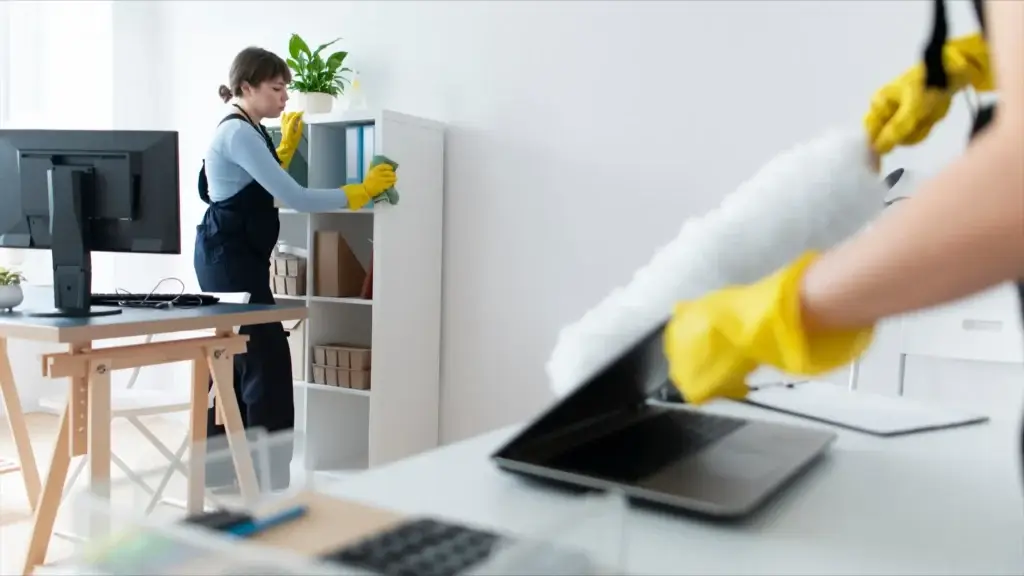
A clean office is not just about appearances. It directly affects how your team feels, how productive they are, and how clients perceive your business. Yet office cleaning is often managed inconsistently — done partially, skipped under busy schedules, or delegated without a clear standard.
An office cleaning checklist changes that. It creates a repeatable process that keeps your workplace genuinely clean, not just surface-tidy. Therefore, whether you manage cleaning in-house or work with a janitorial service, having a documented checklist is essential.
The difference a clean environment makes is more significant than most managers realize. Employees who work in clean, organized spaces report higher job satisfaction and lower stress levels. Clients who visit a clean office form an immediate, positive impression of your business’s operational standards. And from a liability standpoint, a well-maintained workplace reduces the risk of slip-and-fall incidents and illness-related absences. Therefore, office cleaning is not simply a facilities task — it is a management priority.
Why workplace cleanliness affects more than you realize
Studies consistently link workplace cleanliness to employee health and performance. A cluttered, dusty, or poorly sanitized office increases the spread of illness, raises stress levels, and reduces focus. Consequently, businesses with clean, organized workplaces tend to see lower absenteeism and higher team morale.
For client-facing businesses, a clean office also sends an immediate message about your standards and professionalism. A dirty restroom or dusty reception area can undermine even the most polished business presentation. In contrast, a consistently clean environment reinforces trust and credibility.
Janitorial services vs. in-house office cleaning
Many small businesses in South Florida handle office cleaning internally. This works well for smaller spaces with light foot traffic. However, as businesses grow, the demands on cleaning increase — and the consistency often decreases.
Professional janitorial services bring a structured approach, proper equipment, and trained staff. They also provide accountability through documented service schedules and checklists. Therefore, for offices with ten or more employees or high daily traffic, a professional weekly office cleaning service is generally the more reliable option.
Another consideration is liability. When cleaning is done in-house by staff members who are not trained cleaners, the risk of injury — from improper use of chemicals, wet floors without signage, or repetitive strain — falls on the employer. A professional janitorial service carries its own insurance and operates within established safety protocols. Consequently, outsourcing office cleaning is also a risk management decision, not just an operational one.
Cost is often cited as a reason to keep cleaning in-house. However, when you factor in the time employees spend on cleaning tasks, the cost of supplies and equipment, and the inconsistency of results, a professional service frequently delivers better value. For Boynton Beach small businesses especially, where staff time is a premium resource, redirecting cleaning responsibilities to a professional team allows your people to focus entirely on the work they were hired to do.
8-point office cleaning checklist for a productive workplace
This checklist is organized by frequency — daily, weekly, and monthly tasks. Implementing all three levels ensures your office stays clean consistently rather than only after a visible buildup.
Daily office cleaning tasks
Daily tasks focus on the areas with the highest touch frequency and the most visible impact. These should be completed every working day.
Workstations and common areas:
- Empty all trash and recycling bins and replace liners
- Wipe down reception desks and front-facing surfaces
- Clean glass entrance doors and lobby windows
- Sanitize high-touch surfaces including door handles, light switches, and elevator buttons
- Tidy reception seating and straighten any reading materials
Kitchen and break room:
- Wipe down countertops, the stovetop or microwave exterior, and the coffee station
- Clean the sink and faucet
- Empty the dishwasher or ensure used dishes are washed
- Wipe down the exterior of the refrigerator
- Sweep or mop the floor
Restrooms:
- Sanitize toilets, seats, and handles
- Wipe down sinks, faucets, and countertops
- Restock paper towels, toilet paper, and hand soap
- Clean mirrors
- Mop the floor
Additionally, check restrooms mid-day in high-traffic offices. A single morning clean is rarely sufficient in workplaces with more than ten employees.
The restroom is one of the first spaces employees and visitors use to evaluate a business’s cleanliness standards. A poorly maintained restroom — even in an otherwise clean office — creates a lasting negative impression. Conversely, a spotless, well-stocked restroom signals that the business takes its environment seriously. Therefore, restroom maintenance deserves more attention and frequency than most office cleaning schedules currently allocate to it.
Weekly office cleaning tasks
Weekly tasks address areas that accumulate grime more slowly but still require regular attention.
Throughout the office:
- Vacuum all carpeted areas, including under desks and along walls
- Mop all hard floors thoroughly
- Dust all horizontal surfaces including desks, shelving, and windowsills
- Wipe down computer monitors, keyboards, and phones with appropriate electronics-safe cleaner
- Clean glass partitions and interior windows
- Wipe down chairs and upholstered seating
- Sanitize shared equipment including printers, copiers, and communal keyboards
Kitchen and break room:
- Clean inside the microwave
- Wipe down the interior and exterior of the refrigerator
- Descale the coffee maker
- Clean the inside of kitchen cabinets if needed
- Sanitize the trash can interior
Restrooms:
- Scrub tile grout and fixtures thoroughly
- Clean exhaust fans and vent covers
- Wipe down all cabinet interiors and storage areas
- Restock all supplies for the coming week
Furthermore, pay attention to floor transitions and corners during weekly cleaning. These areas collect debris that daily sweeping misses.
Weekly cleaning is also the right frequency to address glass partitions and interior windows, which accumulate fingerprints and smudges from daily use. A streak-free glass cleaner and a clean microfiber cloth make quick work of these surfaces and immediately improve the overall appearance of the workspace. Additionally, wiping down upholstered chair backs and armrests during the weekly clean prevents the gradual buildup of skin oils and debris that makes office seating look worn before its time.
Monthly office cleaning tasks
Monthly tasks address the areas that accumulate slowly but have a significant impact on air quality, equipment longevity, and overall cleanliness.
- Dust and wipe down all light fixtures and ceiling fans
- Clean air vents and replace HVAC filters if needed
- Wash windows inside and outside where accessible
- Deep clean and sanitize all kitchen appliances
- Shampoo or steam-clean upholstered office chairs and sofas
- Clean behind and under large furniture and equipment
- Sanitize and organize supply closets
- Inspect and clean baseboards throughout the office
Monthly cleaning is also a good time to assess whether any areas need additional attention — worn flooring, damaged fixtures, or areas where mold or mildew might be developing, particularly in South Florida’s humid climate.
For South Florida offices, monthly cleaning should also include a check of window seals and AC drain lines. Humidity-related condensation builds up in these areas over time and can create moisture damage or mold if left unaddressed. A quick inspection during each monthly session catches these issues early and prevents more costly repairs down the line. Furthermore, cleaning the exterior of all office plants — if present — as part of the monthly routine removes accumulated dust from leaves and keeps the space looking fresh.
High-touch surface sanitizing: the detail that protects your team
One of the most important elements of any office cleaning checklist is consistent sanitizing of high-touch surfaces. These are the points of contact that every employee and visitor interacts with throughout the day.
High-touch surfaces that require daily sanitizing include:
- Door handles and push plates
- Light switches and panel buttons
- Shared keyboards, mice, and touchscreens
- Office phones and headsets
- Elevator buttons and stair railings
- Coffee machine controls and water dispenser handles
- Meeting room chairs, tables, and presentation remotes
Using an EPA-approved disinfectant on these surfaces daily — not just wiping them down — is the standard that protects your team from the spread of illness.
The distinction between wiping and disinfecting matters significantly in practice. Wiping removes visible dirt and some surface bacteria. Disinfecting with an approved product, applied correctly and allowed adequate contact time, reduces pathogen levels to a safe standard. Many offices wipe high-touch surfaces with a damp cloth and consider the job done. However, this approach does not provide the level of protection that a genuinely sanitized workplace requires. Therefore, ensuring that the right products are used — and used correctly — is as important as the frequency of cleaning itself.
Weekly office cleaning for South Florida small businesses
South Florida offices face some specific cleaning challenges. The humid climate encourages mold growth in bathrooms, around windows, and in areas with poor airflow. Regular sanitizing of these areas is especially important.
Additionally, offices near the coast deal with more salt air, which can affect metal surfaces, windows, and equipment over time. Building a cleaning routine that accounts for these environmental factors keeps your office in better condition year-round.
For small businesses across Boynton Beach and South Florida, Maid Cleaning for You offers professional weekly office cleaning services tailored to your space and schedule. Their team handles everything from daily restroom maintenance to full monthly deep cleans — so your office always reflects the standard your business deserves.
Scheduling flexibility is one of the key advantages of working with a local professional cleaning service. Unlike national janitorial chains, a local provider can accommodate your specific hours, access requirements, and seasonal variations in office usage. For businesses that operate outside standard hours, or that experience peak periods requiring more frequent cleaning, that flexibility is essential.
A clean office is a business decision
Investing in a consistent office cleaning checklist is not just about tidiness. It is a business decision that affects employee health, team productivity, and client perception.
Start with the daily essentials and build from there. Whether you manage cleaning in-house or partner with a professional janitorial service, having a documented, structured approach is what makes the difference between a workplace that looks clean and one that genuinely is.
Your team spends most of their working hours in your office. It should be a space they are proud to walk into every day.
The return on investment from a well-maintained workplace is real and measurable. Fewer sick days, higher morale, stronger client relationships, and a more professional brand impression all trace back to the simple, consistent practice of keeping your office genuinely clean. An office cleaning checklist is the operational tool that makes that consistency possible — every day, without exception.
Start with the daily essentials and build from there. A clean office reflects a well-run business — and that message reaches everyone who walks through your door.