

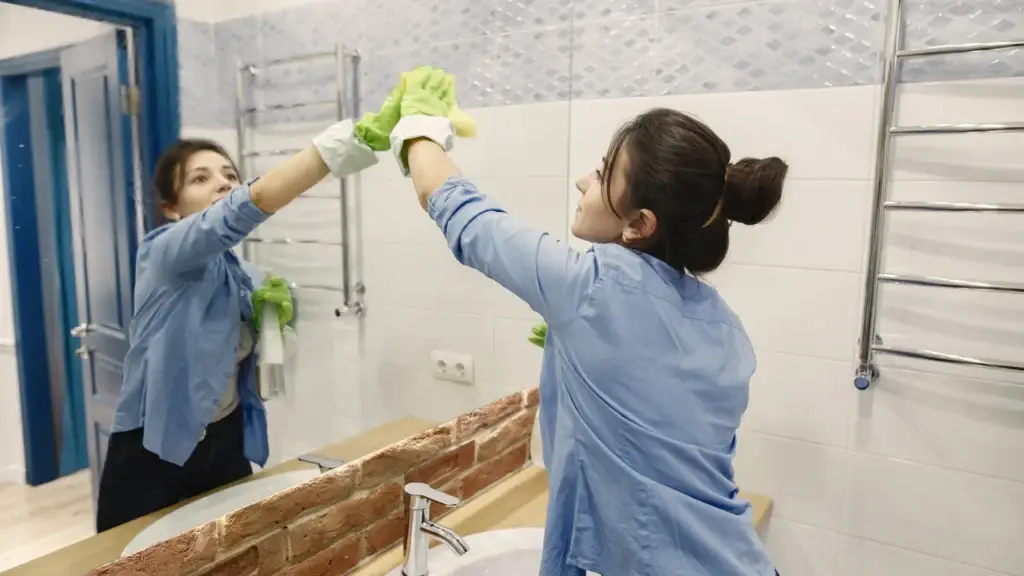
A clean mirror should be invisible. When you stand in front of it, you see your reflection, not the fingerprints, water spots, and toothpaste residue from the past two weeks.
Most people spend more time cleaning mirrors than necessary and still end up with streaks. The problem is almost never effort. It is the wrong mirror cleaner, the wrong cloth, or a wiping pattern that moves residue around instead of removing it. Fix those three things and the process takes under three minutes per mirror.
The right mirror cleaner removes residue without leaving its own film behind. That single principle explains why some products work and others do not, and why technique matters as much as the product you choose.
What causes mirrors to streak
Streaks form when a cleaning solution dries unevenly on the glass, leaving a residue film that catches light at certain angles. The cause is almost always one of the following:
- Too much product: excess cleaner means more residue to dry on the surface. Two to three sprays for a standard bathroom mirror is enough.
- Paper towel: they leave microscopic fibers on glass that show up as streaks under direct light.
- Fabric softener on cloths: towels laundered with fabric softener deposit a silicone coating on glass that streaks badly.
- Cleaning in direct sunlight or on warm glass: the product evaporates faster than you can wipe it, concentrating residue before you can remove it.
- Tap water in homemade cleaners: in South Florida, tap water contains elevated levels of calcium and magnesium. Those minerals stay on the glass after the water evaporates and leave spots that look like streaks.
Identifying which of these applies explains why previous attempts have not produced the result you want.
Best mirror cleaner options
Isopropyl alcohol and distilled water (DIY). Mix equal parts 70% isopropyl alcohol and distilled water in a spray bottle. This is the most effective homemade mirror cleaner for most households. Alcohol dissolves grease, oils, and hairspray without leaving residue. Distilled water eliminates the mineral spotting that tap water causes. Add a small amount of white vinegar if you want extra cutting power on mineral films, though the alcohol does most of the work.
Alcohol-based commercial glass cleaner
Products with alcohol as the primary active ingredient (Windex Original is the most widely available) evaporate quickly and leave minimal residue when used correctly. The key is using less than you think you need. Two or three sprays are enough for a standard mirror. More product increases streak risk, not cleaning power.
Rubbing alcohol for heavy buildup
Bathroom mirrors accumulate hairspray, toothpaste mist, and skincare overspray that standard glass cleaner does not cut through easily. For these, dampen a cloth with 70% isopropyl alcohol and wipe the buildup first. Then clean normally with your mirror cleaner. This two-step approach handles what a single product pass cannot.
Foam glass cleaner
Foam formulas cling to the surface longer, which gives them more contact time to dissolve buildup. They work well on heavily soiled bathroom mirrors but require thorough wiping to prevent the foam itself from drying into streaks. Use the same final dry-buff step you would use with any other product.
The tool that makes the biggest difference when using mirror cleaner
With any mirror cleaner, product choice matters less than the cloth. A lint-free microfiber cloth is the correct tool for mirrors and glass. Microfiber picks up dissolved residue without leaving fibers on the surface, which is why it consistently outperforms paper towels, cotton cloths, and bath towels.
Use a clean cloth each time. A cloth used on other surfaces carries oils, grit, or product residue that transfers directly to the mirror. Keep two or three microfiber cloths dedicated to glass only, and wash them separately without fabric softener.
If microfiber is not available, crumpled newspaper is a reliable alternative. The texture does not lint, and the ink acts as a mild polishing agent. It requires more physical effort than microfiber but produces a streak-free result on most glass surfaces.
Step-by-step method for streak-free mirror cleaning
Professional cleaning teams follow a consistent sequence for mirrors. The same approach works at home:
- Spray the cloth, not the mirror. Applying the mirror cleaner to the cloth rather than the glass gives you control over the amount and prevents overspray on the frame, which drips back onto the glass while you wipe.
- First pass: dissolve and collect. Wipe in a Z-pattern from top to bottom, or in overlapping horizontal passes. Either pattern is more effective than circular motions, which push residue around rather than removing it.
- Second pass: dry buff. Take a dry section of the cloth, or a fresh dry cloth, and do a final pass over the entire surface. This removes any remaining moisture or residue the first pass loosened. This step is what separates a good result from a streak-free one, and it is the step most people skip.
For mirrors with heavy buildup (bathroom mirrors that have not been cleaned in several weeks), do the rubbing alcohol pre-treatment before step one. That first treatment dissolves the layer of product residue so your mirror cleaner can reach the glass surface itself.
How to clean bathroom mirrors with mineral film
Bathroom mirrors in South Florida often develop a persistent cloudiness that does not respond to standard glass cleaner. This is mineral film from tap water, not dirt. Hard water deposits a thin layer of calcium on the glass every time condensation or water splashes on the surface and dries.
To remove it, apply undiluted white vinegar directly to the affected area with a cloth. Let it sit for one to two minutes. The acidity dissolves the calcium film. Wipe clean and follow with a dry buff pass.
After removing the film, the standard mirror cleaner routine maintains the surface. The mineral film will not return as quickly if you follow the prevention habits below.
How to prevent mirror buildup between mirror cleaner sessions
A few consistent habits reduce how often a full cleaning is needed:
- Wipe bathroom mirrors after every shower. A quick pass with a dry microfiber cloth before the condensation dries removes moisture before it deposits minerals. This takes fifteen seconds and makes a significant difference in how often a full cleaning is needed.
- Apply an anti-fog barrier. Spread a small amount of shaving cream over a clean dry mirror and buff it clear. This leaves a thin barrier that reduces steam fogging for several days and prevents condensation from sticking to the surface.
- Keep aerosols away from mirrors. Hairspray and dry shampoo are the most persistent residues on bathroom mirrors and are much harder to remove than water-based deposits. Using them away from the mirror or wiping immediately after use prevents buildup.
Choosing a mirror cleaner for different mirror types
Standard bathroom and bedroom mirrors. Any of the products and methods described above work on standard silvered glass mirrors.
Antique or vintage mirrors. The silvering on older mirrors is fragile. Moisture seeping in at the edges causes black spotting that permanently damages the backing. Apply mirror cleaner to the cloth only, never spray directly onto the glass, and wipe away from the edges rather than toward them.
Mirrors with decorative or wooden frames. Spray cleaner on a cloth to prevent overspray from reaching the frame material. Wood and certain decorative finishes are damaged by alcohol-based cleaners and by moisture that runs down from the glass surface.
Large wall mirrors. Use a telescoping microfiber mop with a flat pad instead of a hand cloth. Apply the cleaner to the pad, work in horizontal passes from top to bottom, and follow with a dry-pad buff pass. This produces better results than stretching across a surface wider than arm’s reach and is physically easier.
Common mirror cleaning mistakes
Cleaning professionals see the same errors repeatedly in homes where mirrors never quite look clean:
- Using paper towels as the primary wiping tool
- Spraying directly onto the glass at close range, which concentrates product in one spot
- Using multi-surface spray cleaners that leave a protective coating designed for countertops, not glass
- Cleaning mirrors with a cloth that has been used on bathroom surfaces (soap scum residue transfers immediately to glass)
- Skipping the dry-buff final pass
Eliminating any one of these improves the result noticeably. Eliminating all of them produces a reliably streak-free finish.
Frequently asked questions
What is the best mirror cleaner for streak-free results? A 50/50 mix of 70% isopropyl alcohol and distilled water in a spray bottle is the most effective homemade option. For commercial products, choose an alcohol-based glass cleaner and use it sparingly. The cloth matters as much as the product: a clean, lint-free microfiber cloth is essential.
Why do my mirrors streak even after I clean them? The most common causes are too much product, paper towels (which leave fibers), fabric softener residue on the cloth, or cleaning in direct sunlight when the product dries before you can wipe it. Switch to a microfiber cloth, use less product, and add a dry-buff final pass.
Can I use vinegar as a mirror cleaner? Yes, diluted white vinegar works well on mineral film and general grime. Mix equal parts vinegar and distilled water. It is less effective on greasy residue like hairspray than alcohol-based cleaners, but it is a good option for hard water spotting and routine cleaning.
How often should I clean bathroom mirrors? Weekly cleaning prevents mineral film and soap deposits from hardening into layers that require more effort to remove. A quick dry wipe after each shower extends the interval between full cleanings.
Why does my bathroom mirror stay cloudy even after cleaning? Persistent cloudiness on bathroom mirrors in South Florida is usually a mineral film from hard water, not ordinary dirt. Standard glass cleaner does not dissolve it. Apply undiluted white vinegar, let it sit for one to two minutes, wipe clean, and follow with your regular mirror cleaner.
When mirrors are clean but the bathroom still is not
A clean mirror in a bathroom with dirty grout, soap-scum glass shower doors, or mineral-stained fixtures does not give the impression of a clean space. The mirror is the most visible surface, but it is not the only one that matters.
If your bathrooms need a thorough reset beyond what routine cleaning addresses, professional deep cleaning in South Florida covers tile, grout, glass shower enclosures, fixtures, and all the surfaces that standard cleaning routines skip. For consistent maintenance between those deeper sessions, regular cleaning visits keep every room, including bathrooms, at a standard that is easier to maintain once it is established.
The American Cleaning Institute recommends cleaning bathroom surfaces, including mirrors, at least weekly to prevent mineral and soap film from hardening into deposits that require more aggressive treatment to remove.