

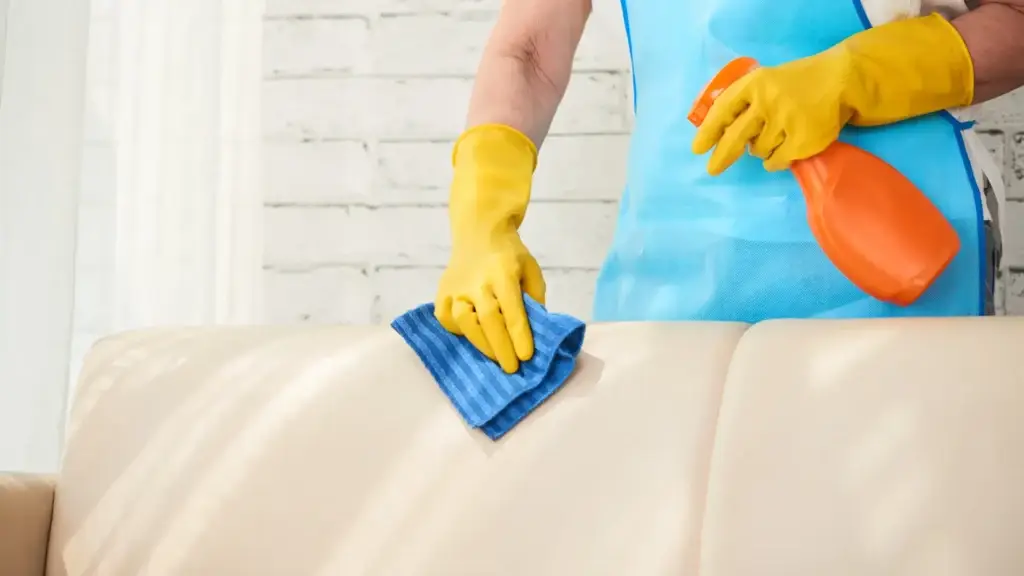
Leather furniture looks elegant until the day a coffee mug tips over, a ballpoint pen slips out of a pocket, or the dog decides the sofa is the right place to nap after a muddy walk. Cleaning up leather is not complicated, but it is unforgiving when you reach for the wrong product.
A leather furniture stain treated correctly lifts cleanly and leaves the surface looking exactly as it did before. The same stain treated with the wrong cleaner, a common household spray, undiluted soap, or rubbing alcohol on the wrong leather type, can leave a permanent dull patch, bleached spot or cracked section that no conditioner will fully restore.
The short version: blot any spill immediately with a dry cloth. For most stains, a small amount of mild soap and distilled water applied with a damp cloth, then dried and followed with a leather conditioner, is the safest starting point. Never use bleach, acetone, ammonia, or general household cleaners on leather.
Why leather type determines everything about stain removal
Not all leather responds the same way to cleaning products, and getting this wrong is responsible for most of the damage people do while trying to help.
- Protected or pigmented leather has a polymer coating over the surface, making it the most durable and stain-resistant. Most modern sofas and chairs use this type. It tolerates mild soap and damp cloths well.
- Semi-aniline leather has a lighter protective coat and a softer feel. It handles mild cleaning but stains more easily and is less forgiving of soaking or harsh products.
- Full aniline leather has no protective coating. Water can spot it, and most cleaning agents darken or discolor it permanently. This type requires professional care for anything beyond a dry blot.
Quick reference: identifying your leather type
- Wipe a hidden spot with a damp white cloth. If water darkens the leather, it is likely full aniline.
- If the surface feels plastic-smooth and uniform, it is probably pigmented leather.
- If it feels soft and shows the natural grain but does not darken easily with water, it is likely semi-aniline.
When in doubt, check the care card that came with the furniture, or contact the manufacturer. American Leather, one of the leading U.S. premium leather furniture makers, advises checking the manufacturer’s care instructions before applying any product, and recommends gently applying a soft cloth moistened with mild non-detergent soap and lukewarm water for stains on protected leather, followed by wiping with a clean damp cloth and blotting dry.
How to remove stains from a leather couch: general approach
The same sequence works as a starting point for most stains on protected or semi-aniline leather.
- Blot up wet spills immediately with a clean, dry white cloth. Press and lift straight up rather than wiping across the surface.
- Allow the area to dry fully before applying any cleaning solution, since cleaning wet leather risks spreading the stain further.
- Dampen a soft cloth lightly with distilled water (tap water can leave mineral deposits).
- Add a tiny amount of mild, non-detergent soap to the cloth and work it gently into the stain using small circular motions.
- Wipe clean with a second cloth dampened only with distilled water.
- Dry the area immediately with a dry cloth, never using heat from a hair dryer or direct sunlight.
- Apply a small amount of leather conditioner once the surface is fully dry.
Never soak the leather or apply any product directly to the surface. The goal is always to use the minimum amount of moisture needed to lift the stain.
Leather furniture stain types and targeted methods
Different stains respond better to different treatments, even on the same leather type.
Water-based stains (coffee, juice, soda): Blot immediately, then clean with the mild soap method above. Residue usually lifts without much difficulty on protected leather.
Oil-based stains (body oil, butter, food grease): Blot up the excess, then let the stain sit without applying any water. Oil-based marks on leather often dissipate into the hide on their own over a day or two. Wiping with water can spread the stain rather than lift it. If it does not fade after 24 hours, apply a small amount of leather-specific degreaser.
Ink stains on a leather couch: Dab gently with a cotton swab barely moistened with rubbing alcohol, working from the outside of the mark inward and using a fresh swab for each pass. Test in a hidden spot first, since alcohol can lift the finish on some leather types. This method works best on small, fresh ink marks, not large or set-in stains.
Dark jean dye transfer: A common problem, especially on light leather sofas. A leather-specific cleaner rather than a DIY approach works better here, since dye transfer sits in the pores of the hide. Professional cleaning is often the most reliable option for significant dye transfer.
What damages leather faster than any stain
The products most likely to permanently damage leather are the ones most people reach for instinctively in a cleaning emergency.
- Bleach strips the finish, discolors leather permanently and weakens the fibers.
- Ammonia-based glass cleaners dry out the leather and crack the finish over time.
- Acetone nail polish remover dissolves the protective coating on most finished leathers.
- Baby wipes, despite being mild on skin, often contain alcohol, fragrance or preservatives that build up on leather and dull the finish with repeated use.
- Olive oil or cooking oils marketed as natural leather conditioners turn rancid inside the hide over time, creating a sticky residue and an unpleasant smell.
How leather conditioner after cleaning prevents cracking
Cleaning removes some of the natural oils and protective compounds from leather along with the stain. Without conditioning afterward, the surface dries out incrementally with each cleaning, eventually leading to cracking and flaking, especially along seam lines and areas that flex regularly.
A good leather conditioner applied every six to twelve months keeps the surface pliable and restores what cleaning removes. Apply it after any stain treatment as well, not just on a set schedule.
In Florida’s climate, air conditioning running most of the year creates a consistently low-humidity environment indoors that can dry leather faster than in other regions. This means conditioning at the more frequent end of the range, every six months, is worthwhile for leather that sees daily use.
Leather furniture and South Florida’s specific challenges
Beyond air conditioning drying the leather out, salt air near the coast deposits fine particles on leather surfaces over time, which can dull the finish if not removed regularly. A light dry wipe with a soft cloth once a week prevents this buildup from becoming a harder cleaning job later.
Direct sunlight through south and west-facing windows fades leather progressively, which is the one type of discoloration that no cleaning or conditioning can reverse. Keeping leather furniture out of direct sun paths, or using UV-filtering window treatments, preserves color far more effectively than any product applied after fading has already occurred.
When a leather furniture stain needs professional attention
Some situations are better handed to a professional leather cleaning specialist than treated at home.
- Full aniline leather with any stain beyond a dry blot.
- Large ink stains, dye transfer covering more than a small area, or stains that have had days to set.
- Cracking or peeling that suggests the finish itself is compromised.
- White or light-colored leather with tannin stains from coffee, wine or tea that have not responded to the mild soap method.
A professional has access to leather-specific spot cleaning compounds and protective coatings that are not available in general retail, and they can assess whether the leather type and finish respond to a given treatment before applying it to the full surface.
For leather couches as part of a broader upholstery cleaning project, our upholstery deep cleaning includes upholstered surfaces alongside everything else in the home.
Frequently asked questions about leather furniture stains
How do I get a dark stain out of a light leather couch? Mild soap and distilled water removes most water-based marks on protected leather. For tannin stains from coffee or wine, a leather-specific stain remover used according to its label is safer than DIY methods on light leather.
Will leather conditioner remove stains? No. Conditioner prevents cracking and restores moisture after cleaning, but it does not lift stains. Use it after cleaning, not instead of it.
Can I use magic eraser on leather? Not recommended. Magic erasers are mildly abrasive and can strip the finish from protected leather, leaving a dull or lighter patch.
How do I get ballpoint ink off a leather sofa? A cotton swab barely dampened with rubbing alcohol, dabbing from the outside of the mark inward, works on small fresh ink stains on protected leather. Test in a hidden area first. For larger or older marks, professional treatment is more reliable.
Does leather crack because of cleaning or because of age? Both. Overcleaning without conditioning removes oils from the hide. Age combined with low humidity and direct sun dries the leather over time. Regular conditioning is the most reliable protection against both causes.
Maintaining leather furniture between cleanings
A dry wipe once a week to remove dust and surface particles, conditioning every six months, and quick blotting of any spill the moment it happens covers almost everything leather furniture needs to stay in good condition for years.
The single most common mistake is waiting to see if a spill will dry on its own. With leather, an immediate dry blot removes most of what would otherwise become a set-in stain, while waiting for it to dry first makes the job meaningfully harder. A leather furniture stain that is treated within the first few minutes rarely leaves any lasting mark on protected leather, which is the type found in most modern homes.
A small bottle of leather cleaner and a clean cloth kept near frequently used leather furniture makes that immediate response practical rather than aspirational. Having the tools in reach removes the delay between noticing a spill and addressing it. A few minutes of neglect on a leather furniture stain is rarely catastrophic, but an hour or more, especially with an oil-based spill or ink, shifts the situation from easily managed to difficult or impossible to fully reverse without professional help.
For leather furniture as part of a full home clean, our scheduled home cleaning visits keep upholstery, floors and surfaces maintained on a cycle that prevents buildup before it becomes a problem.