

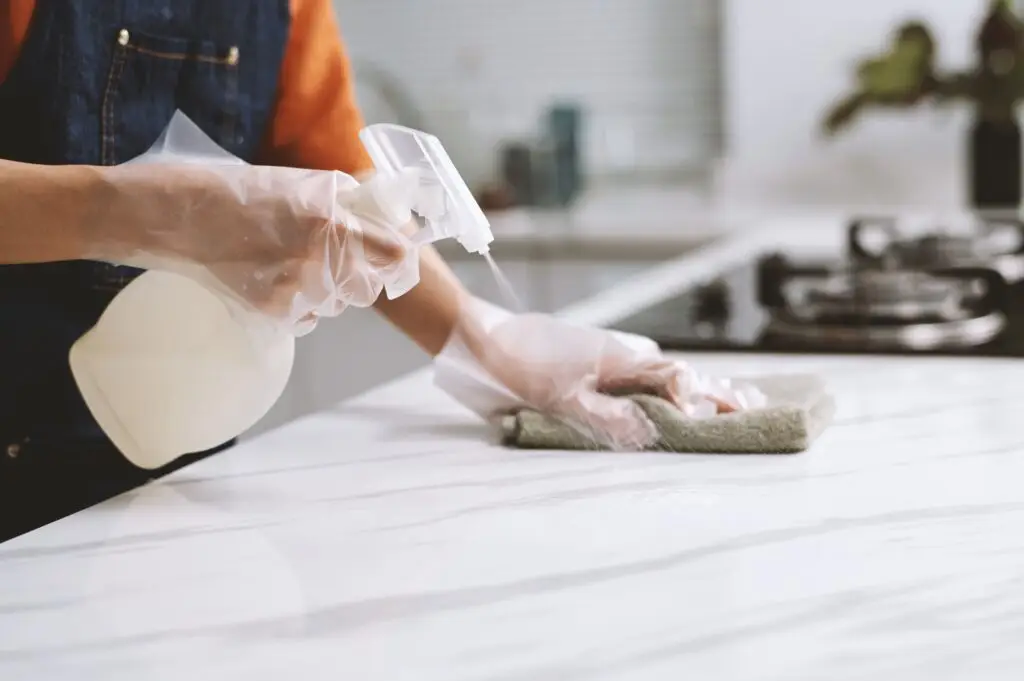
Your kitchen countertop is the hub of your home. It’s where school bags are dropped, groceries are unpacked, and family meals are prepared. Because of this constant activity, it is also the area most prone to harboring bacteria and germs.
To keep your kitchen healthy, it is vital to understand the difference between cleaning and disinfecting. Cleaning removes visible dirt, crumbs, and grease, while disinfecting actually kills the microscopic pathogens that can cause illness. Master both, and you will ensure your kitchen stays truly safe.
Remove Crumbs and Surface Dirt First
Many people make the mistake of spraying disinfectant directly onto a dirty counter. This is ineffective because food residue and grease act as a barrier, preventing the disinfectant from reaching the surface underneath.
- The First Sweep: Use a damp microfiber cloth to remove all visible food particles, sticky spills, and crumbs.
- Don’t Push the Mess: Be careful not to sweep debris into the gaps between the counter and the wall, or under your appliances.
- Focus Areas: Pay extra attention to the food preparation zones, the area around the coffee machine, and the edges near the sink where food residue frequently collects.
Use Surface-Safe Products
Not all countertops are created equal. Using a one-size-fits-all cleaning approach can permanently damage expensive materials.
- Know Your Material: Natural stone like granite, marble, and quartz can be etched or dulled by acidic cleaners like vinegar or lemon juice. Similarly, butcher block wood requires specialized oils and gentle cleansers to prevent drying or cracking.
- The pH-Neutral Rule: When in doubt, stick to pH-neutral, manufacturer-approved cleaners. They are powerful enough to clean everyday grime without stripping the protective seal of your counters.
- Safety Warning: Never mix cleaning products. Mixing bleach with ammonia or acids creates toxic gases that are extremely hazardous. Always use one product at a time and follow the label instructions.
Disinfect High-Touch Counter Areas Properly
Disinfectants are not magic—they need time to do their job. This is called dwell time.
- Respect the Label: Read the back of your disinfecting product. Most need to sit visibly wet on the surface for a specific period (usually 3 to 10 minutes) to successfully kill germs.
- High-Touch Zones: Prioritize disinfecting the areas you touch most often: faucet handles, appliance buttons, the edges of the counter where your hands rest, and the spots where you unpack raw food.
- Rinse After: If you are using a chemical disinfectant on a surface where you prepare food, always follow the label instructions regarding rinsing with water afterward to avoid chemical residue.
Prevent Cross-Contamination
Disinfecting a counter is useless if you immediately re-contaminate it with a dirty cloth or a cross-contaminated cutting board.
- Color-Code Your Cloths: Use specific microfiber cloths for the kitchen, and never use them in the bathroom. Even better, have a dedicated cloth for handling raw meat prep that goes directly into the laundry afterward.
- The Grocery Bag Rule: Bags from the grocery store have been on warehouse floors and cart handles. Never set them directly on food prep surfaces; use a designated “unloading zone” or wipe down your counters immediately after putting the groceries away.
- Towel Hygiene: Dish towels are notorious for spreading bacteria. Change them daily, and always use paper towels when wiping up raw juices from meat or poultry.
Build a Daily Countertop Routine
Consistency is the secret to a germ-free kitchen. You don’t need to spend hours; you just need to be intentional.
- Morning: Wipe down the counters after breakfast to start the day with a clean slate.
- After Meals: Clear crumbs and wipe spills immediately so they don’t have time to harden or attract pests.
- Evening Reset: Before bed, do a final wipe-down of all counters and faucets. This ensures you wake up to a sanitized kitchen and prevents nighttime bacterial growth.
When Professional Kitchen Cleaning Helps
Even the most diligent daily wiping can’t reach every hidden corner. Grime slowly accumulates around the base of the faucet, the underside of the backsplash, the edges of the stove, and the front panels of your cabinets.
Maid Cleaning For You specializes in the kind of deep, detail-oriented cleaning that keeps your kitchen truly healthy. We reach the spots that daily maintenance misses, ensuring that grease and bacteria don’t have a chance to build up over time. If your kitchen needs a reset, or if you simply want the peace of mind that comes with a professionally sanitized space, we are here to support your healthy home.
Ready to enjoy a sparkling, germ-free kitchen? Contact Maid Cleaning For You today to get a quote and schedule your first professional cleaning visit!
FAQ
What is the best way to disinfect kitchen counters?
First, clean the surface of all food and debris using soap and water. Once the counter is clean, apply a food-safe disinfectant, let it sit for the “dwell time” recommended on the label, and rinse with water if the instructions require it.
Can I use vinegar on all countertops?
No. Vinegar is acidic and can etch or damage natural stone surfaces like granite, marble, and limestone. It is generally safe for laminate, but always check with your countertop manufacturer.
How often should kitchen counters be disinfected?
For high-traffic kitchens or after handling raw meat, poultry, or eggs, you should disinfect immediately. Otherwise, a thorough evening disinfection is usually sufficient for maintaining a healthy home.
What should I avoid using on natural stone countertops?
Avoid abrasive scouring pads, steel wool, and acidic cleaners like vinegar, lemon juice, or harsh chemical bathroom cleaners. Always use a pH-neutral cleaner specifically formulated for natural stone to maintain its seal and shine.