

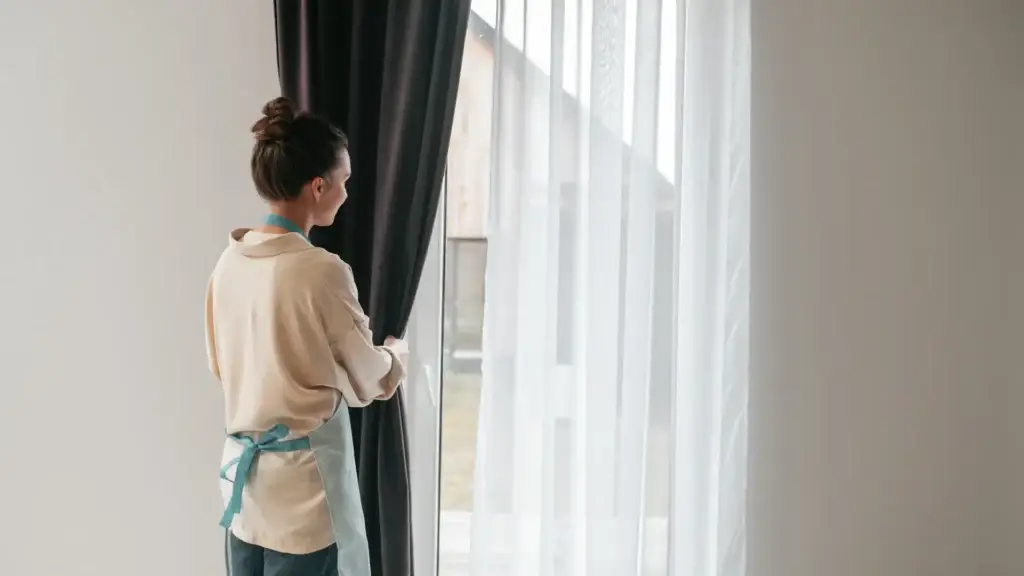
Curtains collect far more dust, pollen, pet dander and cooking odors than most people realize, partly because they hang in place for months or years without ever being taken down. By the time they look dingy, they have usually been overdue for washing for quite a while.
Knowing how to wash curtains the right way matters more than the washing itself. The wrong method for the fabric can shrink them by several inches, fade deep dyes, or distort a structured lining so badly the curtains never hang straight again.
The short version: always check the care label before anything else. Most lightweight curtains can go into a washing machine on the delicate cycle with cold water, while heavier lined drapes and delicate fabrics like silk or velvet usually require hand washing or dry cleaning. Remove hooks and rings first, shake out loose dust, and hang curtains back up while still slightly damp to prevent wrinkles.
Why the care label is the only rule that matters first
The care label on curtains works the same way as any garment label, using standardized symbols to indicate the safest washing method for that specific fabric. Ignoring it and washing based on how the curtain looks is the most common reason curtains come out of the wash shrunken, puckered or ruined.
According to the American Cleaning Institute, fabric care symbols offer the best advice for cleaning any textile, wash after wash, and following them is the single most important step in preserving fabric over time. That guidance applies equally to curtains, drapes and other household linens.
If the care label is missing or unreadable, a simple test helps: wet a small hidden corner with cold water and blot it with a white cloth. If color transfers or the fabric puckers, hand washing with cool water is safer than a machine cycle.
Can you wash curtains in the washing machine?
The answer for most fabric types is yes, but the settings and preparation matter as much as the decision itself. Knowing how to wash curtains in a machine without damage comes down to three things: the right cycle, cold water and not overloading.
Quick reference: machine washing checklist
- Remove all hooks, rings, pins and tiebacks.
- Shake curtains outside or over a trash can to loosen surface dust.
- Use a mesh laundry bag for sheer or lightweight panels.
- Select the delicate or gentle cycle with cold water.
- Use a mild detergent formulated for delicate fabrics.
- Do not overload the machine, since curtains need room to move freely.
Polyester, cotton and cotton-blend curtains typically tolerate the gentle cycle well. Lined drapes are trickier, since the lining and the face fabric may shrink at different rates if washed in hot water, leaving the curtain puckered and uneven.
One practical test: measure the drop length before washing, then measure again after. Even a one-inch difference can make a curtain look too short once rehung.
How to hand wash curtains for delicate fabrics
Sheer linen, embroidered panels and lightweight silk-blend curtains carry a higher risk in a machine because agitation can distort the weave or damage decorative stitching.
- Fill a clean bathtub or large sink with cool water and a small amount of gentle detergent.
- Submerge the curtain fully and swirl it gently for two to three minutes, avoiding wringing or twisting.
- Drain the soapy water and refill with cool clean water for rinsing.
- Repeat rinsing until no detergent remains, then gently press the water out rather than wringing.
- Lay the curtain flat on a clean towel, roll the towel to absorb excess moisture, then hang immediately.
This method takes longer but is far safer for fabrics with a weave or finish that cannot handle machine agitation.
Steam clean drapes as a between-wash option
A fabric steamer is one of the best tools for curtains and drapes that cannot be washed frequently, whether because of size, fabric or time.
Steaming while the curtain hangs deodorizes the fabric, relaxes wrinkles and kills some surface bacteria without any removal or drying time. It works particularly well between full washes, or for curtains labeled dry clean only that only need a quick refresh rather than a full treatment.
Hold the steamer several inches away from the fabric and move it steadily from top to bottom, avoiding prolonged contact with any single area, which can cause water spotting on delicate finishes.
Dry cleaning curtains: when it is the right call
Dry cleaning is the correct method for structured valances, interlined blackout drapes, velvet curtains, and any panel with delicate trim, beading or embroidery that would not survive water exposure.
A few signs that dry cleaning is the better choice even without a label:
- The curtain has significant structure or stiffening that water would collapse.
- Multiple fabrics are combined, such as a velvet panel with a cotton lining.
- The curtain has decorative braid, fringe or metallic thread.
- A spot test shows color transfer or obvious puckering.
Bringing curtains in for dry cleaning every year or two, rather than more often, is reasonable for most structured drapes that are vacuumed or steamed in between.
How often should you wash curtains?
This is one of the most common questions about how to wash curtains properly, and the answer depends more on the room than the fabric type.
- Kitchen curtains: every one to two months, since cooking grease and steam build up quickly.
- Bathroom curtains: every one to two months, due to humidity and mildew risk.
- Bedroom curtains: every three to four months, or more often for allergy sufferers.
- Living room curtains: every four to six months if kept away from cooking or pet areas.
Vacuuming curtains monthly with a soft brush attachment removes surface dust and extends the time between full washes, which also reduces wear on the fabric over time.
How to wash curtains and dry them without shrinking
Drying is the step where most curtain damage happens, and it almost always comes from excess heat.
- Air drying by re-hanging while still slightly damp is the safest method for nearly every curtain type. Gravity pulls out wrinkles as the fabric dries, making ironing unnecessary in most cases.
- If using a tumble dryer, select the lowest heat setting and remove the curtains while they are still slightly damp.
- Never dry sheer or linen curtains on high heat, even for a short time. Both fabrics shrink irreversibly and can develop a puckered texture that no amount of re-washing will fix.
- Lay delicate panels flat on a clean surface to dry if hanging causes any distortion in the weave.
Returning curtains to the rod while still slightly damp also helps the fullness drape naturally, since fully dried curtains tend to hang stiffer and require more effort to arrange evenly.
How to treat specific stains on curtains before washing
Some stains benefit from a pretreatment before the curtain goes into the wash, which improves results particularly on white or light-colored fabrics.
- Grease from cooking: Sprinkle baking soda or cornstarch on the stain, let it sit for 15 minutes to absorb the grease, then brush it off before washing.
- Mildew spots: Apply a diluted white vinegar solution to the affected area, let it sit for 10 minutes, then wash as usual. This works for surface mildew on washable fabrics only.
- General soiling near the hem: Pre-treat with a small amount of liquid laundry detergent worked gently into the fabric before washing.
Pretreating removes the bulk of the stain before the wash cycle, which means the machine has less work to do and is less likely to redistribute soiling across the fabric.
South Florida’s intense sun exposure accelerates fading on curtains far faster than in cooler climates. UV rays break down fabric dyes, particularly on south- and west-facing windows that get direct afternoon sunlight for most of the year.
A few habits slow fading:
- Use a cold or low-temperature wash rather than warm, since heat also degrades dye bonds.
- Choose curtains with a UV-protective or blackout lining on sun-exposed windows.
- Rotate sheer panels seasonally, reversing which side faces the window, to even out fading.
- Line-dry or tumble dry on low heat rather than high, since high dryer heat can accelerate the breakdown of fabric dyes.
Humidity adds another layer of challenge. Salt air near the coast deposits fine particles on fabric over time, and the general moisture content of the air keeps curtains in a slightly damp state that makes them more attractive to mildew if they are not washed and dried thoroughly.
Common mistakes that damage curtains during washing
Most curtain-washing disasters come from skipping one step or misjudging the fabric.
- Washing a lined or structured drape in a standard wash cycle without a mesh bag.
- Using warm or hot water on a fabric that only tolerates cold.
- Leaving curtains in the dryer until fully dry, which causes permanent shrinkage in many fabrics.
- Hanging wet curtains in direct sunlight to dry, which fades color unevenly.
- Putting curtains back on the rod while completely dry and stiff, which makes smoothing out wrinkles much harder.
Re-hanging curtains while still slightly damp is the simplest way to avoid ironing later. Gravity does most of the work as the remaining moisture evaporates.
Frequently asked questions about washing curtains
Can I wash curtains in the washing machine if the label says hand wash? Not safely. Machine agitation can distort fabrics that are rated for hand washing only, even on the gentlest cycle.
Do curtains shrink when washed? They can, particularly if washed in warm or hot water or dried on high heat. Always use cold water and low or no heat for drying to minimize shrinkage risk.
How do I get mildew smell out of curtains? Add a cup of white vinegar to the wash cycle alongside your detergent, then dry thoroughly. Persistent mildew odor usually means the curtains need to be dried faster after washing, or that moisture in the room needs to be addressed.
Can I iron curtains to remove wrinkles after washing? Yes, with a low setting on the reverse side for most fabrics. Check the care label, since some fabrics such as polyester can melt under a hot iron.
Are dry-clean-only curtains safe to steam at home? Generally yes, as long as the steamer does not contact the fabric directly. Steaming does not involve soaking the fabric the way washing does, so it is usually safe for most structured or delicate panels.
Keeping curtains fresh between washings
A consistent schedule, monthly vacuuming and occasional steaming covers most of what curtains need between full washes. Matching the cleaning method to the fabric type on that first wash protects panels from damage that cannot be undone.
If you have never washed your curtains, or if a recent move into a new home means taking over windows someone else left behind, a professional deep cleaning visit covers fabric surfaces, upholstery and the hidden dust buildup that gathers in the spaces around and behind curtains.