

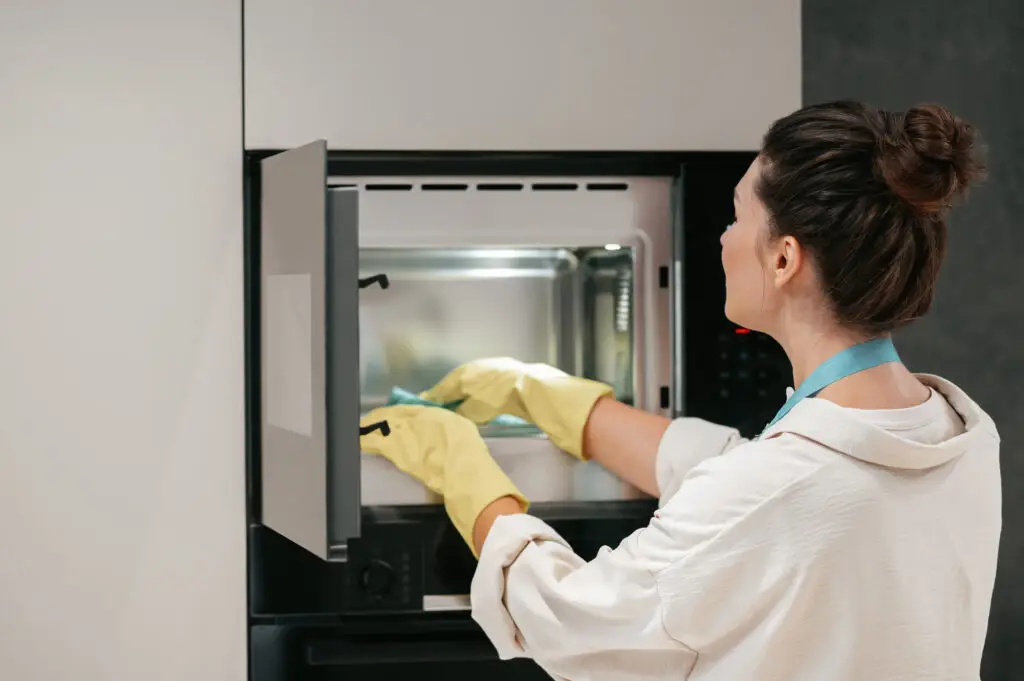
The microwave oven is an essential kitchen tool, but frequent use often leads to stubborn, splattered messes and unpleasant odors. Cleaning it doesn’t require harsh chemicals. Distilled white vinegar provides a natural, effective, and powerful solution using steam to lift even the toughest grime.
Why Use Vinegar for Microwave Cleaning
Vinegar is a versatile, non-toxic cleaner that excels in this application thanks to its acidic properties and deodorizing capabilities.
Eco-friendly and Deodorizing
Distilled white vinegar is a biodegradable and environmentally safe alternative to commercial chemical cleaners. It contains acetic acid, which effectively neutralizes strong, lingering odors (like burnt popcorn or old food smells) instead of just masking them. When steamed inside the microwave, the resulting vapor sanitizes the interior surfaces.
Dissolves Grease and Stuck-On Food
The heat combined with the acetic acid creates a powerhouse cleaning agent.
- Steam Power: Heating the vinegar solution creates intense steam, which softens and liquefies hardened food residue and grease.
- Acidic Action: The vinegar’s mild acidity helps break down and dissolve mineral deposits, grease films, and tough, sticky splatters, making them easy to wipe away without intense scrubbing.
What You’ll Need
Gathering these three simple items is all the preparation required for this cleaning method.
White Vinegar, Water, and a Microwave-Safe Bowl
| Item | Specification | Why It’s Needed |
| White Vinegar | Distilled white vinegar (standard household type). | The active ingredient for dissolving grime and deodorizing. |
| Water | Standard tap water. | To create the steam and dilute the vinegar. |
| Microwave-Safe Bowl | Glass measuring cup or ceramic bowl with a wide opening. | To hold the solution and safely heat the liquid. |
| Microfiber Cloths | One for washing, one for drying. | For gentle, non-abrasive wiping. |
Step-by-Step Cleaning Instructions
Follow these steps precisely to leverage the power of steam and acidity for effortless cleaning.
1. Mix Vinegar and Water (1:1 Ratio)
Combine the cleaning agents in the microwave-safe container.
- Pour 1 cup (240 mL) of water into your bowl.
- Add 1 cup (240 mL) of white vinegar to the water. This 1:1 ratio ensures a strong enough concentration of acetic acid to be effective.
- Optional: Remove the glass turntable and set it aside to be washed separately in the sink with warm, soapy water.
2. Heat for 5 Minutes to Loosen Grime
Place the bowl of solution inside the microwave and start the steaming process.
- Set the microwave to run on High Power for 5 minutes.
- The solution will come to a boil, generating dense, acidic steam that will condense on the interior walls and ceiling of the appliance, softening all the baked-on food.
- Crucial Step: Once the 5 minutes are up, do not open the door. Let the bowl sit inside the closed microwave for an additional 10 to 15 minutes. This prolonged exposure to the steam is what allows the toughest grime to loosen completely.
3. Wipe with a Damp Microfiber Cloth
With the grime fully softened, the final step should be virtually effortless.
- Carefully remove the hot bowl (use oven mitts).
- Take a clean, damp microfiber cloth and wipe down the interior walls, ceiling, and door. You will find that most of the food splatters and grease easily slide right off the surfaces.
- Rinse the cloth frequently and wipe again until all residue is gone.
- If you removed the turntable, dry it and replace it.
Tips for Maintenance
A little routine maintenance goes a long way in keeping your microwave fresh and minimizing the need for deep cleaning.
Clean Spills Immediately After Use
As soon as a spill or splatter occurs—especially soups, sauces, or cheese—wipe it up immediately while the spill is still fresh and soft. Waiting even a few minutes allows the residue to cook onto the surface, making removal exponentially harder. Keep a designated kitchen rag or paper towel nearby for quick cleanup.
Repeat Weekly to Prevent Buildup
In high-use households, repeating the vinegar steaming process once per week (or every two weeks) prevents tough stains and persistent odors from ever taking hold. This quick, proactive maintenance requires only a few minutes of microwave time and minimal wiping, ensuring your appliance always looks and smells clean.
FAQs
Can I add lemon for a fresher scent?
Yes, absolutely! Adding citrus, particularly lemon, is a popular and effective way to enhance the deodorizing effect and leave behind a fresh, clean scent. You can slice half a lemon and add it to the vinegar and water solution, or simply use the peel and juice. The citric acid in the lemon also contributes to the cleaning power.
Is vinegar safe for all microwaves?
Yes, vinegar steam cleaning is safe for all standard residential microwaves. The interior lining of a microwave is typically made of plastic, enamel, or stainless steel, none of which are damaged by diluted acetic acid. The key is to never use undiluted, highly concentrated vinegar, as prolonged exposure to strong acid could potentially harm certain seals or finishes over time. The $1:1$ ratio in this guide is perfectly safe and effective.