

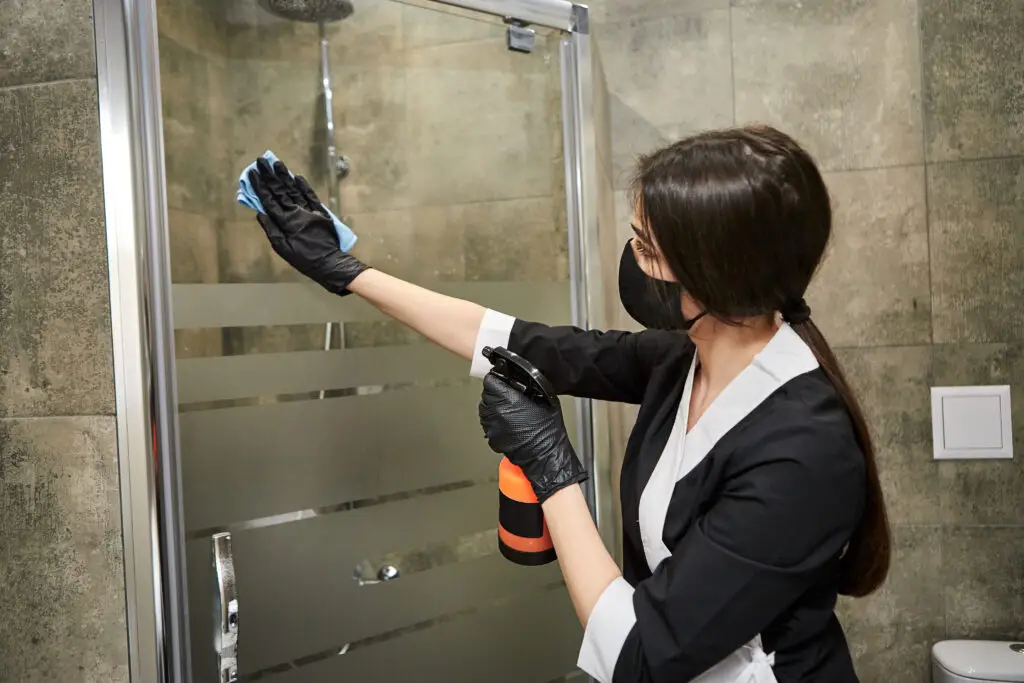
Knowing how to clean glass shower doors the right way can make a bathroom look brighter, fresher, and better maintained. Glass shower doors collect soap scum, hard water spots, body oils, shampoo residue, and mineral buildup every time the shower is used.
This guide explains how to clean glass shower doors safely at home, which products work for different types of buildup, what mistakes to avoid, and how to keep the glass clear for longer. The focus is DIY cleaning, not replacing damaged glass or treating severe etching caused by long-term mineral damage.
What is the best way to clean glass shower doors?
The best way to clean glass shower doors is to loosen soap scum with a surface-safe cleaner, scrub gently with a non-scratch sponge, rinse well, and dry the glass with a microfiber cloth or squeegee. For hard water spots, use a glass-safe acidic cleaner only if it is safe for the surrounding materials.
For daily maintenance, the most effective habit is to squeegee the glass after each shower. This removes water before minerals and soap residue dry on the surface.
Why glass shower doors get cloudy
Glass shower doors get cloudy because water, soap, minerals, and body products dry on the surface. Over time, these layers create a dull film that regular rinsing does not remove.
The most common causes are:
- Soap scum from bar soap and body wash
- Hard water minerals, especially calcium and magnesium
- Shampoo and conditioner residue
- Body oils and skincare products
- Shaving cream residue
- Poor ventilation
- Water left to dry on the glass
- Infrequent cleaning
- Cleaner residue that was not rinsed well
Professional cleaners often see shower glass that looks permanently cloudy but improves once soap scum and mineral buildup are treated separately. The key is knowing whether the marks are on the surface or etched into the glass.
Soap scum vs hard water stains
Soap scum and hard water stains can look similar, but they are not the same problem. Understanding the difference helps you choose the right cleaning method.
Soap scum is a filmy residue created when soap mixes with minerals in water, body oils, and dirt. It often feels waxy or greasy. It may look white, gray, or cloudy.
Hard water stains are mineral deposits left behind when water dries on the glass. They often look like white spots, rings, or cloudy patches. They can be harder to remove if they sit for a long time.
A good cleaning routine often needs two steps:
- Remove soap and body product residue.
- Treat mineral spots after the film is gone.
If you only use a glass cleaner on heavy soap scum, the door may still look cloudy. If you only scrub hard water spots without loosening the minerals, you may scratch the surface or waste time.
Tools and supplies you need
You do not need complicated tools to clean shower glass. The best tools are gentle, non-scratch, and easy to rinse.
Useful supplies include:
- Microfiber cloths
- Non-scratch sponge
- Spray bottle
- Squeegee
- Soft-bristle brush
- Mild dish soap
- White vinegar, if safe for nearby surfaces
- Baking soda for paste cleaning
- Commercial glass shower cleaner
- Glass-safe hard water remover
- Gloves
- Towels for the floor
- Clean water for rinsing
Avoid using rough scouring pads, metal tools, or abrasive powders unless the product label clearly says they are safe for glass shower doors.
How to clean glass shower doors step by step
To clean glass shower doors well, remove loose residue first, treat buildup by type, rinse thoroughly, and dry the glass completely. Drying is just as important as washing because water left behind can create new spots.
1. Ventilate the bathroom
Open a window, turn on the exhaust fan, or leave the bathroom door open. Good airflow helps reduce fumes and moisture while cleaning.
The CDC recommends following product labels and using cleaning products safely, especially when ventilation is needed. This is important in small bathrooms where sprays can linger in the air. Review the CDC guidance on cleaning and disinfecting your home: https://www.cdc.gov/hygiene/about/when-and-how-to-clean-and-disinfect-your-home.html
2. Rinse the glass with warm water
Rinse the shower doors with warm water to loosen surface residue. This helps soften soap film and makes the cleaner work more evenly.
If the glass is very dry and cloudy, let warm water run over it for a few minutes before applying cleaner.
3. Apply a soap scum cleaner
Spray a bathroom-safe cleaner on the glass. For light buildup, a mix of mild dish soap and warm water may be enough. For heavier soap scum, use a product made for shower glass or bathroom surfaces.
Let the cleaner sit for the time recommended on the label. Do not let it dry on the glass.
4. Scrub with a non-scratch sponge
Use a non-scratch sponge or microfiber cloth to scrub the glass in small sections. Focus on the lower half of the door, where soap scum and water spots often build up the most.
Use gentle pressure. Heavy force is not always better and can damage coatings or surrounding trim.
5. Treat hard water spots
If white mineral spots remain after removing soap scum, treat them separately. Use a glass-safe hard water remover or a vinegar solution if it is safe for the surrounding materials.
Do not use vinegar on natural stone, some metal finishes, or surfaces that may be damaged by acid. If the shower has marble, limestone, travertine, or other sensitive stone nearby, avoid acidic cleaners and use a product approved for those materials.
6. Rinse thoroughly
Rinse the glass well with clean water. Cleaner residue can leave streaks, dullness, or a sticky finish.
Pay attention to:
- Door edges
- Handles
- Bottom tracks
- Hinges
- Corners
- Overlapping glass panels
Residue often hides around these areas.
7. Dry with a squeegee and microfiber cloth
Use a squeegee from top to bottom. Then buff the glass with a clean microfiber cloth.
This final drying step helps prevent streaks and new water spots. It also gives the glass a clearer finish.
How to clean shower door tracks
Shower door tracks collect soap scum, hair, mineral deposits, and standing water. Even if the glass looks clean, dirty tracks can make the shower smell or look neglected.
To clean shower door tracks:
- Remove loose hair and debris.
- Spray a mild bathroom cleaner into the track.
- Let it sit briefly, but do not let it dry.
- Scrub with a small brush.
- Rinse with a small cup of water or damp cloth.
- Dry the track completely.
If the track holds standing water often, check whether the drain holes are blocked. Do not force sharp tools into the track. You can damage the frame or seal.
How to clean shower door handles and hinges
Handles and hinges collect fingerprints, soap residue, minerals, and cleaner overspray. They need gentle cleaning because finishes can scratch or tarnish.
Use a damp microfiber cloth with mild soap. For tight areas, use a soft brush. Dry the hardware immediately after cleaning.
Avoid harsh chemicals on:
- Brushed nickel
- Brass
- Matte black finishes
- Oil-rubbed bronze
- Coated metal hardware
If a cleaner is made for glass, it may not be safe for the metal around the glass. Always check the product label.
Common mistakes when cleaning glass shower doors
Many glass shower door problems come from using the wrong product or skipping the drying step. A clean door can become streaky again if residue or water is left behind.
Avoid these mistakes:
- Using abrasive pads on glass
- Mixing bleach with vinegar or ammonia
- Letting cleaner dry on the surface
- Using vinegar near natural stone
- Scrubbing metal finishes with harsh tools
- Ignoring the bottom track
- Cleaning glass but not rinsing well
- Leaving the door wet after cleaning
- Using the same dirty cloth for the whole door
- Treating etched glass like normal soap scum
- Spraying cleaner without ventilation
- Using toilet bowl cleaner on shower glass
The CDC notes that cleaning alone is enough in many routine situations, while disinfecting is more relevant when someone has been sick or there is a specific contamination concern. For shower glass, the main goal is usually removing residue, not disinfecting the glass every day.
How often should you clean glass shower doors?
You should clean glass shower doors lightly after each shower and deep clean them once a week or every two weeks, depending on water hardness and shower use. Daily drying prevents buildup from becoming difficult to remove.
A practical schedule looks like this:
- After each shower: Use a squeegee to remove water.
- Two to three times per week: Wipe handles and lower glass if buildup appears.
- Weekly: Clean the glass with a mild bathroom cleaner.
- Every two weeks: Scrub tracks, handles, hinges, and edges.
- Monthly: Treat hard water spots if needed.
- Immediately: Clean visible soap scum, pink residue, or heavy mineral spots.
Homes with hard water, poor ventilation, or frequent shower use may need more frequent cleaning.
Signs your shower doors need deeper cleaning
Glass shower doors may need deeper cleaning when regular wiping no longer restores clarity.
Look for these signs:
- Cloudy film that returns quickly
- White spots that do not rinse away
- Waxy soap scum on the lower glass
- Rough texture when you touch the glass
- Streaks after cleaning
- Buildup around handles or hinges
- Dirty or smelly door tracks
- Pink or orange residue near edges
- Water spots that remain after drying
- Glass that looks dull even after cleaning
If the glass feels rough after cleaning, mineral deposits may still be present. If the glass looks cloudy even after removing residue, the surface may be etched.
What if the glass is etched?
Etching happens when minerals sit on glass for a long time and affect the surface. It can look like permanent cloudiness or spots that do not come off with normal cleaning.
Cleaning can remove buildup on top of the glass, but it cannot always reverse etching. In some cases, polishing or professional restoration may help. In severe cases, the damage may be permanent.
Signs of possible etching include:
- Spots that remain after hard water treatment
- Cloudiness that does not change after cleaning
- Rough or uneven texture
- Older doors with years of mineral buildup
- Areas directly under frequent water spray
This is why prevention matters. Squeegeeing the glass after each shower is simple, but it can reduce long-term mineral damage.
How to prevent soap scum and water spots
Prevention is easier than heavy scrubbing. The best way to keep shower glass clear is to remove water and soap residue before they dry.
Use these habits:
- Squeegee the glass after each shower.
- Keep a microfiber cloth near the shower.
- Use the bathroom fan during and after showers.
- Leave the shower door open for airflow.
- Rinse heavy soap residue before leaving the shower.
- Clean the lower glass weekly.
- Avoid letting shampoo and conditioner dry on the door.
- Use a drain-safe shower routine to reduce standing water.
- Treat hard water spots early.
- Consider a water softener if hard water is severe.
A daily squeegee routine takes less than a minute and can prevent most visible buildup.
Best cleaner options for different shower door problems
Different glass shower door problems need different cleaning methods. Choose the cleaner based on the buildup, not just the surface.
| Problem | Best approach |
|---|---|
| Light water spots | Squeegee, microfiber cloth, mild glass cleaner |
| Soap scum | Bathroom cleaner or mild dish soap solution |
| Hard water stains | Glass-safe mineral remover or safe vinegar method |
| Greasy film | Mild dish soap and warm water |
| Streaks | Rinse better and dry with microfiber |
| Dirty tracks | Small brush, mild cleaner, full drying |
| Hardware buildup | Mild soap, soft cloth, immediate drying |
| Possible etching | Try mineral removal, then consider professional advice |
The EPA Safer Choice program can help consumers identify cleaning products that meet safer ingredient criteria while still performing effectively. You can explore the EPA Safer Choice program here: https://www.epa.gov/saferchoice
Real cleaning scenarios professionals often see
In recurring cleaning appointments, glass shower doors often look cloudy because water dries on the surface every day. The glass may not be very dirty yet, but it needs regular rinsing and drying to stay clear.
In deep bathroom cleaning, the lower half of the glass usually needs the most work. Soap scum collects where water, body wash, shampoo, and minerals run down the door.
In homes with hard water, even clean showers can develop white mineral spots quickly. The best results usually come from removing soap scum first, then treating mineral deposits separately.
In move-in or move-out cleaning, shower doors often need extra detail because old buildup makes the entire bathroom feel less clean. Tracks, hinges, and handles are especially important because they show whether the shower was cleaned carefully.
These real situations show why a specific guide is useful. Glass shower doors need their own cleaning method, not just a quick bathroom wipe-down.
DIY cleaning vs professional bathroom cleaning
This guide explains how to clean glass shower doors as a DIY task. It is useful for regular maintenance, light soap scum, mild hard water spots, and weekly upkeep.
Professional bathroom cleaning may be a better option when:
- The shower has heavy buildup.
- The glass has not been cleaned in months.
- Tracks are full of residue.
- The whole bathroom needs a reset.
- You are preparing for guests.
- You are moving in or moving out.
- You want the shower, sink, toilet, floor, and vanity cleaned together.
DIY cleaning keeps shower glass clear between deeper cleanings. Professional cleaning helps when the entire bathroom needs detailed attention.
Glass shower door cleaning checklist
Use this checklist when your shower doors look cloudy or streaky:
- Ventilate the bathroom.
- Rinse the glass with warm water.
- Apply a surface-safe cleaner.
- Let the cleaner sit briefly, following the label.
- Scrub with a non-scratch sponge.
- Treat hard water spots separately.
- Rinse the glass thoroughly.
- Clean tracks, handles, and hinges.
- Squeegee from top to bottom.
- Buff with a dry microfiber cloth.
- Leave the shower open for airflow.
- Repeat weekly or as needed.
This process helps remove buildup without damaging glass, hardware, or nearby surfaces.
FAQ about how to clean glass shower doors
What is the easiest way to clean glass shower doors?
The easiest way to clean glass shower doors is to spray a bathroom-safe cleaner, let it sit briefly, scrub with a non-scratch sponge, rinse well, and dry with a squeegee and microfiber cloth.
Can I use vinegar on glass shower doors?
You can use vinegar on many glass shower doors, but only if it is safe for the surrounding materials. Do not use vinegar near natural stone, sensitive metal finishes, or surfaces that may be damaged by acid.
How do I remove hard water stains from shower glass?
Remove soap scum first, then treat hard water stains with a glass-safe mineral remover or a safe vinegar method. Rinse well and dry completely to prevent new spots.
Why do my glass shower doors still look cloudy after cleaning?
They may still have mineral deposits, cleaner residue, or soap scum. If the cloudiness does not change after proper cleaning, the glass may be etched from long-term mineral exposure.
How often should I clean glass shower doors?
Use a squeegee after each shower and clean the glass weekly. If your home has hard water or the shower is used often, clean the doors more frequently.
What should I avoid using on glass shower doors?
Avoid abrasive pads, metal scrapers, toilet bowl cleaner, harsh chemicals not meant for glass, and any product that can damage nearby stone, seals, or hardware.
How do I keep shower doors clear longer?
Squeegee after each shower, improve ventilation, rinse heavy soap residue, dry the glass, and clean the lower section weekly. These habits reduce soap scum and water spots.
When should I call a professional cleaner?
Call a professional cleaner when the shower has heavy buildup, dirty tracks, recurring stains, or when the entire bathroom needs a detailed cleaning reset.
Keep shower glass clear with simple weekly care
Clean glass shower doors make the whole bathroom feel brighter and better cared for. The most important habits are simple: remove water after each shower, clean soap scum before it hardens, treat hard water spots early, and avoid products that can damage glass, stone, hardware, or seals.
If your shower doors have heavy buildup, cloudy glass, dirty tracks, or the whole bathroom needs a deeper reset, Maid Cleaning For You can help with detailed bathroom cleaning that covers the areas often missed during regular upkeep.