

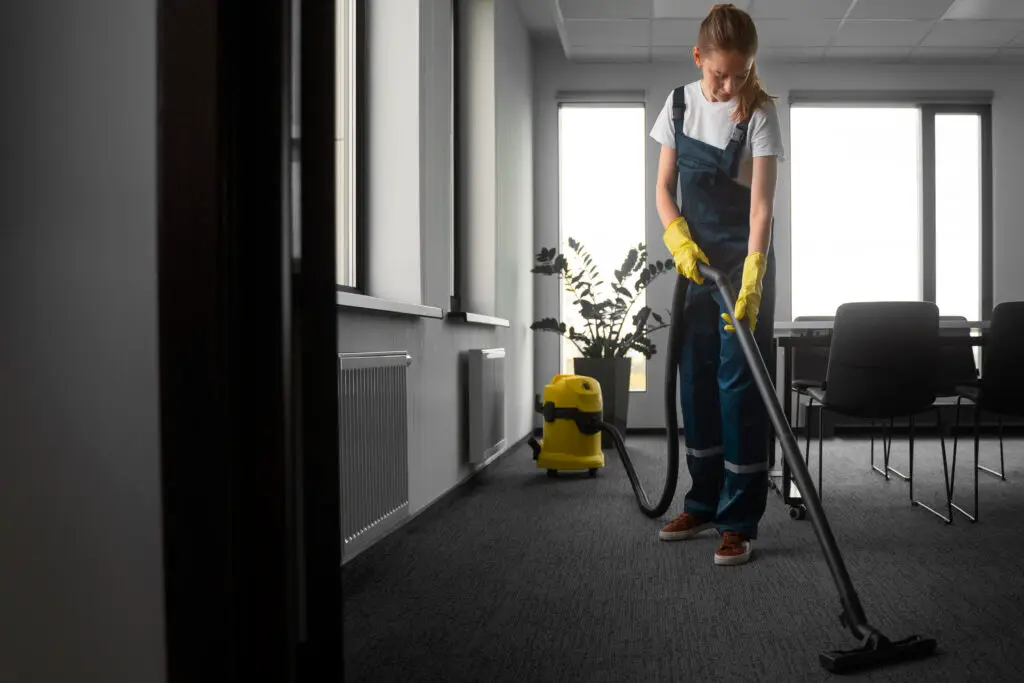
Office carpets absorb a lot more than they show. Every step tracks in dirt, dust, and small spills that settle deep into the fibers long before any stain becomes visible on the surface. Left alone too long, that buildup affects air quality, appearance, and how long the carpet actually lasts.
So how often should office carpets be cleaned? The honest answer depends on traffic, allergies, and how the space is used, but there are clear guidelines that apply to almost any office. This guide breaks down the right schedule for different situations and the warning signs that mean it is time to clean sooner.
In South Florida, that schedule often needs to account for humidity too. Damp air slows drying time after any kind of cleaning, which can turn a routine maintenance task into a bigger problem if carpets stay wet longer than expected.
Quick answer: Most offices need carpets vacuumed daily in high-traffic areas, with a full professional cleaning every three to six months depending on foot traffic and allergy concerns. Low-traffic spaces, such as private offices, can often wait up to a year between deep cleanings.
What decides how often office carpets should be cleaned
There is no single number that fits every workplace. Several factors shift the ideal schedule up or down, and most offices end up with a mix of these factors rather than just one.
- Foot traffic. Entryways, hallways, and breakrooms collect dirt far faster than private offices or storage rooms.
- Allergies and respiratory conditions. If employees or visitors deal with asthma or allergies, carpets need more frequent attention to keep dust mites and pollen from building up.
- Spills and stains. Breakrooms and kitchenette areas need more regular cleaning to prevent food and drink stains from setting in.
- Local climate. South Florida’s humidity and frequent rain track in more moisture, which means carpets near entrances dry slower and collect more grime between cleanings.
- Number of people in the space. More employees and visitors naturally means more dirt and debris moving through the office each day.
- Pets in the workplace. Offices that allow pets need extra cleaning to manage fur, dander, and the occasional accident.
- Industry type. Medical offices and food service businesses usually need a tighter schedule than a typical general office.
How often should office carpets be cleaned by traffic level
This is the part most office managers want a direct answer to, so here is a practical breakdown by traffic level.
High-traffic areas (lobbies, hallways, breakrooms):
- Vacuum daily.
- Schedule a full professional cleaning every three months.
- In especially busy zones, a targeted monthly clean can help control the buildup between full services.
Medium-traffic areas (private offices, smaller conference rooms):
- Vacuum weekly.
- Schedule a professional deep clean about every six months.
Low-traffic areas (executive offices, storage rooms):
- Vacuum monthly.
- A professional clean once a year is usually enough to keep the carpet in good shape.
Professional cleaners who service offices regularly tend to recommend scheduling the next clean before the carpet looks dirty, not after. By the time soiling is visible, the fibers are often holding far more dust and allergens than most people expect.
How professional cleaners decide it’s time for a deeper clean
Experienced cleaning crews rarely rely on the calendar alone. They look at a few practical signals during routine visits to decide whether an office needs its professional cleaning moved up.
- The texture test. Running a hand across the carpet and feeling grit underneath usually means embedded soil has built up past what a vacuum can remove.
- The color check. Comparing a high-traffic path to a corner that rarely gets walked on shows how much dulling has already happened, even if no one noticed day to day.
- The smell test. A faint musty smell near entrances often points to moisture sitting in the carpet longer than it should, which is common after a humid season.
- Wear pattern mapping. Crews who service the same office repeatedly track which zones wear down fastest, so the schedule can be adjusted for those specific areas instead of treating the whole floor the same way.
These checks are why a carpet that “looks fine” on a quick glance can still be due for a professional clean, and why a fixed yearly schedule does not always match what is actually happening in the fibers.
Why a consistent carpet cleaning schedule matters
A clean carpet does more than look good. It supports a healthier and more comfortable workplace in several practical ways.
- Better indoor air quality. Carpets trap dust, pollen, and other particles, and routine cleaning removes them before they recirculate through the air. The EPA recommends vacuuming carpets weekly or more often as part of reducing indoor dust and allergens.
- Fewer allergy triggers. Regular cleaning lowers the amount of dust mites and dander that can aggravate allergies and asthma.
- Mold prevention. Drying carpets quickly after cleaning or spills helps stop mold and mildew from taking hold, which is especially important in humid coastal climates.
- A stronger first impression. Clean carpets make a noticeable difference to clients and visitors walking through the door.
- A longer carpet lifespan. Dirt particles act like sandpaper on carpet fibers, so removing them regularly helps the carpet keep its color and texture for longer.
- Less odor. Trapped moisture and debris are common sources of musty smells, and cleaning removes the source rather than just masking it.
Daily, weekly, and monthly maintenance between deep cleans
Professional cleaning handles the deep buildup, but daily habits keep the carpet in better shape between visits, and they often determine how far the carpet can stretch before it actually needs a professional clean.
- Vacuum high-traffic areas every day, focusing on entryways and hallways where dirt collects fastest.
- Blot spills immediately instead of rubbing them, since rubbing pushes the stain deeper into the fibers.
- Vacuum the whole office weekly, including under desks and around furniture legs.
- Check for new stains weekly so they can be treated before they set.
- Move light furniture monthly to vacuum the areas underneath that get skipped during quick cleanings.
- Inspect wear patterns monthly and flag any areas that may need extra attention at the next professional cleaning.
Common mistakes that shorten a carpet’s life
A few habits make carpets look worse faster, even with a regular cleaning schedule in place.
- Waiting until the carpet looks dirty. By that point, it is already holding a significant amount of embedded grit.
- Rubbing instead of blotting spills. This spreads the stain and pushes it deeper into the padding.
- Skipping the vacuum before a professional clean. Loose debris should be removed first so the deep clean can focus on embedded soil.
- Over-wetting carpets during cleaning. Excess moisture that does not dry quickly can lead to mold growth in the padding underneath.
- Ignoring low-traffic rooms entirely. Even rarely used spaces collect dust over time and need an occasional clean.
Signs your office carpet needs cleaning sooner
Between scheduled cleanings, watch for these signals that it is time to move up the next service.
- Noticeable dust that returns within days of vacuuming
- A musty or stale smell, especially near entrances or windows
- Visible traffic lanes or flattened, matted fibers
- Increased sneezing or allergy symptoms among employees
- Stains that linger after a quick spot treatment
When to clean vs. when to replace office carpet
Cleaning solves most problems, but there comes a point when replacement makes more sense.
Clean when:
- Soiling is mostly on the surface or lightly embedded.
- Stains are recent and limited to a small area.
- The carpet looks dull but the fibers are still intact.
Replace when:
- The pile is matted, torn, or worn through in spots.
- A strong odor persists even after professional cleaning, which can point to mold in the padding.
- Large areas show permanent staining from old spills or chemical damage.
- The carpet has experienced significant water damage with visible mold growth.
Frequently asked questions about office carpet cleaning frequency
How often should office carpets be cleaned in a small business? A small office with light foot traffic can usually manage with a professional clean once or twice a year, paired with regular vacuuming in between.
Does carpet cleaning frequency change in humid climates like South Florida? Yes. Higher humidity slows drying time after cleaning or spills, which can encourage mold and odor if carpets stay damp too long. Offices in humid areas often benefit from slightly more frequent cleaning near entrances and windows.
Can vacuuming alone replace professional carpet cleaning? No. Vacuuming removes surface dust and debris, but it cannot reach the soil and allergens embedded deep in the fibers. A periodic professional clean is still necessary for full indoor air quality benefits.
What is the best method for office carpet cleaning? Hot water extraction is the most common professional method because it removes embedded dirt while controlling moisture levels, which helps the carpet dry faster afterward.
Is it normal for a carpet to look fine but still need cleaning? Yes. Dirt and allergens build up well before they become visible, which is why scheduling cleanings on a calendar, rather than waiting for visible soiling, gives better results.
Does the type of carpet affect cleaning frequency? Yes. Looped, low-pile carpets tend to show dirt and resist soiling longer than thick, cut-pile carpets, which can trap more debris and may need slightly more frequent attention in high-traffic areas.
Build a carpet cleaning schedule that fits your office
A clean office carpet says a lot about how a business takes care of its space and the people in it. Matching the cleaning schedule to actual foot traffic, allergy needs, and local humidity makes a bigger difference than following a generic rule of thumb, and it tends to cost less in the long run than waiting until the carpet needs replacing.
If building and sticking to that schedule feels like one more thing on a long list, Maid Cleaning For You’s office cleaning service can take it off your plate with a routine built around how your space is actually used. For carpets that need a deeper refresh right now, the deep cleaning service targets the embedded dirt that everyday vacuuming leaves behind, and the house cleaning troubleshooting guides cover more tips for handling stains and odors around the office.
Ready for a carpet cleaning schedule that actually works for your office? Get a free quote from Maid Cleaning For You and let a trusted local team build a plan around your space.