

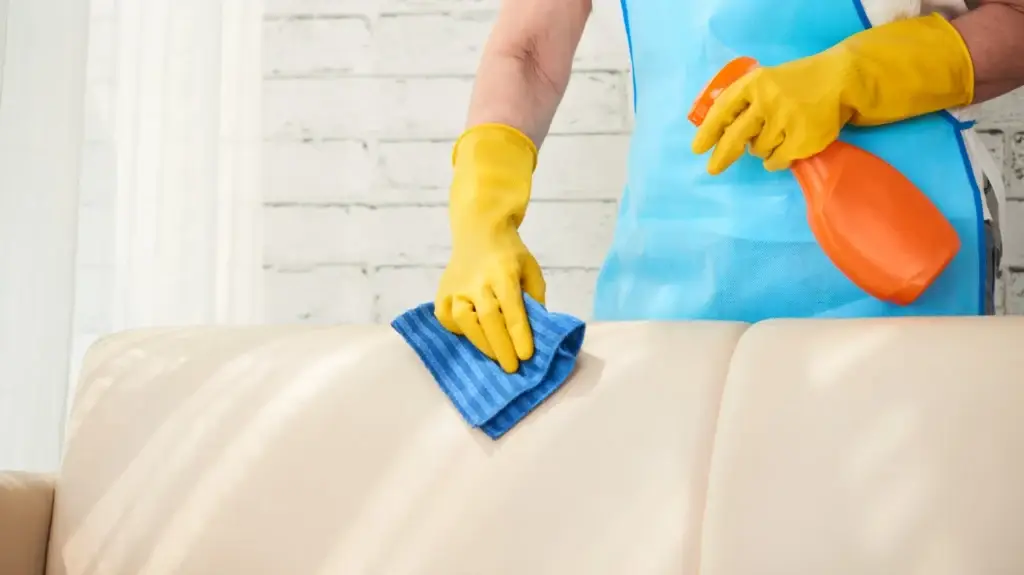
Your couch is one of the most used pieces of furniture in your home. Families sit on it daily, pets curl up on it, snacks get eaten on it, and sometimes people sleep on it. All of that use adds up in ways that are not always visible. Dust mites, pet dander, food particles, body oils, and sweat accumulate deep in the upholstery over time, long before any stain appears on the surface.
Learning how to clean a couch properly depends on what it is made of. Fabric, leather, and microfiber all respond to different cleaning methods, and using the wrong product on any of them can cause permanent damage. This guide covers each material with step-by-step instructions so you can clean your couch safely and effectively.
Step one: check the cleaning code
Before applying any product or moisture, check the tag on the cushions or beneath the frame. Most upholstered furniture includes a cleaning code:
- W: Water-based cleaners are safe
- S: Solvent-based cleaners only, no water
- W/S: Either water or solvent-based cleaners are safe
- X: Vacuum only, no liquid cleaners of any kind
This code is the most important piece of information for cleaning your couch safely. Using water on an S-coded couch can cause water rings, staining, or fabric shrinkage that cannot be undone.
How to clean fabric couches
Fabric is the most common couch material and also the most variable. The term covers polyester blends, cotton, linen, and velvet, each with slightly different requirements.
Vacuum first. Remove all cushions and vacuum the entire couch, including the back, sides, and underneath the cushions. Use the crevice tool for seams and gaps. This removes a significant amount of dry debris before any liquid is introduced, which matters because wetting debris pushes it further into the fabric.
Deodorize with baking soda. Sprinkle a light, even layer over the cushions and the main couch surface. Leave it for at least 20 minutes, or up to an hour. In South Florida, where humidity causes upholstery to develop a stale smell more quickly, this step is especially valuable. Baking soda absorbs odors and moisture without adding any chemical residue.
Vacuum the baking soda away. After the baking soda has had time to work, vacuum it up thoroughly with the upholstery attachment.
Spot-clean stains. Mix a small amount of dish soap with warm water and dampen a clean white cloth. Blot stains gently rather than rubbing. Work from the outside edge inward to prevent spreading.
Allow to dry. After spot-cleaning, allow the fabric to dry completely before using the couch or replacing cushions.
How to clean a fabric couch with baking soda and vinegar
For a deeper clean on W-coded fabric, mix one teaspoon of dish soap, one tablespoon of white vinegar, and one cup of warm water. Apply with a clean cloth, blotting gently. The mild acidity of the vinegar helps cut through oils and odors. Rinse by blotting with a cloth dampened with plain water, then allow to dry fully.
Test this mixture on a hidden area first. Vinegar can affect some fabric dyes, particularly on older or lower-quality upholstery.
How to clean leather couches
Leather requires a different approach than fabric. Because leather is a natural material, it can dry out, crack, and stain when the wrong cleaners are used.
Vacuum gently. Use the soft brush attachment to vacuum the surface. This removes dust and crumbs without scratching. Focus on seams and crevices where debris accumulates.
Wipe with a damp cloth. Dampen a soft cloth with clean water and wipe the entire surface. Use very little moisture. Because leather absorbs water, a wet cloth can leave water marks or cause the leather to stiffen.
Clean stains. For everyday grime, a few drops of mild dish soap in warm water on a soft cloth is sufficient. Wipe gently, then follow with a clean, damp cloth to remove soap residue.
For persistent stains, a dedicated leather cleaner is a better choice than DIY solutions. These products are pH-balanced for leather and contain conditioning agents that protect the material during cleaning.
Condition the leather. After cleaning, apply a leather conditioner to restore moisture and flexibility. In South Florida, where air conditioning and low-humidity interiors can dry out leather, conditioning every two to three months is a worthwhile habit.
Avoid: Alcohol, bleach, ammonia, and silicone-based products. These strip leather’s natural oils and lead to drying, cracking, and discoloration over time.
How to clean microfiber couches
Microfiber is popular because it is soft, durable, and stain-resistant. However, cleaning it incorrectly, particularly using water on an S-coded microfiber couch, can leave permanent water rings that are difficult or impossible to remove.
Check the cleaning code first. Many microfiber couches are S-coded, which means water is not appropriate regardless of how gentle the application.
Vacuum thoroughly. Remove cushions and vacuum all surfaces with the upholstery attachment.
For S-coded microfiber: Fill a spray bottle with rubbing alcohol. Spray lightly onto the surface and immediately scrub with a clean white bristle brush. The alcohol dries quickly without leaving water rings. As it dries, the fibers lift and the fabric refreshes. Brush in one direction to restore the nap.
For W-coded microfiber: Use the fabric cleaning method described above with a mild soap and water solution, applied sparingly.
Allow to dry. Microfiber dries relatively quickly with rubbing alcohol. Once fully dry, brush the surface again to restore the texture.
How to remove pet stains from a couch
Pet stains require an enzyme cleaner, regardless of the couch material (use a leather-safe enzyme product on leather). Standard cleaners cannot fully break down uric acid crystals, so odor returns even after the stain appears clean.
Blot as much of the stain as possible immediately. Apply the enzyme cleaner according to the product instructions and allow it to sit for the specified time. Then blot up the cleaner and allow the area to dry fully.
Avoid steam cleaning pet stains before using an enzyme cleaner. Heat permanently sets the stain and the odor becomes extremely difficult to remove afterward.
How often should you clean your couch?
A light clean every two to four weeks combined with a deeper clean every three to six months maintains most couches in good condition. Households with pets, children, or heavy daily use benefit from more frequent attention.
In South Florida, where humidity encourages dust mites and mold in upholstery, regular vacuuming and occasional baking soda treatment are particularly valuable habits regardless of visible soiling.
Beyond the couch
Your couch is one of the larger fabric surfaces in your home, but it is not the only one. Curtains, area rugs, and upholstered chairs all accumulate similar types of buildup over time and benefit from the same regular attention.
If managing upholstery cleaning across the home is more than your current schedule allows, a deep cleaning service that includes thorough attention to fabric surfaces and floors can make a meaningful difference in how the whole space looks and feels.
For more guidance on specific stain types or fabric surfaces, the house cleaning troubleshooting guides offer practical, targeted advice for common household scenarios.
A clean couch changes how your living room feels
Knowing how to clean a couch properly makes a real difference in the comfort and hygiene of your living space. Whether your couch is fabric, leather, or microfiber, the right method restores its appearance and extends its life.
Vacuum regularly, address stains promptly, and schedule a deeper clean a few times a year. With the correct products for your specific material, your couch stays looking and smelling fresh throughout the year without requiring more time or effort than the job actually needs.