

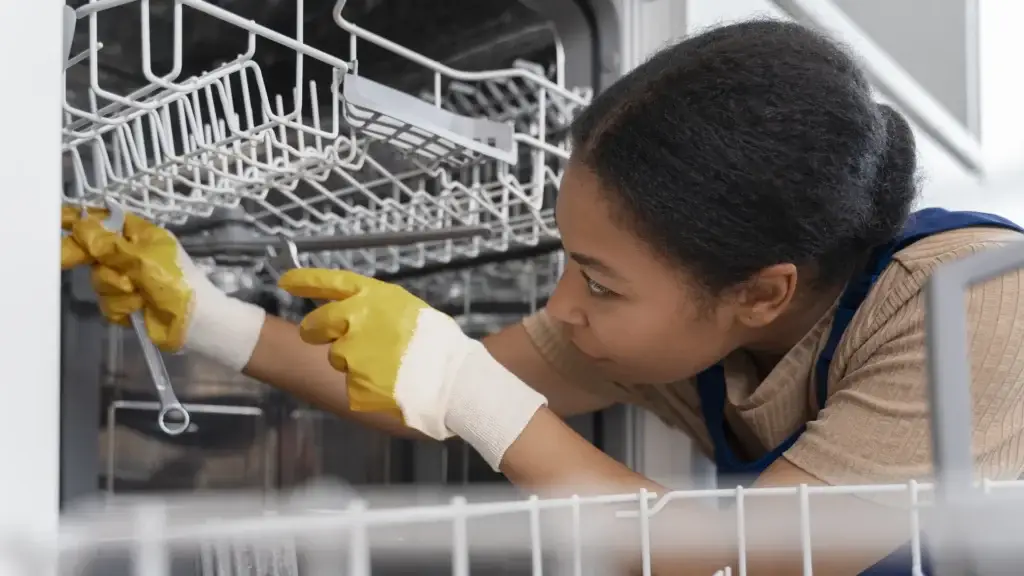
Your dishwasher works hard every day, but when was the last time you actually cleaned it? If dishes are coming out cloudy, spotted, or smelling off, the appliance itself is likely overdue for a proper clean. The best way to clean a dishwasher is not complicated, but it does require the right steps in the right order — and most guides skip at least one of them.
In South Florida, hard water accelerates buildup inside the machine significantly faster than in most other regions. Calcium and limescale coat the interior walls, the heating element, and the filter long before any visible signs appear. A consistent monthly routine keeps the dishwasher running at full capacity and your dishes genuinely clean rather than just rinsed.
What causes a dishwasher to stop cleaning well?
Before jumping into the steps, it helps to understand what actually goes wrong inside the machine. Dishwasher performance declines for a few predictable reasons.
- Clogged filter: The filter traps food particles so they do not recirculate onto dishes. When it fills up and is never cleaned, water cannot drain efficiently, and debris ends up back on the dishes you are trying to clean.
- Blocked spray arms: The rotating arms that distribute water have small holes that get clogged with mineral deposits and food fragments. When the holes narrow, water pressure drops and coverage becomes uneven.
- Mineral scale on the heating element: Hard water leaves calcium deposits on the heating element, which reduces its efficiency. Water heats more slowly, reaches lower temperatures, and does a worse job dissolving detergent and cutting through grease.
- Mold and bacteria in the gasket: The rubber door seal collects food residue and moisture in its folds. In South Florida’s humidity, mold grows there quickly and contributes to persistent dishwasher odor.
Understanding which of these is affecting your machine tells you where to focus your cleaning effort.
What you need before you start
- White vinegar (distilled, not apple cider)
- Baking soda
- A soft brush or old toothbrush
- A microfiber cloth
- Dish soap
- A toothpick or thin wire for clearing spray arm holes
These are all you need for a thorough clean. No commercial dishwasher cleaning tablets are required, though they can work as a monthly maintenance shortcut if you prefer them.
Step 1: Remove and clean the filter
Pull out the bottom rack and locate the filter assembly at the base of the dishwasher. On most models, it consists of a cylindrical filter that twists out and a flat mesh screen beneath it. Remove both.
Rinse both components under warm running water. Use a toothbrush and a drop of dish soap to scrub the mesh and the inside of the cylindrical filter. If the buildup is heavy, soak them in warm soapy water for 10 minutes before scrubbing.
This is the single most important step in the best way to clean a dishwasher. A clogged filter explains the majority of performance complaints, including dishes that come out with visible food residue even after a full cycle. According to appliance manufacturers, filters should be cleaned at least once a month for average household use, and more frequently for daily use.
Step 2: Clear the spray arms
Remove the upper and lower spray arms if your model allows it. Most twist or clip off without tools. Hold each one up to the light and look through the holes. Use a toothpick to clear any that are partially blocked.
Rinse the arms under running water while rotating them so water flushes out any loosened debris from inside. Reinstall them securely before proceeding.
Step 3: Wipe down the door gasket
The rubber seal around the door is one of the most neglected parts of the dishwasher. Food particles and moisture collect in the folds of the gasket and create the conditions for mold growth, which is the primary cause of dishwasher odor.
Dampen a microfiber cloth with undiluted white vinegar. Wipe the full length of the gasket, pressing the cloth into every fold. Work slowly: the areas where the seal curves inward are where buildup concentrates. For visible mold spots, apply the vinegar directly and let it sit for five minutes before wiping.
Step 4: Run a hot vinegar cycle
Place a dishwasher-safe measuring cup or bowl filled with one cup of white vinegar on the top rack. Run the machine on the hottest cycle available with the dishwasher otherwise empty.
White vinegar is mildly acidic, which makes it effective at dissolving calcium and limescale deposits on the interior walls, the heating element, and the spray arm mounts. It also neutralizes odor-causing bacteria. This is the chemical core of the best way to clean a dishwasher for mineral buildup, and it is particularly important in South Florida where municipal water hardness typically ranges between 150 and 350 parts per million.
Do not add detergent during this cycle.
Step 5: Run a baking soda cycle
After the vinegar cycle completes and the dishwasher has cooled slightly, sprinkle one cup of baking soda across the bottom of the machine. Run a short hot cycle.
Baking soda deodorizes residual odors and brightens the interior surface without scratching or leaving harmful residue. Combined with the vinegar cycle, it produces a thorough clean that addresses both mineral scale and bacterial growth.
Step 6: Wipe the exterior
Dampen a microfiber cloth with warm water and wipe down the door panel, handle, and control buttons. For stainless steel finishes, wipe in the direction of the grain to avoid surface marks. A small amount of dish soap on the cloth handles any grease buildup around the handle area.
How often should you clean your dishwasher?
| Component | Frequency |
|---|---|
| Filter | Monthly (every 2 weeks for daily use) |
| Spray arms | Monthly |
| Door gasket | Monthly |
| Vinegar cycle | Monthly |
| Baking soda cycle | Monthly |
| Exterior wipe-down | Weekly |
In South Florida, the hard water environment and year-round humidity make monthly cleaning the practical minimum. Households that run the dishwasher daily, or that notice odor returning within a few weeks of cleaning, benefit from a three-week cycle instead.
Why does my dishwasher still smell after cleaning?
If persistent odor remains after completing all the steps above, check the following.
Drain hose: A kinked or partially clogged drain hose traps standing water that ferments over time. Pull the dishwasher out slightly and inspect the hose for bends or blockages near the connection to the garbage disposal or drain pipe.
Air gap or garbage disposal connection: If your dishwasher drains through a garbage disposal, run the disposal before starting the dishwasher to clear any food trapped at the connection point. A blocked disposal outlet causes dirty water to back up into the dishwasher.
Standing water in the sump: If water consistently remains in the bottom of the dishwasher after a cycle completes, the drain pump or check valve may need professional service.
Common dishwasher cleaning mistakes to avoid
- Using too much detergent: Excess detergent leaves a residue film on dishes and the interior. Follow the manufacturer’s recommendation, especially with concentrated formulas.
- Skipping pre-rinse scraping: You do not need to fully rinse dishes before loading, but large food chunks should be scraped off. They overwhelm the filter quickly.
- Running cold or warm cycles for cleaning: The vinegar and baking soda cycles need hot water to work. Always select the hottest available setting.
- Combining vinegar and baking soda in the same cycle: They neutralize each other. Run them in separate cycles for full effectiveness.
What about commercial dishwasher cleaning tablets?
Tablets like Affresh or Cascade Dishwasher Cleaner work well as a monthly maintenance option if you prefer not to use vinegar and baking soda. They are formulated to descale, deodorize, and clean the interior in a single cycle.
They are not a substitute for cleaning the filter, gasket, and spray arms manually. Tablets clean surfaces but do not dislodge debris from the mechanical components, which is where the most significant performance-affecting buildup occurs.
Best way to clean a dishwasher filter: a closer look
Because the filter is so often overlooked, it is worth addressing in more detail. There are two filter types in common use.
Manual-clean filters, standard on most modern dishwashers, require regular removal and hand washing. If your dishwasher runs quietly, it almost certainly has a manual filter.
Self-cleaning filters, common on older models, use a grinder to dispose of food waste automatically. They produce more noise during operation but require less maintenance.
If you are unsure which type your dishwasher has, check the owner’s manual or look up your model number online. The filter is typically located at the bottom of the dishwasher interior, beneath the lower spray arm.
Habits that keep the dishwasher clean between monthly sessions
A few consistent habits reduce how quickly the machine builds up between full cleaning sessions.
- Leave the door ajar after cycles to allow the interior to air out and dry more completely.
- Scrape food off dishes before loading, but avoid rinsing them completely. Detergent needs some food soil to activate properly.
- Use a rinse aid alongside detergent, especially in hard water areas. Rinse aid prevents water spots and helps dishes and the interior dry more completely, which reduces the moisture that mold and bacteria depend on.
- Wipe the gasket briefly with a dry cloth after the last cycle of the day.
These are low-effort habits that significantly extend the time between full cleaning sessions and reduce odor in between.
The connection between appliance maintenance and kitchen hygiene
A clean dishwasher is one part of a kitchen that maintains genuine hygiene rather than just surface cleanliness. Appliances that go without regular cleaning harbor bacteria and can transfer it to dishes and surfaces. The areas most often missed in routine cleaning — the interior of the dishwasher, the stovetop hood filter, the refrigerator drip tray, and the surfaces behind and beneath appliances — are where bacteria and odors typically originate.
If your kitchen gets a deep clean periodically, that is also a practical moment to run the dishwasher cleaning cycle: the machine is empty, you have products out, and both tasks take similar amounts of time to set up.
For ongoing kitchen upkeep that includes appliance surfaces and the areas around them, a consistent regular cleaning routine focused on accessible surfaces keeps the kitchen functional day to day.
Keep your dishwasher clean and your kitchen running smoothly
The best way to clean a dishwasher comes down to one consistent monthly routine: filter, spray arms, gasket, vinegar cycle, baking soda cycle. The full process takes under 30 minutes and produces a visible improvement in how dishes come out and how the machine smells.
In South Florida’s hard water environment, skipping this routine means faster buildup, stronger odors, and more frequent repair calls. Start this month, set a reminder, and your dishwasher will keep delivering clean results for years longer than it would with no maintenance at all.
Want a kitchen that stays clean between deep cleans? Explore regular cleaning services in South Florida and see how consistent maintenance protects every appliance and surface in your home.