

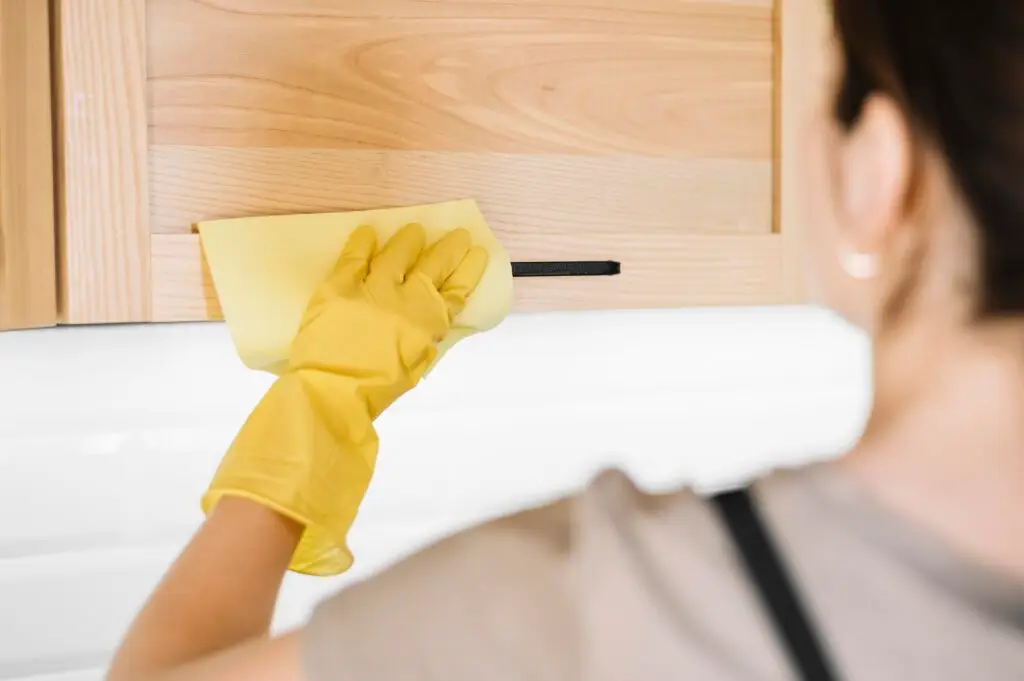
A good bathroom cabinet cleaner routine does more than make the vanity look neat. Bathroom cabinets collect dust, toothpaste splashes, makeup residue, hair products, moisture, and small product spills. Over time, that buildup can leave sticky shelves, dull finishes, musty smells, stains, and surface damage.
The best way to clean bathroom cabinets is to match the cleaner to the cabinet material, remove everything before wiping, use gentle products first, dry every area well, and watch for signs of water damage. This guide explains how to choose a bathroom cabinet cleaner, how to clean different surfaces safely, how often to clean them, and which mistakes to avoid.
What is the best bathroom cabinet cleaner?
The best bathroom cabinet cleaner is a mild, surface-safe cleaner that removes dust, stains, product residue, and moisture buildup without damaging the cabinet finish. For most painted, laminate, sealed wood, or thermofoil cabinets, warm water with a small amount of mild dish soap is the safest routine option.
A stronger product is not always better. Bathroom cabinets are often made with materials that can swell, peel, dull, or stain when exposed to too much water or harsh chemicals. Start with gentle cleaning, then treat specific stains only when needed.
The best bathroom cabinet cleaner depends on the material
A bathroom cabinet cleaner should remove buildup without leaving the surface wet, sticky, or dull. The right product depends on the cabinet material and the type of dirt you need to remove.
Bathroom cabinets are not all the same. A cleaner that works on a laminate vanity may be too harsh for painted wood or sealed surfaces. Before using any product, check the material and test a small hidden area.
Common bathroom cabinet materials include:
- Painted wood: Needs gentle cleaning and careful drying.
- Sealed wood: Can handle light moisture, but should not stay wet.
- Laminate: Usually easier to clean, but edges can swell if water gets inside.
- Thermofoil: Smooth and wipeable, but heat and moisture can loosen the coating.
- MDF: Very sensitive to moisture if the finish is chipped or exposed.
- Metal hardware: Can tarnish or corrode if harsh chemicals sit too long.
For most homes, the safest bathroom cabinet cleaner is a mild soap solution used with a microfiber cloth. Strong disinfectants, abrasive powders, bleach, vinegar, and degreasers should only be used when they are safe for the specific surface.
Why bathroom cabinets get dirty faster than other storage areas
Bathroom cabinets sit in one of the most humid areas of the home. Even when the outside looks clean, the inside can collect spills, product rings, loose powder, hair, lint, and moisture.
Professional cleaners often see the same pattern during bathroom cleaning appointments: the mirror, sink, toilet, and floor get cleaned regularly, but cabinet interiors are skipped because everything has to be removed first. That hidden buildup can become a bigger issue over time.
Bathroom cabinets usually get dirty because of:
- Toothpaste and mouthwash splashes
- Makeup powder and foundation residue
- Hair spray, gel, oil, and styling product buildup
- Leaking bottles
- Damp towels or cloths stored inside
- Dust mixed with bathroom humidity
- Small plumbing leaks under the sink
- Rust rings from cans or metal containers
- Soap residue from hand washing near the vanity
- Skin care products that leave oily marks
- Cleaning products stored without trays or liners
Cabinet cleaning matters because these surfaces touch the products you use every day. It also helps prevent odors, stains, moisture damage, and clutter.
How to choose a bathroom cabinet cleaner by type of dirt
The right bathroom cabinet cleaner also depends on the type of buildup. Not every mark needs the same treatment.
For light dust and daily residue, use a dry microfiber cloth first, then a damp cloth with mild soap. For sticky product buildup, let a damp cloth sit on the spot for a few minutes before wiping. For stains, avoid scrubbing aggressively and treat the area slowly.
Use this simple guide:
| Type of buildup | Best cleaning approach |
|---|---|
| Dust and hair | Vacuum or dry microfiber cloth |
| Toothpaste splashes | Damp cloth with mild soap |
| Sticky product residue | Mild soap, warm water, short dwell time |
| Makeup powder | Dry dusting first, then damp wipe |
| Rust rings | Surface-safe stain treatment, test first |
| Musty smell | Empty cabinet, clean, dry, check for leaks |
| Water stains | Dry area, inspect moisture source, clean gently |
| Greasy product film | Mild soap solution, not harsh degreaser first |
A bathroom cabinet cleaner should solve the problem without creating a new one. If a product requires heavy ventilation, gloves, or long contact time, make sure it is necessary and safe for the cabinet surface.
How to clean bathroom cabinets step by step
A strong bathroom cabinet cleaner routine starts with removing everything from the cabinet. This makes it easier to see stains, leaks, expired products, and sticky residue.
1. Empty the cabinet completely
Take everything out of the cabinet, drawers, and shelves. Place items on a towel or tray while you clean.
As you remove products, check for:
- Expired medication or skincare
- Leaking bottles
- Sticky containers
- Rusted cans
- Damp packaging
- Products you no longer use
- Items stored too close to plumbing
- Loose caps or broken packaging
- Old razors, cotton, or personal care items
This step is important because a cabinet can look organized while still holding old spills or moisture behind bottles.
2. Vacuum or dust before using liquid cleaner
Before applying a bathroom cabinet cleaner, remove dry debris. Use a handheld vacuum, microfiber cloth, or soft brush attachment.
This helps remove:
- Hair
- Dust
- Loose powder
- Cotton fibers
- Dried toothpaste flakes
- Small product caps or packaging pieces
If you spray cleaner directly over dust, it can turn into a muddy residue that is harder to remove.
3. Wipe with a mild cleaner
Mix warm water with a small amount of mild dish soap. Dip a microfiber cloth into the solution, wring it well, and wipe the interior and exterior surfaces.
The cloth should be damp, not dripping. Too much water can damage wood, MDF, seams, and cabinet edges.
Wipe these areas carefully:
- Cabinet doors
- Drawer fronts
- Inside shelves
- Corners
- Handles and knobs
- Under-sink base
- Around pipe openings
- Drawer tracks
- Door edges
- Hinges
- Shelf corners
For routine maintenance, this mild bathroom cabinet cleaner method is often enough.
4. Treat sticky residue carefully
Sticky residue is common inside bathroom cabinets because products like hairspray, body oil, sunscreen, lotion, and toothpaste can leak or build up.
To remove sticky residue:
- Place a damp microfiber cloth over the spot for a few minutes.
- Wipe gently with mild soap and warm water.
- Use a soft brush for corners if needed.
- Rinse with a clean damp cloth.
- Dry immediately.
Avoid scraping with metal tools. They can scratch paint, laminate, or protective coatings.
5. Clean cabinet hardware
Handles and knobs collect oils from hands, soap residue, and bathroom dust. Wipe them with a damp cloth and mild cleaner.
For metal hardware, avoid harsh abrasive products unless the manufacturer recommends them. Dry the hardware well to reduce the chance of tarnish or corrosion.
If handles feel sticky after cleaning, wipe again with clean water and dry with a soft cloth.
6. Dry every surface completely
Drying is one of the most important parts of bathroom cabinet cleaning. Moisture left behind can cause swelling, peeling, musty odors, or finish damage.
Use a dry microfiber cloth on:
- Shelves
- Corners
- Cabinet base
- Door edges
- Around hinges
- Under-sink areas
- Drawer interiors
Leave cabinet doors open for a short time after cleaning so air can circulate.
Cleaning, sanitizing, and disinfecting bathroom cabinets
Cleaning, sanitizing, and disinfecting are not the same thing. For bathroom cabinets, cleaning is usually the most important step.
Cleaning removes dust, residue, spills, and grime from the surface. This is what most bathroom cabinets need during regular maintenance.
Sanitizing reduces germs on a surface to a safer level. It may be useful for some high-touch areas, depending on the product and surface.
Disinfecting kills certain germs listed on the product label. It is more relevant after illness, contamination, pest activity, or specific hygiene concerns.
Before sanitizing or disinfecting, clean the surface first. Disinfectants work better when dirt and residue have already been removed.
The CDC recommends cleaning surfaces with soap and water or products appropriate for the surface and following label instructions when disinfecting. You can review the CDC guidance on cleaning and disinfecting your home here: https://www.cdc.gov/hygiene/about/when-and-how-to-clean-and-disinfect-your-home.html
For bathroom cabinets, do not use a disinfectant only because the product sounds stronger. Make sure it is safe for the finish, safe for the room, and necessary for the situation.
Bathroom cabinet cleaner mistakes to avoid
Many cabinet problems come from using the wrong product or leaving moisture behind. A bathroom cabinet cleaner should help protect the surface, not create new damage.
Avoid these common mistakes:
- Spraying cleaner directly into cabinet seams
- Soaking wood or MDF surfaces
- Using bleach on painted or delicate finishes without checking compatibility
- Mixing cleaning products
- Using abrasive powders on glossy surfaces
- Scrubbing with steel wool
- Leaving wet bottles inside the cabinet
- Ignoring leaks under the sink
- Closing cabinet doors before surfaces are dry
- Using vinegar on surfaces that may be sensitive to acids
- Storing damp towels or cloths inside closed cabinets
- Using steam cleaners near thermofoil or peeling finishes
A good rule is simple: clean gently, dry fully, and use stronger products only when the surface and situation call for them.
When to disinfect bathroom cabinets
Bathroom cabinets do not always need disinfecting. In many situations, regular cleaning is enough. Disinfecting is more relevant when there has been illness in the home, a spill involving bodily fluids, pest activity, mold concerns, or heavy contamination.
Before disinfecting, clean the surface first. Use an EPA-registered disinfectant only if it is safe for the cabinet material. Follow the product label for:
- Surface compatibility
- Contact time
- Ventilation
- Rinsing instructions
- Protective equipment
- Safe storage
Do not assume that a disinfectant is safe for every cabinet finish. Painted, sealed, laminate, and wood surfaces can react differently.
If the cabinet is used to store toothbrushes, skincare, towels, or personal care products, let the surface dry fully before placing items back inside.
How often should bathroom cabinets be cleaned?
Bathroom cabinets should be cleaned lightly once a week on the outside and deep cleaned inside every one to three months. Homes with children, heavy product use, shared bathrooms, or high humidity may need more frequent cleaning.
A practical schedule looks like this:
- Weekly: Wipe handles, drawer fronts, cabinet doors, and visible splashes.
- Monthly: Check under the sink for leaks, odors, product spills, and dust.
- Every one to three months: Empty cabinets and clean shelves, drawers, and interiors.
- Immediately: Clean spills, leaks, sticky products, and toothpaste buildup.
- Seasonally: Declutter old products and reorganize storage.
If the cabinet is in a guest bathroom that is rarely used, a monthly check may be enough. If the cabinet is in a busy family bathroom, weekly maintenance helps prevent bigger cleaning problems.
Signs your bathroom cabinets need deeper cleaning
A bathroom cabinet may need more than a quick wipe if there are signs of moisture, odor, residue, or surface damage.
Look for these warning signs:
- Musty smell when opening the cabinet
- Sticky shelves or drawers
- White or cloudy product rings
- Dark stains under the sink
- Peeling paint or bubbling finish
- Swollen cabinet edges
- Rust marks from containers
- Mold-like spots
- Loose cabinet lining
- Damp items stored inside
- Recurring dust and hair buildup
- Small insects or pest droppings
- Soft cabinet base under the sink
- Product stains that return after wiping
If you notice moisture under the sink, check the plumbing area before cleaning. Cleaning alone will not solve a leak. A slow leak can damage the cabinet base and create odors even if the surface is wiped often.
How to clean different bathroom cabinet surfaces
Different surfaces need different care. When in doubt, start gently and avoid soaking the cabinet.
Bathroom cabinet cleaner for painted cabinets
Painted cabinets should be cleaned with a damp microfiber cloth and mild soap. Avoid abrasive sponges, strong degreasers, and too much water.
After wiping, dry immediately. Pay attention to corners and edges where paint may be thinner or chipped.
If paint is peeling, avoid aggressive scrubbing. Clean gently and consider repairing the finish to protect the cabinet from moisture.
Bathroom cabinet cleaner for sealed wood
Sealed wood can usually handle gentle cleaning, but it should never stay wet. Use a damp cloth with mild soap, wipe with clean water, and dry well.
Avoid leaving wet bottles, damp towels, or cleaning cloths on wood shelves. Water rings can form quickly in humid bathrooms.
Bathroom cabinet cleaner for laminate cabinets
Laminate cabinets are often easier to clean, but the edges still need care. If water gets into seams, the material underneath can swell.
Use a mild cleaner and soft cloth. Dry around edges, corners, and drawer seams.
Bathroom cabinet cleaner for thermofoil cabinets
Thermofoil cabinets have a smooth surface that wipes clean easily, but heat and moisture can cause peeling over time.
Avoid steam, excessive water, and harsh scrubbing. Dry the surface after cleaning and keep the bathroom ventilated.
Bathroom cabinet cleaner for under-sink cabinets
Under-sink cabinets need extra attention because plumbing leaks often start there. Remove products, check the pipes, and look for moisture or staining.
Clean the base with a damp cloth and mild soap. Dry completely. If the bottom panel feels soft, swollen, or smells musty, the issue may be water damage rather than simple dirt.
What not to store in bathroom cabinets
Bathroom cabinets are convenient, but they are not ideal for every item. Heat, humidity, and poor airflow can affect some products.
Avoid storing these items in damp bathroom cabinets:
- Damp towels
- Wet cleaning cloths
- Open cotton products
- Leaking bottles
- Rust-prone metal cans
- Products with loose caps
- Items directly touching plumbing pipes
- Cardboard packaging that absorbs moisture
- Extra toilet paper if the cabinet has leak risk
- Products you rarely use and never check
If you need to store many items, use removable bins or trays. They make cleaning faster and prevent one leaking bottle from spreading residue across the shelf.
Real cleaning scenarios professionals often find
Bathroom cabinet cleaning looks simple, but real homes often have hidden issues.
In recurring cleaning appointments, professional cleaners often find product buildup around handles and drawer fronts because people touch cabinets with damp or lotion-covered hands. These marks are easy to remove when cleaned weekly, but they become sticky over time.
In deep cleaning appointments, the inside of the vanity often needs more attention. Items are removed, shelves are wiped, and old spills are found behind bottles or organizers.
In move-in and move-out cleaning, bathroom cabinets can be one of the most important areas. New residents want drawers and shelves cleaned before storing personal items. Old toothpaste, hair, dust, and product residue can make the bathroom feel less fresh even when the sink and floor are clean.
If your bathroom cabinets have not been emptied and cleaned in months, a deeper bathroom cleaning service can save time and help reset the space.
For a more complete reset, see our bathroom cleaning service: https://maidcleaningforyou.com/bathroom-cleaning-service/
How to keep bathroom cabinets cleaner for longer
Good storage habits make bathroom cabinet cleaning easier. The goal is to reduce leaks, moisture, dust, and product residue.
Try these simple habits:
- Store bottles upright.
- Wipe bottles before putting them back.
- Use washable bins or trays.
- Keep daily products in one easy-to-clean organizer.
- Avoid storing damp towels inside cabinets.
- Check under the sink monthly.
- Keep cabinet doors open briefly after hot showers if the room is humid.
- Replace rusty cans or containers.
- Use shelf liners only if they are washable and dry underneath.
- Declutter products you no longer use.
- Keep cleaning products in a separate tray.
- Do not overfill drawers and shelves.
Bathroom cabinets stay cleaner when products are easy to remove. Too many loose bottles make it harder to wipe shelves and notice leaks.
Natural cleaner options for bathroom cabinets
Some homeowners prefer simple cleaning solutions. For many routine cabinet cleanups, warm water and mild dish soap are enough. A microfiber cloth can remove dust, residue, and light grime without harsh chemicals.
Use caution with acidic cleaners like vinegar. Vinegar is often used in home cleaning, but it is not suitable for every surface. It can affect some finishes, stone surfaces, and protective coatings.
A safer routine is:
- Dust first.
- Clean with mild soap and warm water.
- Wipe with a clean damp cloth.
- Dry fully.
- Use stronger products only when needed and only if compatible.
Natural does not always mean safe for every material. Always match the bathroom cabinet cleaner to the surface.
Bathroom cabinet cleaner checklist
Use this checklist when cleaning bathroom cabinets:
- Remove all products from the cabinet.
- Throw away expired, empty, or leaking items.
- Vacuum or dust shelves and drawers.
- Wipe surfaces with a mild bathroom cabinet cleaner.
- Clean handles, knobs, and drawer fronts.
- Treat sticky residue gently.
- Check under the sink for leaks or moisture.
- Dry every surface completely.
- Wipe bottles before putting them back.
- Organize items in bins or trays.
- Leave doors open briefly for airflow.
- Add a reminder for the next deep clean.
This process keeps the cabinet clean without turning a small task into a full bathroom renovation problem.
FAQ about bathroom cabinet cleaner
What is the best bathroom cabinet cleaner?
The best bathroom cabinet cleaner is a mild, surface-safe cleaner that removes residue without damaging the finish. Warm water with a small amount of mild dish soap works well for many cabinets. Always test a small hidden area first.
Can I use vinegar to clean bathroom cabinets?
You can use vinegar only on surfaces that tolerate acidic cleaners. Avoid vinegar on natural stone, delicate finishes, damaged paint, or surfaces where the manufacturer does not recommend it.
Can I use bleach inside bathroom cabinets?
Bleach should not be used casually inside bathroom cabinets. It may damage finishes, discolor surfaces, and create strong fumes. If disinfecting is necessary, use a product that is safe for the surface and follow the label exactly.
How do I remove sticky residue from bathroom cabinets?
Place a damp cloth over the sticky area for a few minutes, then wipe with mild soap and warm water. Use a soft brush for corners. Rinse with a clean damp cloth and dry fully.
Why does my bathroom cabinet smell musty?
A musty smell may come from moisture, a slow plumbing leak, damp products, old spills, or poor ventilation. Empty the cabinet, clean it, dry it, and check for leaks under the sink.
How often should I deep clean bathroom cabinets?
Deep clean bathroom cabinets every one to three months. Clean them more often if the bathroom is used daily, shared by several people, or has high humidity.
Should I clean bathroom cabinets during regular bathroom cleaning?
Yes. Handles, doors, and visible splashes should be part of regular bathroom cleaning. Interior shelves and drawers can be cleaned less often, unless there are spills or odors.
What should I do if the cabinet is swollen or peeling?
Swelling or peeling usually means moisture has damaged the surface. Clean gently, dry the area, and investigate leaks or humidity. If the material is soft or warped, repair or replacement may be needed.
A cleaner bathroom starts inside the cabinets
A bathroom can look clean at first glance, but messy or sticky cabinets can still make the space feel unfinished. A good bathroom cabinet cleaner routine removes hidden residue, protects surfaces from moisture, and keeps daily products organized.
If your cabinets have product buildup, musty odors, water stains, or months of clutter, it may be time for a deeper reset. Maid Cleaning For You can help with detailed bathroom cleaning that covers the visible areas and the often-forgotten spots that make a bathroom feel truly fresh.