

Baseboards are one of those surfaces that are easy to overlook until they become impossible to ignore. Dust builds up along the top edge, scuff marks appear at floor level, and in South Florida homes, humidity encourages mold and mildew to develop in corners and behind furniture.
The good news is that the right baseboard cleaner and a few efficient techniques make this job far less tedious than most people expect. This guide covers the best tools, the right products for different types of buildup, and the habits that keep your baseboards looking clean between deep cleans.
Why baseboard cleaning matters more than it seems
Baseboards collect a surprising amount of debris. Because they sit at floor level, they catch dust, pet hair, sand tracked in from outside, and splash residue from mopping. In South Florida, fine sand from beaches and outdoor living spaces works its way into homes year-round and accumulates along baseboards faster than in landlocked regions.
Beyond appearance, dirty baseboards affect indoor air quality. The dust and allergens that settle on them get disturbed and recirculated every time someone walks through the room. Therefore, keeping them clean is not just an aesthetic choice — it is a practical health measure.
Moreover, painted baseboards that are not cleaned regularly develop a sticky residue layer that attracts more dust and eventually becomes harder to remove without damaging the paint.
The best baseboard cleaner for most situations
For general baseboard cleaning — removing dust, light dirt, and minor scuff marks — you do not need a specialized product. A solution of warm water with a small amount of dish soap handles the majority of what you will encounter.
However, for South Florida homes where humidity causes mold or mildew to develop along baseboards in bathrooms, laundry rooms, and any room with poor ventilation, a diluted white vinegar solution (one part vinegar to two parts water) is more effective. Vinegar is a natural antifungal and cuts through mildew residue without requiring significant scrubbing.
For painted wood baseboards with waxy buildup from cleaning products or floor polish, a small amount of rubbing alcohol on a cloth removes the residue without damaging the paint surface. Test this in an inconspicuous spot first if your baseboards have a delicate finish.
Baseboard cleaning tools: what actually works
The tool you use matters as much as the product. The best approach depends on your physical situation and the condition of your baseboards.
Flat mop or microfiber duster with extendable handle
This is the single best tool for anyone who wants to avoid bending down for an extended period. An extendable microfiber duster removes loose dust from the top and face of baseboards while standing upright. It covers ground quickly and is ideal for maintenance cleaning between deeper sessions.
Because microfiber traps particles rather than just pushing them around, it picks up dust and pet hair effectively without requiring any liquid product.
Old dryer sheets
Dryer sheets are one of the most underrated baseboard cleaning tools available. They remove dust effectively and leave a light static-repelling coating on the surface, which means dust takes longer to resettle. Run a dry dryer sheet along the top and face of each baseboard after cleaning and you will notice that the next round of cleaning requires less effort.
This is a particularly useful tip for South Florida homes where fine dust and sand are constant. The anti-static property reduces reattachment significantly.
Narrow cleaning brush or old toothbrush
For the edges where baseboards meet the wall and the floor — where dust compacts into a firm residue — a narrow brush is more effective than a cloth. An old toothbrush or a small detail brush reaches these recessed areas and loosens packed debris that a flat cloth slides over.
Use this tool dry first to loosen the buildup, then follow with a damp cloth to pick up the residue.
Microfiber cloth or sponge
For the actual washing step, a wrung-out microfiber cloth works better than a soaking wet sponge. Too much water on painted baseboards can cause paint to bubble or peel over time, particularly in older homes. In addition, excess moisture at floor level contributes to the mold risk that South Florida’s climate already presents.
Wring the cloth thoroughly before applying it to any baseboard surface.
The best way to clean baseboards: a step-by-step method
This approach is efficient, thorough, and easy to adapt to different baseboard conditions.
Step 1: Dry dust first. Use your microfiber duster or vacuum brush attachment to remove all loose dust and debris. Skipping this step and going straight to a wet cloth turns the dust into a muddy paste that is harder to clean.
Step 2: Mix your cleaning solution. For most baseboards, warm water and a few drops of dish soap is sufficient. For mildew or heavy buildup, use the vinegar dilution instead.
Step 3: Work section by section. Do not try to clean the entire room at once. Work in sections of two to three feet, cleaning and drying each section before moving on. This prevents the cleaning solution from drying on the surface and leaving streaks.
Step 4: Address scuff marks. For rubber scuff marks from shoes or furniture, a small amount of rubbing alcohol on a cloth removes them cleanly. For paint transfer from darker scuffs, a melamine foam eraser (magic eraser) works well on semi-gloss painted baseboards without scratching the finish.
Step 5: Dry the surface. Follow each wet section with a dry cloth to remove all moisture. This is especially important in bathrooms and kitchens where standing moisture encourages mold growth.
Step 6: Apply dryer sheet for protection. Once dry, run a clean dryer sheet along the surface to reduce future dust accumulation.
How to clean baseboards without bending down
For anyone with back problems or mobility limitations, bending down to clean baseboards is a real barrier. Fortunately, several approaches make this task manageable without getting on your hands and knees.
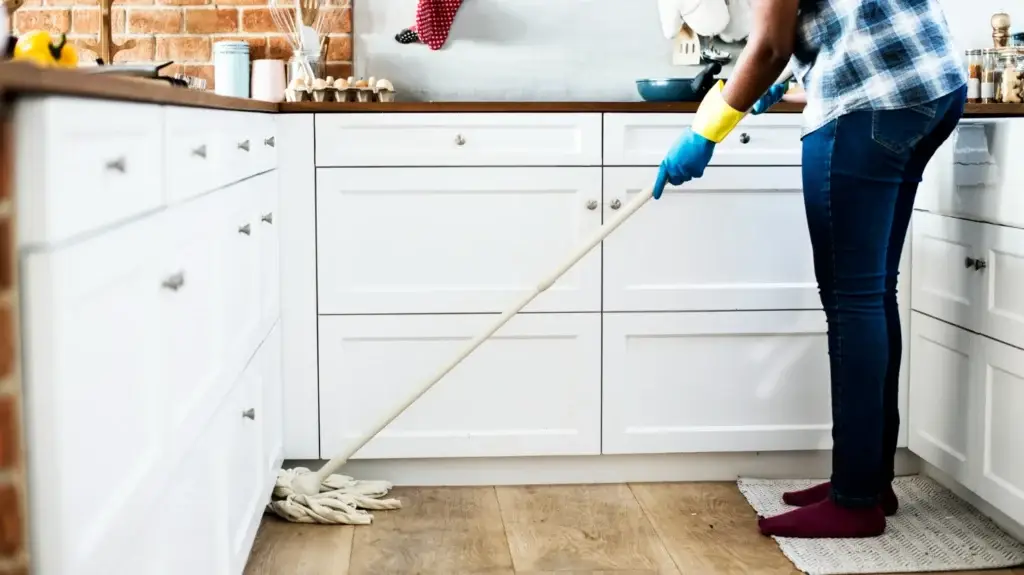
An extendable microfiber flat mop with a pivoting head allows you to reach baseboards while standing. Wrap a damp microfiber cloth around the head and angle it to press against the baseboard surface. This technique covers the top and face of the baseboard effectively.
For corners and edges, a long-handled detail brush gives you the reach to address compacted buildup without crouching. These are widely available at hardware stores and make a meaningful difference in accessibility.
Furthermore, a robotic vacuum set to run along wall perimeters regularly reduces the dust accumulation on baseboards significantly, which means the manual cleaning you do needs to happen less often and takes less effort each time.
How often should you clean baseboards?
A light dusting once a week or every two weeks, incorporated into your regular cleaning routine, keeps baseboards from reaching the point where a deep clean is necessary.
A full wet clean every one to two months is appropriate for most South Florida homes. However, if you have pets, children, or live near the beach where sand is tracked in regularly, more frequent attention is reasonable.
Bathrooms and kitchens need more frequent baseboard cleaning than other rooms because of the moisture and splatter those environments produce. In humid months, check bathroom baseboards for any early signs of mildew and address them before they spread.
When baseboards need professional attention
There are situations where baseboard cleaning is better handled as part of a broader professional service. If your home has not had a thorough cleaning in several months, if mold is present along multiple baseboard sections, or if you are preparing a home for sale or rental inspection, professional cleaning delivers a result that is difficult to match with DIY methods.
Deep cleaning services include full baseboard cleaning throughout the home, along with all the other surfaces and areas that accumulate buildup over time. This is the most efficient way to reset a home that needs more than routine maintenance.
Simple habits that keep baseboards cleaner longer
A few small adjustments make a real difference in how quickly your baseboards get dirty again after cleaning.
Use a doormat at every entrance and ask household members to remove shoes at the door. This single habit reduces the amount of sand, dirt, and debris that makes its way to baseboards significantly — especially in South Florida, where outdoor living means floors see constant traffic.
Run a vacuum along wall perimeters when you vacuum the rest of the floor. Most vacuums have a baseboard or crevice attachment that picks up the dust line that forms at the base of the wall before it settles onto the baseboard.
Finally, when mopping floors, avoid splashing the mop against baseboards. Mop water leaves a residue line that dries and discolors paint over time. Keep the mop moving parallel to the baseboard and wring it well so the floor stays slightly damp rather than wet.
These habits do not eliminate the need for baseboard cleaning, but they extend the time between sessions and make each cleaning session easier and faster.