

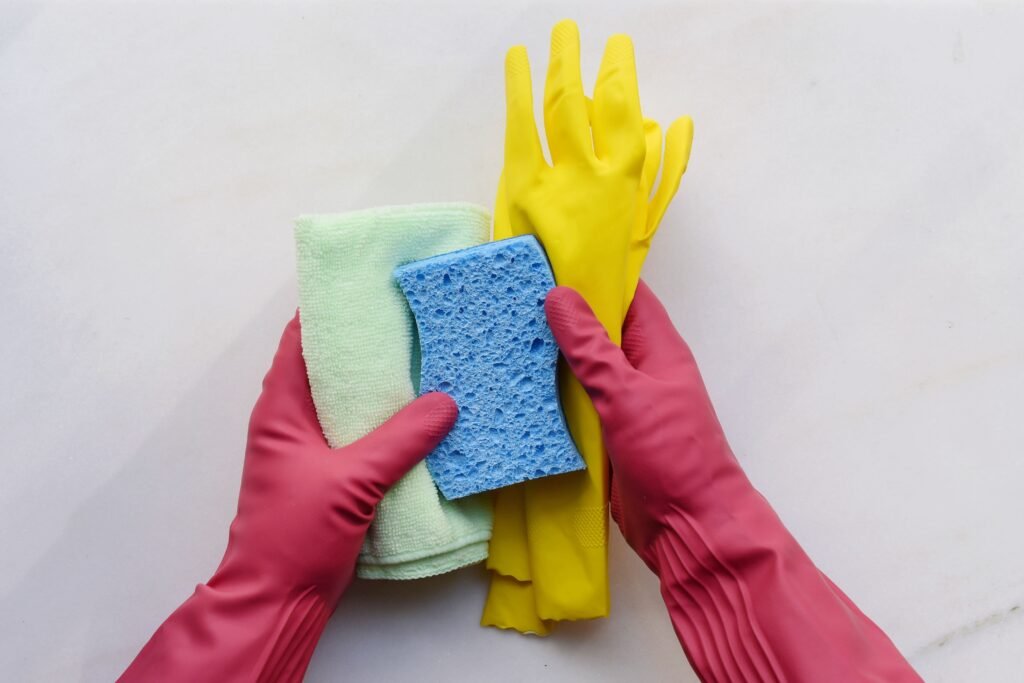
We often think of cleaning tools as “self-cleaning,” but the reality is quite the opposite. Your sponges, brushes, and cloths are the primary vehicles for moving dirt, grease, and bacteria around your home. When these tools are worn out or improperly maintained, they stop cleaning effectively and start spreading odors and germs instead. Knowing when to retire your cleaning gear isn’t just about hygiene—it’s about ensuring that your hard work actually leaves your home cleaner, not dirtier.
When to Replace Kitchen Sponges
The kitchen sponge is perhaps the most heavily used—and often the most contaminated—tool in the house. Because it is porous, constantly damp, and regularly exposed to organic food particles, it is an ideal breeding ground for bacteria.
- The Signs: If your sponge has a sour odor, shows visible discoloration, or begins to fray and lose its shape, it has passed its prime.
- Replacement Window: For a household that cooks daily, a sponge should be replaced every one to two weeks.
- The Drying Factor: Never leave a wet sponge sitting in a puddle. Squeeze it out thoroughly and store it in a ventilated rack so it can air-dry completely between uses. If it doesn’t dry, it’s not clean.
When to Replace Scrub Brushes
Unlike sponges, brushes have durable bristles, which makes them easy to keep for too long. However, once those bristles lose their integrity, they stop scrubbing and start just pushing debris around.
- Watch the Bristles: If the bristles are bent, crushed, or falling out, the brush is no longer providing the friction needed to lift grime.
- Deep Clean Your Brushes: Between replacements, sanitize your brushes by soaking them in a mixture of hot water and a mild disinfectant or vinegar.
- Replacement Window: Replace scrub brushes every three to six months, depending on frequency of use. Toilet brushes should be replaced more often—typically every six months or immediately if they become heavily stained or damaged.
How to Care for Microfiber Cloths
Microfiber is a marvel of cleaning technology, but it requires specific care to keep its “grabbing” power. These cloths contain millions of tiny, wedge-shaped fibers that trap dust and bacteria; if these fibers get clogged with fabric softener or wax, they become useless.
- Washing Rules: Wash your microfiber cloths in warm water using a mild detergent. Never use fabric softener, which coats the fibers and ruins their absorbency. Avoid high-heat drying, which can melt the fibers.
- The Replacement Test: If the cloth feels rough to the touch, no longer absorbs spills, or leaves streaks on glass despite being clean, the fibers have likely become damaged or permanently clogged. It is time for a new one.
Avoid Cross-Contamination
The most common mistake in home cleaning is using the “one-cloth-for-everything” strategy. Transferring a cloth from a bathroom sink to a kitchen counter is a recipe for cross-contamination.
- Color-Code Your Gear: Assign specific colors to specific zones. For example, use Blue for general dusting, Yellow for the kitchen, and Red for bathrooms.
- Kitchen Separation: Keep dish-washing sponges strictly away from general cleaning brushes to ensure that chemicals from cleaners don’t end up near your dinnerware.
Store Cleaning Tools Properly
Dampness is the enemy of hygiene. If your cleaning tools are stored in a dark, sealed container under the sink while they are still wet, you are essentially cultivating mildew.
- Ventilation is Essential: Store your brushes and cloths in a way that allows airflow. Use ventilated caddies or hooks.
- The “Smell Test”: If your cloths or sponges still smell musty after a thorough wash and dry, it means bacteria have colonized the fibers. Discard them immediately; no amount of extra soap will fix a permanently “sour” tool.
How Professional Cleaning Reduces Tool Guesswork
Keeping up with a rotation of cleaning tools is a chore in itself. Many homeowners find that their cleaning routine suffers simply because their tools are past their prime. At Maid Cleaning For You, we arrive with a systematic, professional-grade toolkit. We maintain our supplies to the highest standards of hygiene, ensuring that we never use worn-out cloths or dirty sponges in your home.
Outsourcing your cleaning to a professional service removes the guesswork of supply maintenance. You don’t have to worry about whether your brushes are effective or your sponges are sanitary; we bring the professional baseline of clean to you every single visit.
Ready to stop worrying about your cleaning supplies and enjoy a truly fresh home? Contact Maid Cleaning For You today to explore our recurring cleaning plans and let us handle the maintenance for you!
FAQ
How often should kitchen sponges be replaced?
Kitchen sponges should be replaced every 1–2 weeks for households that cook daily. If the sponge develops an odor or looks dirty, replace it immediately.
Can microfiber cloths be washed and reused?
Yes, microfiber is highly reusable. With proper care—washing in warm water without fabric softener and air-drying—a high-quality microfiber cloth can last for hundreds of washes.
When should I replace a toilet brush?
You should replace your toilet brush at least every six months, or sooner if you notice visible staining, damaged bristles, or an odor that does not go away after cleaning.
How do I prevent cleaning cloths from smelling bad?
Always wash your cloths promptly after use and ensure they are thoroughly dried. Never store them in a pile while they are damp, and avoid using fabric softeners, which trap bacteria inside the cloth fibers.