

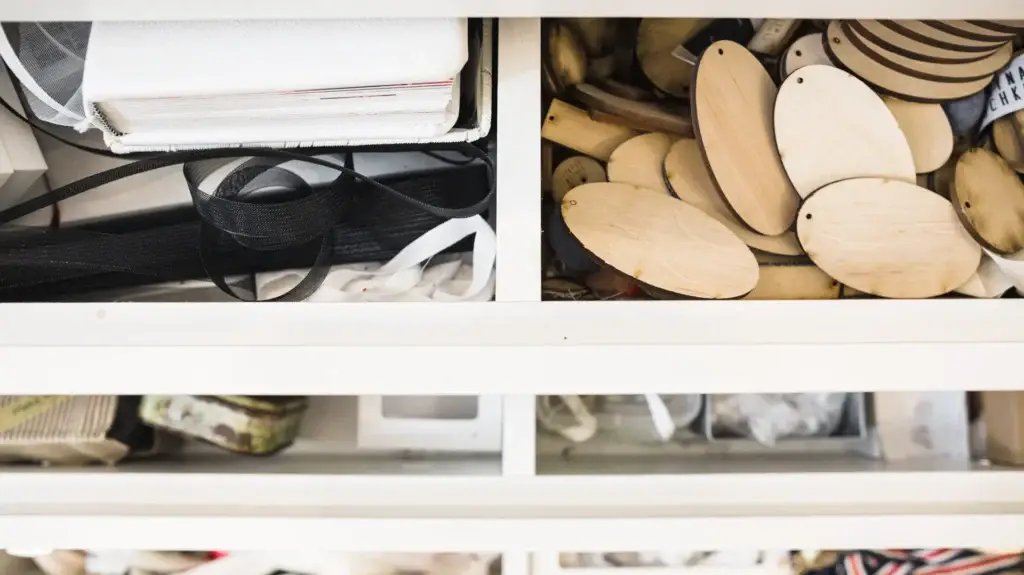
Every home has one. A drawer that started with a single spare battery and a roll of tape, and somehow now holds half a tool kit, three dead pens, and a takeout menu from a restaurant that closed years ago.
A junk drawer organizer does not need to be complicated or expensive to fix this problem. With the right system, the same drawer that has frustrated you for months can stay genuinely tidy, not just tidy for the afternoon you cleaned it.
Empty the drawer completely, sort everything into keep, relocate and toss piles, then return only what you actually use to the drawer using dividers sized to your items. The whole process takes about 20 minutes once you stop second-guessing what to keep.
Why junk drawers get out of control so fast
A junk drawer becomes a catch-all because it is the path of least resistance. Anything without an obvious home, a stray screw, a phone charger you are not sure you still need, a single chopstick, ends up there because putting it away properly takes more thought than tossing it in.
The problem compounds over time. Once a few miscellaneous items live there, the drawer stops feeling like a place for things with a purpose and starts feeling like a place for things you cannot decide about. That mental shift is why junk drawers rarely organize themselves, even when everything else in the kitchen is tidy, and why the same drawer tends to relapse again and again without a deliberate system in place.
How to organize a junk drawer in under 20 minutes
A junk drawer organizer system works best when you start from zero rather than trying to tidy around what is already there.
- Dump the entire contents onto a counter or table so you can see everything at once.
- Sort into three piles: keep, relocate (belongs somewhere else in the house) and toss.
- Wipe out the empty drawer while everything is out, since crumbs and dust collect at the bottom over time.
- Group the keep pile into categories, such as tools, office supplies, batteries and miscellaneous cords.
- Place dividers or small bins sized to each category, then return items grouped by type rather than tossing them back in loosely.
Quick reference: the 20-minute method
- Dump everything out.
- Sort into keep, relocate, toss.
- Wipe the drawer.
- Group the keep pile by category.
- Add dividers and return items by group.
Resist the urge to skip the relocate pile. Items that genuinely belong elsewhere, like scissors that should live with office supplies or a screwdriver that belongs in a toolbox, will just migrate back into the drawer if you put them back here out of convenience.
The best junk drawer organizer systems and dividers
The right divider setup depends on the drawer size and what you are storing, but a few options work well across most kitchens and home offices.
- Adjustable expandable dividers fit a range of drawer widths and let you customize compartment sizes as your items change.
- Small modular bins work well for deeper drawers, since they can be lifted out entirely for quick access to items at the back.
- Repurposed containers, like washed-out spice jars or small boxes, are a no-cost option for odds and ends like screws, rubber bands or paper clips.
- Drawer trays with a shallow lip keep loose items like keys or coins from sliding around every time the drawer opens.
Whatever option you choose, sizing matters more than style. A divider too large for its contents lets items shift and remix, undoing the sorting work within a few weeks. Measuring the drawer’s interior depth and width before buying anything saves a return trip and avoids the temptation to just stack a too-large tray in at an angle.
Kitchen drawer organization: keeping categories from mixing
Kitchen junk drawers face an extra challenge, since they often sit close to utensils, takeout menus and odd kitchen tools that blur the line between junk and genuinely useful items.
A simple rule helps: if an item is used at least once a month for an actual everyday kitchen task, such as a meat thermometer or a bottle opener, it can stay, ideally in its own small section. Anything used less often, like a stack of old manuals or single-use party supplies, belongs in long-term storage instead of prime drawer space.
Keeping a small notepad and pen in the drawer is fine. Keeping every notepad and pen you have ever owned is how the drawer slides back into chaos within a month.
Decluttering small spaces beyond the junk drawer
The same sorting method that works for a kitchen drawer applies to other small, catch-all spaces around the house.
- Entryway baskets that collect mail, keys and loose change benefit from the same keep, relocate, toss approach.
- Bathroom drawers often hold half-used products that can be tossed during the same sorting session.
- Car glove compartments and console bins tend to mirror kitchen junk drawers almost exactly, down to the stray pen and old receipts.
Tackling one small space at a time, rather than the whole house in one weekend, keeps the process from feeling overwhelming and makes it more likely to stick.
How to keep a junk drawer organizer system tidy long term
Setting up dividers solves the immediate mess, but a long-term habit is what keeps the drawer from sliding backward. According to housing and family consumer sciences specialists at the University of Georgia Extension, one effective approach to maintaining an organized space is the “one thing in, one thing out” method: if something new goes into the drawer, something else needs to come out to make room for it.
Their guidance also points to tackling one small category at a time, such as a single drawer or shelf, rather than trying to declutter an entire room at once, since smaller wins build momentum and make the habit easier to stick with.
Applied to a junk drawer, this might mean a quick 60-second check every couple of weeks: if the drawer is harder to close than it used to be, that is the signal to repeat the sorting process before it turns into another half-hour project.
Common mistakes that undo a junk drawer organizer setup
A few habits explain why some junk drawers stay tidy for years while others slide back into chaos within a month, even with the same dividers.
- Buying dividers before sorting, which means you end up forcing items into compartments instead of choosing compartments based on what you actually kept.
- Skipping the relocate pile and putting everything back in the drawer out of convenience.
- Treating the drawer as permanent storage for items used only once or twice a year.
- Letting kids or other household members toss items in without a quick sort, which undoes the system faster than almost anything else.
- Never revisiting the setup as needs change, so a system built for a previous season of life stops matching what actually gets used.
Avoiding these is less about willpower and more about building the sorting habit into a regular, low-effort check rather than a one-time project.
Getting the whole household to keep the system working
A junk drawer organizer setup is far more likely to last if everyone in the house understands the categories, not just the person who built it. A drawer with clearly grouped sections, even without labels, tends to guide people toward returning items to roughly the right spot.
For households with kids, a quick walkthrough after setting up the system, showing where batteries go versus where tape and scissors live, helps the habit stick faster than hoping everyone figures it out on their own. Labeling small bins, even with simple masking tape and a marker, removes the guesswork entirely and makes it just as easy to put something back correctly as it is to toss it in randomly.
This small bit of upfront communication matters more than it seems. A system that only makes sense to the person who built it tends to fall apart within a few weeks, while one that the whole household understands tends to hold up for months without any extra effort.
If a cluttered junk drawer is one symptom of a kitchen that needs a broader reset, our full deep clean tackles drawers, cabinets and surfaces in the same visit.
Frequently asked questions about junk drawer organizers
What is the best size for a junk drawer organizer? It depends on the drawer itself. Measure the interior before buying dividers, since a tray slightly too large will not sit flat and one too small leaves wasted space that invites clutter back in.
Should I keep batteries in the junk drawer? Yes, in a dedicated small compartment, ideally separated by size. Batteries are one of the most common junk drawer items and benefit from their own labeled spot.
How often should I redo my junk drawer organizer setup? A quick check every two to four weeks keeps things from sliding back into clutter, with a full sort every few months as habits and needs change.
What should never go in a junk drawer? Sharp tools without a sheath, anything flammable, and items that genuinely belong in a toolbox, office drawer or first-aid kit are better stored in their proper location.
Are dollar store dividers good enough, or do I need something sturdier? Basic dividers work fine for light items like office supplies and batteries. Heavier tools may need a sturdier tray to avoid warping or sliding over time.
Should every room have its own junk drawer, or just one for the whole house? One well-organized drawer per main living area, such as the kitchen and a home office, usually works better than scattering several small catch-all spots throughout the house.
A tidy drawer that actually stays that way
The difference between a junk drawer that stays organized and one that slides back into chaos is rarely the dividers themselves. It is the habit of sorting before things pile up, and giving every item a category instead of just a place to land. Once that habit forms, the same 20-minute method works just as well on the next cluttered drawer that starts creeping toward chaos.
Once the small spaces in your kitchen are under control, the rest of the room tends to feel more manageable too.
Want the rest of your kitchen to match that newly organized drawer? Request your free quote and let our background-checked team handle the deep cleaning while you focus on keeping the small spaces tidy, one drawer, shelf or cabinet at a time.