

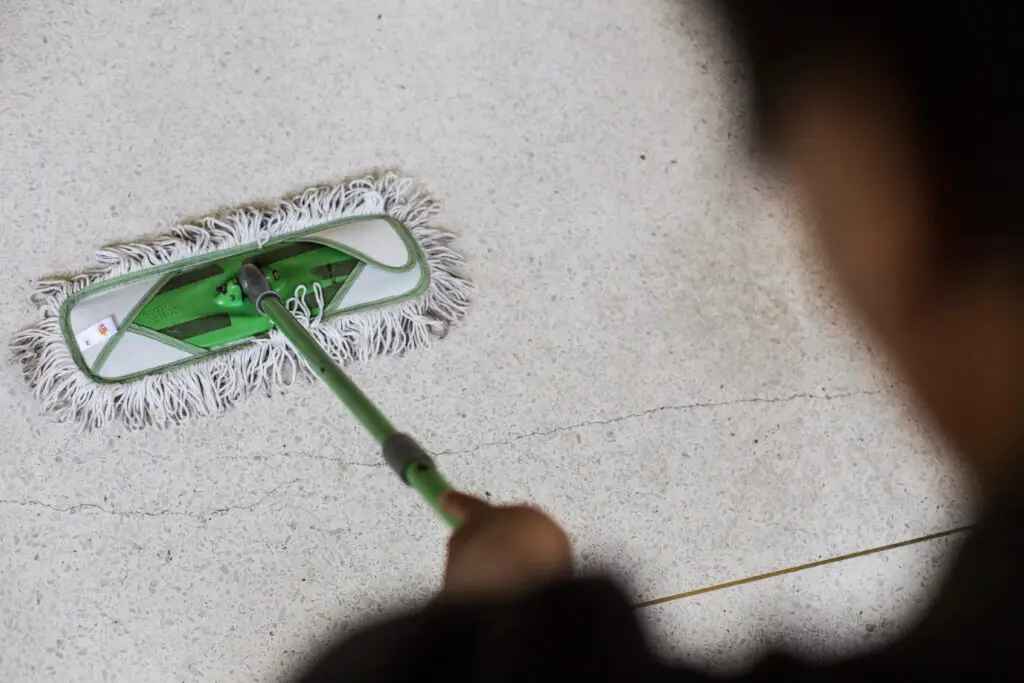
The garage floor takes the brunt of vehicle traffic, spills, and seasonal debris. Regular cleaning is essential not just for aesthetics, but for maintaining the integrity of the concrete surface and ensuring a safer workspace. This guide covers everything from initial sweeping to deep stain removal.
Why Cleaning Your Garage Floor Matters
A clean garage floor contributes significantly to the overall condition and function of your home’s most hard-working space.
Prevents Stains, Odors, and Concrete Damage
Oil, grease, antifreeze, and road salt are highly corrosive and damaging to unsealed concrete over time.
- Concrete Damage: Spills like road salt or battery acid can weaken the concrete, leading to pitting, cracking, and spalling (surface flaking). Oil stains that sit for too long become deeply embedded, making removal extremely difficult.
- Odor Control: Stagnant spills, chemical leaks, and moisture trapped in debris can lead to persistent, unpleasant odors that permeate the entire garage and sometimes enter the main house. Regular cleaning flushes these substances out.
Improves Safety and Curb Appeal
A dirty, stained garage floor is a liability, while a clean one enhances the entire property.
- Safety: Grease and oil create dangerously slick surfaces, increasing the risk of slips and falls, especially when wet. Removing these hazards is crucial for a safe walking and working environment.
- Curb Appeal: The garage is often the largest single entrance visible from the street. A tidy, clean garage floor contributes to a feeling of organization and significantly boosts your home’s overall curb appeal and resale value.
Supplies You’ll Need
Gathering the right tools beforehand will make the cleaning process efficient and effective.
Broom, Degreaser, Scrub Brush, and Pressure Washer
| Item | Purpose | Notes |
| Broom or Leaf Blower | Initial removal of dry debris, dirt, and dust. | Use a stiff-bristle shop broom for concrete. |
| Degreaser | Breaking down oil, grease, and automotive fluid stains. | Must be heavy-duty and formulated for concrete. |
| Stiff-Bristle Scrub Brush | Agitating stains to help the degreaser penetrate. | A brush with a long handle (deck brush) is ideal. |
| Pressure Washer or Garden Hose | Final rinsing and blasting away loosened contaminants. | A pressure washer ($1500$–$2500$ PSI) is highly recommended for deep cleaning. |
| Wet/Dry Vacuum (Optional) | Removing standing water and cleaning small puddles. | Recommended if you cannot easily drain water outside. |
Step-by-Step Cleaning Process
Follow these steps for a complete and effective cleaning, focusing first on spot treatments before generalized scrubbing.
1. Sweep Dust and Debris
Before introducing any liquid, you must clear the area of loose dirt, leaves, and trash.
- Clear the Area: Remove everything from the floor: tools, boxes, vehicles, and the turntable.
- Sweep Thoroughly: Use a stiff-bristle broom or a leaf blower to move all dry dust and debris out of the garage. Pay attention to corners and beneath workbenches where fine dust settles.
2. Apply Degreaser to Oil Spots
Treat individual stains before tackling the general surface. This is the most crucial step for eliminating persistent oil spots.
- Pre-Wet: Lightly wet the stained areas with a garden hose. This helps prevent the degreaser from soaking into the concrete too quickly.
- Apply Degreaser: Pour or spray the commercial degreaser directly onto the oil and grease spots. Follow the product instructions for application, which often call for covering the stain completely.
- Dwell Time: Allow the degreaser to sit for the recommended 5 to 10 minutes to give the chemical time to break down the oil bonds. Do not let it dry.
3. Scrub and Rinse Thoroughly
Now it’s time for agitation and removal.
- Scrub: Use the stiff-bristle brush (or a rotary scrubbing machine for large areas) to aggressively scrub the entire floor, focusing heavily on the degreased spots. Work the degreaser into a lather or foam.
- Pressure Wash/Rinse: If using a pressure washer, use a wide-angle nozzle ($25^{\circ}$ or $40^{\circ}$) and systematically spray the entire floor, moving the contaminants toward the garage door opening. If using a hose, use a jet nozzle with the highest available pressure and scrub while rinsing to ensure all soap residue is flushed away.
- Allow to Dry: Leave the garage door open and allow the floor to completely air-dry before parking vehicles or placing items back down. Good ventilation is key to preventing residual moisture and odors.
Optional Deep Cleaning
For floors that haven’t been cleaned in years or that have heavy rust and tire marks, these steps provide extra revitalization.
Use Concrete Cleaner for Tough Stains
If standard degreaser fails to lift old, deeply set stains (like tire marks, rust, or embedded oil), you may need a stronger chemical solution.
- Alkaline vs. Acidic: Highly alkaline concrete cleaners can tackle deep grime, while specialized concrete etching/acidic cleaners are required for rust stains. Use extreme caution with acidic cleaners, ensuring proper ventilation and wearing protective gear (gloves, safety glasses).
- Poultice Method: For very old oil stains, you can create a paste (poultice) of baking soda or concrete cleaner mixed with a small amount of water or solvent. Apply the paste, cover it with plastic wrap, and let it dry completely overnight. As it dries, it pulls the stain out of the concrete.
Seal the Floor for Long-Term Protection
Once the floor is impeccably clean, sealing it is the best investment for future protection and ease of maintenance.
- Preparation: Ensure the floor is completely dry and has been chemically neutralized (especially if an acid cleaner was used).
- Application: Apply a high-quality garage floor sealer (like epoxy, polyurethane, or penetrating sealer) according to the manufacturer’s directions.
- Benefits: Sealing creates a non-porous barrier, preventing liquids from penetrating the concrete. This makes future spills wipe up easily and eliminates the deep staining and damage caused by automotive fluids.
FAQs
Can I use dish soap on garage floors?
You can use common dish soap (like concentrated liquid dish detergent) on a garage floor for basic, light cleaning where no heavy oil or grease is present. However, dish soap is generally not effective as a degreaser for automotive oils and heavy grease spills because it is not formulated to break down petroleum-based compounds aggressively enough. For serious stains, a dedicated, industrial-strength degreaser is necessary for proper chemical breakdown.
How often should I clean my garage?
The frequency depends heavily on use, but a good rule of thumb is:
- Heavy Use (Workshop/Frequent Car Maintenance): Quarterly (every $3$ months)
- Average Use (Daily Parking): Bi-annually (twice a year, ideally in spring and fall)
- Light Use/Sealed Floors: Annually (once a year)
Regardless of the deep cleaning schedule, you should always immediately spot-clean any major oil or chemical spill as soon as it happens to prevent permanent staining and concrete erosion.