

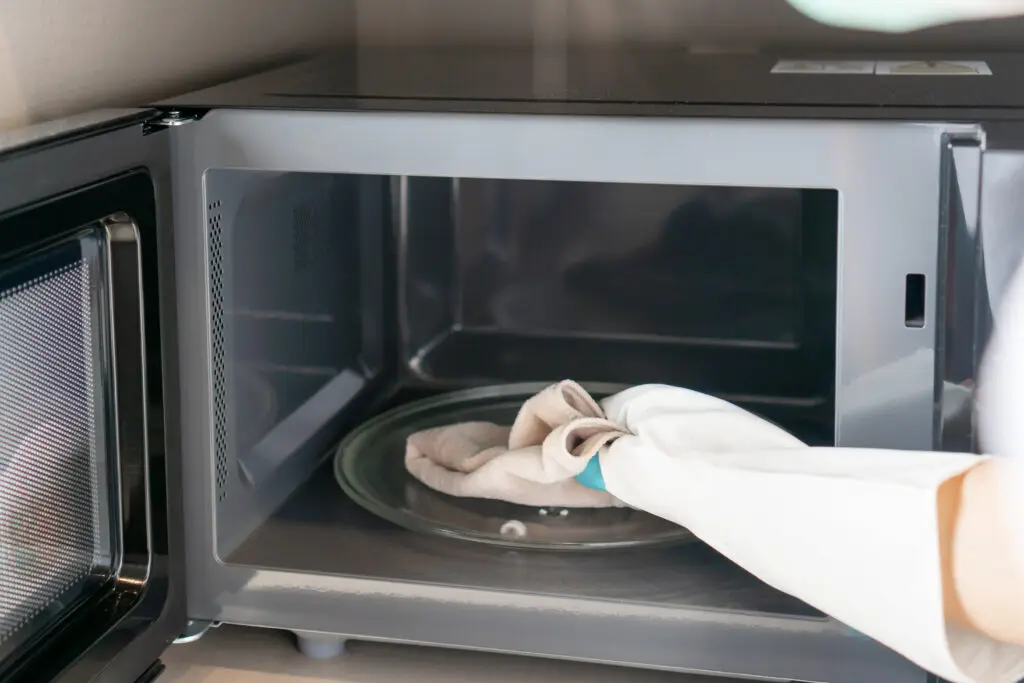
Accidents happen—whether it’s popcorn left in too long or a cooking spill—the resulting burnt odor can permeate your kitchen and linger stubbornly inside your microwave’s cavity. Because microwave interiors are often made of plastic or painted metal, they are highly porous and prone to trapping volatile organic compounds (VOCs) that cause these strong smells. Addressing the odor immediately with steam and absorption techniques is key to restoring freshness.
Why Microwaves Trap Burnt Smells
Understanding where the odor hides helps you target your cleaning efforts more effectively.
Residue Buildup from Food Spills
When food burns, organic compounds become carbonized, creating a dark, sticky, or hardened residue. This residue often clings to the roof, sides, or turntable of the appliance. The smell doesn’t just come from the smoke; the burnt, carbonized material itself continues to emit odor molecules long after the incident. If this residue is not physically removed, no amount of deodorizing will fully work.
Absorption of Smoke and Grease Particles
The interior lining of a microwave oven—especially plastic wave guides and painted metal—is slightly porous. When smoke fills the cavity:
- VOC Absorption: Tiny particles of smoke and grease, which are composed of volatile organic compounds (VOCs), are rapidly absorbed into the porous surfaces.
- Persistent Smell: These trapped molecules slowly off-gas back into the cavity, making the smell persistent even if the visible residue has been cleaned. This is why deodorizing agents that actively absorb or neutralize the trapped molecules are essential.
Best Odor Removal Methods
The most effective strategies rely on steam to lift microscopic residue and natural agents to chemically neutralize or physically absorb the trapped odor molecules.
Vinegar and Water Steam Cleaning
This is the gold standard method for deep-cleaning and neutralizing smells. The acetic acid in vinegar is a mild, non-toxic acid that chemically neutralizes alkaline odors (like those found in burnt residue), while the steam helps lift the hardened mess.
- Solution: Mix 1 cup of water with 2 tablespoons of distilled white vinegar in a microwave-safe bowl.
- Benefit: The resulting steam condenses on the microwave walls, loosening residue and allowing the vinegar to penetrate and neutralize absorbed odors.
Lemon and Baking Soda for Freshness
Lemon is ideal for cutting through grease, and baking soda is a powerful odor absorbent, making this an excellent one-two punch for a cleaner smell.
- Lemon Steam: Slice a whole lemon and add it to 1 cup of water in a microwave-safe bowl. The citric acid is great at dissolving grease, and the essential oils leave a fresh scent.
- Baking Soda Absorption: After cleaning, leave an open bowl of baking soda inside the microwave overnight to adsorb any lingering molecules.
Activated Charcoal or Coffee Grounds Overnight
For stubborn odors that persist after cleaning, chemical absorption is necessary. Both activated charcoal and coffee grounds are highly porous materials with large surface areas that can physically trap odor molecules (a process called adsorption).
- Application: Place a small bowl of activated charcoal briquettes (not regular grilling charcoal) or fresh, dry coffee grounds inside the microwave.
- Dwell Time: Close the door and leave it overnight or for up to 24 hours. The porous materials will slowly pull in the lingering VOCs from the interior cavity.
Step-by-Step Deodorizing Guide
Follow these steps for a complete restoration of your microwave’s freshness.
1. Heat Solution for 3–5 Minutes (The Steam Method)
This step uses heat to generate odor-fighting steam and soften the burnt residue, making removal easy.
- Preparation: Ensure your microwave is unplugged, and you have physically scraped off any large, hardened pieces of burnt food first. Plug it back in.
- Execution: Place your chosen vinegar-water or lemon-water solution inside the microwave. Heat on high power for 3 to 5 minutes, or until the liquid is rapidly boiling and the window is completely fogged with steam.
- Crucial Step (Dwell Time): Do not open the door immediately. Allow the steam to condense on the walls for an additional 10 to 15 minutes. This is the key process where the residue softens and the odor neutralizers work their magic.
2. Wipe Walls and Turntable with a Damp Cloth
After the steam has done its work, the residue should easily wipe away.
- Cleaning: Carefully remove the hot bowl. Dip a clean sponge or microfiber cloth into the remaining solution (if still warm) and use it to wipe down the entire interior, including the ceiling, walls, door, and inside lip of the cavity.
- Turntable: Remove the turntable and wash it separately in the sink with dish soap.
- Inspection: Pay extra attention to the corners and the plastic wave guide cover (often a small plate on the side or roof), as these areas trap significant odor and grease.
- Final Drying: Use a dry cloth to thoroughly wipe down the entire interior, leaving no moisture behind.
Preventing Future Odors
A few small habits can eliminate future odor emergencies entirely.
Cover Food When Reheating
The single most effective preventative measure is covering your food.
- Barrier Protection: Use a microwave-safe cover, damp paper towel, or a microwave-safe lid (leaving a slight gap for steam to escape) on virtually all foods being heated.
- Spatter Control: This prevents tiny droplets of fat, sugar, and sauce from spattering onto the microwave walls, where they accumulate and eventually become the source of burnt smells when overheated.
Clean Weekly with Natural Cleaners
Establish a quick maintenance routine to prevent residue accumulation.
- Quick Wipe: Once a week, use a spray bottle filled with a simple solution of equal parts water and vinegar to spritz the interior. A quick wipe with a clean cloth will lift any fresh food residue before it has a chance to harden or contribute to odor.
- Check the Wave Guide: Periodically inspect the plastic wave guide cover. If it is stained or warped, it may need cleaning or replacement to eliminate a deep, hidden odor source.
FAQs
How long does the burnt smell last?
Unfortunately, if the residue is not completely removed and the absorbed VOCs are not neutralized, the burnt smell can last indefinitely—sometimes weeks or even months—because the porous materials inside the microwave continue to off-gas the odor molecules. The odor will be worse whenever the microwave is used because heating the interior causes the trapped molecules to volatilize faster. Immediate cleaning and follow-up deodorization (like using activated charcoal overnight) are crucial for fast results.
Can I use air fresheners inside a microwave?
No, never use air fresheners, essential oils, or chemical sprays inside a microwave.
- Fire Hazard: Many aerosol air fresheners, as well as essential oils, contain flammable alcohols or petroleum-based carriers. Heating these substances can create a fire hazard inside the appliance.
- Chemical Odor: Introducing strong synthetic chemical scents will simply mask the burnt smell temporarily and often result in a highly unpleasant mixed odor when the microwave is used next. Stick to natural, food-safe deodorizers like vinegar, lemon, and baking soda.
By prioritizing steam cleaning to lift the gunk and follow-up absorption (like coffee grounds) to neutralize the deep-set smells, you can typically restore your microwave’s freshness within 24 hours.