

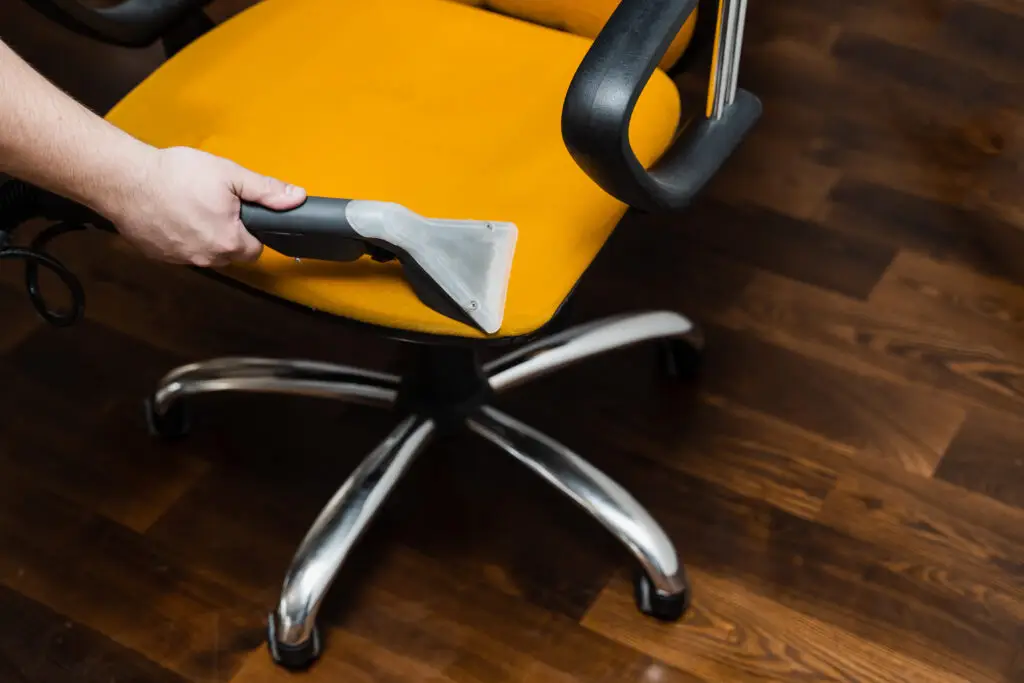
Your office chair holds up your back for hours every day, but it rarely gets the same attention as your desk or keyboard. Dust, body oils, crumbs, and spills build up quietly until the seat starts to look dull and smell less than fresh.
Knowing how to clean office chairs the right way protects your health, your furniture, and the overall look of your workspace. The method changes depending on whether your chair is fabric, leather, or mesh, so this guide walks through each material step by step.
Vacuum the chair first to remove loose dust and debris, then check the material. Fabric and mesh chairs respond well to a mild dish soap solution applied with a damp microfiber cloth, while leather and faux leather need a gentler, well-wrung cloth followed by a conditioner. Always rinse with a clean, damp cloth and let the chair air dry before sitting on it again.
Why office chairs need regular cleaning
An office chair is a high-touch surface. Armrests, headrests, and seat cushions collect sweat, skin cells, dust mites, and bacteria every time someone sits down. The CDC notes that surfaces touched often by multiple people carry a higher risk of spreading germs, which is why cleaning frequently used items in shared spaces matters as much as cleaning desks and doorknobs
A neglected chair can also affect how your workspace feels and looks:
- Hygiene: Bacteria and allergens build up faster on chairs that see daily use.
- Appearance: Stains and dull upholstery make even a tidy office look unkept.
- Odor: Body oils and spills create smells that linger in fabric and mesh.
- Lifespan: Dirt left untreated breaks down stitching, foam, and leather over time.
- Comfort: A clean seat simply feels better during long work sessions.
Professional cleaners who handle office spaces regularly say chairs are one of the most overlooked items during routine cleaning, even though they sit right next to a desk that gets wiped down weekly. In South Florida offices, humidity adds another layer to the problem. Damp air slows down drying time on fabric and mesh chairs, which gives mildew and odor-causing bacteria more time to settle in before the upholstery fully dries.
That combination is why a chair left untreated for a few months can smell musty even without an obvious spill. The fix is not complicated, but it does call for the right steps for the right material.
What you need before cleaning office chairs
Gathering the right supplies before you start makes the process faster and reduces the risk of damaging the upholstery.
- Vacuum with an upholstery attachment
- Two clean microfiber cloths
- Mild dish soap (non-detergent based, if possible)
- A soft-bristled brush, such as an old toothbrush
- Baking soda (for odor removal on fabric and mesh)
- Leather conditioner (for real leather only)
- A fan or open window for faster drying
Before applying any product, check the chair for a manufacturer’s cleaning code, usually found on a tag underneath the seat. The letter “W” means a water-based cleaner is safe, “S” means you should use only solvent-based products, “WS” allows either, and “X” means vacuum only, with no liquid cleaners at all.
How to clean fabric office chairs
Fabric chairs are common in home offices and corporate spaces alike, but the material absorbs spills and dust quickly.
- Vacuum thoroughly. Move the upholstery attachment slowly across the seat, back, and armrests, paying attention to seams and the gap under the seat.
- Spot test. Apply a small amount of cleaning solution to a hidden area, such as the underside of the seat, and wait a few minutes to check for discoloration.
- Mix a mild solution. Combine a few drops of dish soap with warm water until it turns slightly sudsy.
- Clean in sections. Dampen a microfiber cloth, never soak it, and blot the fabric gently rather than scrubbing. Work in small areas so the fabric does not stay wet too long.
- Treat stubborn spots. Use a soft brush to work the solution into tougher stains without pushing them deeper into the fibers.
- Rinse with a second cloth. Dampen a clean cloth with plain water and blot the same areas to remove soap residue, which otherwise attracts more dirt.
- Dry completely. Blot with a dry towel and let the chair air dry before anyone sits on it again.
How to clean leather and faux leather office chairs
Leather chairs are more forgiving than fabric, but they need a gentler hand to avoid drying out the surface.
- Dust first. Wipe the entire chair with a dry microfiber cloth to remove loose debris before adding any moisture.
- Prepare a light solution. Mix a small amount of mild dish soap with warm water, or use a leather cleaner made for furniture.
- Spot test. Try the solution on a hidden panel before cleaning the visible surface.
- Wipe gently. Wring the cloth until it is just damp, then wipe the chair in smooth, even strokes.
- Rinse and buff. Follow with a clean, damp cloth to remove residue, then buff dry with a separate towel.
- Condition real leather. Apply a leather conditioner once the chair is dry to keep the material supple and prevent cracking. Faux leather does not need this step.
How to clean mesh office chairs and remove odors
Mesh is breathable and easy to maintain, but its woven texture traps dust and odors in the small gaps.
- Vacuum the mesh. Use the upholstery attachment on both sides of the backrest if possible, since dust collects on the underside too.
- Sprinkle baking soda for odors. Cover the mesh evenly and let it sit for several hours, or overnight for stronger smells, before vacuuming it away.
- Spot clean stains. Dampen a cloth with a mild soap solution, blot rather than rub, and use a soft brush for set-in spots.
- Rinse and dry. Wipe with a clean, damp cloth to remove soap, then let the chair air dry fully before use.
Common mistakes when cleaning office chairs
Even with good intentions, a few habits can shorten the life of an office chair instead of extending it.
- Soaking the fabric or mesh. Excess water seeps into the foam and can cause mildew or a musty smell that lasts for weeks.
- Skipping the spot test. Some cleaning solutions react with certain dyes and leave permanent discoloration.
- Scrubbing too hard. Aggressive rubbing pushes stains deeper instead of lifting them out.
- Using harsh chemicals on leather. Alcohol-based or abrasive cleaners strip the finish and lead to cracking.
- Forgetting to rinse. Leftover soap residue attracts dirt faster than the original stain did.
- Sitting on a damp chair. This presses moisture back into the cushion and slows drying even further.
- Ignoring the chair’s base. Wheels and the underside of the seat collect just as much dust as the cushion, even though they are easy to forget during a quick clean.
How often you should clean office chairs
A simple maintenance routine prevents most of the buildup that leads to deep stains and odors. Cleaning crews who service offices on a recurring basis usually build chair care into a tiered schedule rather than treating it as a once-a-year task.
- Weekly: Wipe down armrests and the seat with a dry microfiber cloth.
- Monthly: Vacuum fabric and mesh chairs to remove dust before it settles into the fibers.
- Every three to six months: Do a full clean with soap and water, plus a leather conditioner if applicable.
- As needed: Treat spills the moment they happen instead of waiting for the next scheduled clean.
Signs your office chair needs a deeper clean
Watch for these signals between scheduled cleanings:
- Visible stains that do not lift with a quick wipe
- A musty or sour smell, especially after sitting for a while
- Dust that reappears within days of vacuuming
- Stiff or cracking leather around the seams
- Allergy symptoms that improve when you are away from your desk
If any of these show up, it is a good time to deep clean the chair rather than waiting for the next routine pass.
Frequently asked questions about cleaning office chairs
Can I use disinfectant wipes on a fabric office chair? Only if the chair’s cleaning code allows water-based products. Many disinfectant wipes contain alcohol, which can fade or stiffen certain fabrics.
How do I get rid of a sweat smell on a mesh chair? Baking soda left on the mesh for several hours, followed by a thorough vacuum, usually removes sweat odors without needing harsh chemicals.
Is it safe to use a steam cleaner on office chairs? Steam can work on some fabrics, but it is risky on leather and certain dyed materials. Check the manufacturer’s tag first, and avoid steam on chairs marked with an “X” cleaning code.
How long does it take an office chair to dry after cleaning? Most chairs dry within a few hours with good airflow. A fan or an open window speeds up the process, and the chair should feel completely dry before anyone sits on it.
Should I clean the wheels and base too? Yes. Dust and hair often wrap around the casters, which can damage flooring and make the chair harder to roll over time.
Can humidity make office chairs smell worse? Yes, especially in South Florida. High humidity slows drying after cleaning, which gives bacteria more time to grow in fabric and mesh. Running a fan or pointing the chair toward an air vent after cleaning helps it dry faster and reduces the chance of lingering odors.
Keep your office spotless with professional help
Cleaning office chairs regularly keeps your workspace healthier, more comfortable, and more presentable for clients and team members alike. A consistent routine, paired with quick action on spills, goes a long way toward extending the life of your furniture, especially in a humid climate like South Florida.
Not every office has the time to fit chair care into a busy week, and that is where a professional team can fill the gap. If you would rather leave the details to trained staff, Maid Cleaning For You’s office cleaning service covers chairs, desks, and every other high-touch surface in your workspace. For a more thorough refresh, the deep cleaning service tackles built-up grime that routine wiping can miss, and the house cleaning troubleshooting guides offer more tips for tackling stains and odors around the office.
Ready for a spotless workspace without the extra effort? Get a free quote from Maid Cleaning For You and let a trusted local team handle the details.