

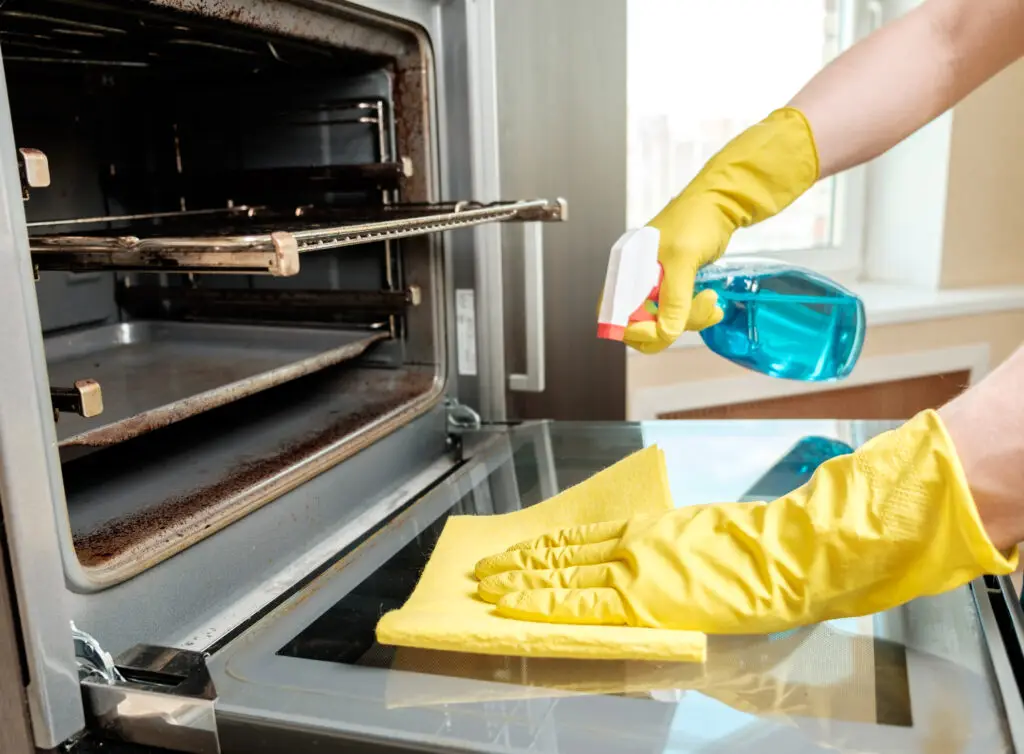
A sparkling clean oven can make your entire kitchen feel brighter and more inviting. However, the oven door glass, often a window into the messiest part of your appliance, can quickly become obscured by baked-on grease, food splatters, and stubborn stains. These unsightly marks not only diminish your oven’s appearance but can also make it difficult to monitor your cooking. Learning how to clean oven door glass for a sparkling finish is a straightforward task that can dramatically improve your kitchen’s cleanliness and your cooking experience.
Common types of oven glass stains
Before you start cleaning, it’s helpful to understand what kind of grime you’re dealing with, as this can influence the best cleaning approach.
- Baked-On Grease and Food Splatters: This is the most common culprit. During cooking, fats and food particles can splatter onto the glass. With repeated heating, these residues bake onto the surface, hardening into a stubborn, dark film.
- Carbonized Residue: Over time, baked-on grease and food can become completely carbonized, turning into a black, crusty, and extremely difficult-to-remove layer.
- Burnt-On Sugar: Sugary spills (like pie filling or casserole drippings) can caramelize and then burn onto the glass, creating a very hard, sticky, and dark stain.
- Streaks and Haze: Even after cleaning, a hazy film or streaks can remain, often due to improper rinsing, residue from cleaning products, or hard water deposits.
- Stains Between Glass Panes: In some ovens, grease or spills can seep between the inner and outer glass panes of the oven door. This is a more challenging stain to address, often requiring partial disassembly of the door.
Safe cleaning materials and avoiding scratches
The key to cleaning oven door glass effectively is using materials that are tough on grime but gentle on the glass. Avoiding scratches is paramount.
- Soft Cloths/Sponges: Always use non-abrasive materials like microfiber cloths, soft sponges, or paper towels.
- Plastic Scraper/Razor Blade (Use with Caution): For truly stubborn, baked-on spots, a plastic scraper designed for non-stick surfaces or a new razor blade (held at a very shallow angle, almost flat against the glass) can carefully lift burnt-on bits. Extreme caution is needed to avoid scratching the glass. Always test in an inconspicuous area first.
- Baking Soda: A natural, mild abrasive that is excellent for breaking down grease and carbon.
- White Vinegar: An acid that helps cut through grease and hard water stains, and leaves a streak-free shine.
- Dish Soap: A degreaser that helps lift oily residues.
- Commercial Oven Cleaners (Use with Care): While powerful, many commercial oven cleaners contain harsh chemicals. If using, always follow product instructions carefully, ensure good ventilation, and wear protective gloves. Some are not recommended for self-cleaning ovens or certain glass types, so check your oven’s manual.
Step-by-step glass cleaning process
This method uses common household ingredients and is highly effective for most oven door glass stains.
- Safety First: Ensure your oven is completely cool before starting. If it has a self-cleaning feature, make sure it’s turned off and the oven is not hot.
- Remove Loose Debris: Use a dry cloth or paper towel to wipe away any loose crumbs or food particles from the glass.
- Apply Baking Soda Paste:
- In a small bowl, mix 1/2 cup of baking soda with 2-3 tablespoons of water to form a thick paste. Adjust water as needed.
- Apply a generous layer of this paste directly onto the stained areas of the oven door glass. Make sure the entire stained area is covered.
- Let It Sit: This is the magic step. Allow the baking soda paste to sit on the glass for at least 20-30 minutes. For very stubborn, baked-on stains, let it sit for several hours, or even overnight. The baking soda will work to break down the grime.
- Scrub Gently:
- After the sitting time, use a damp microfiber cloth or a soft sponge to gently scrub the paste and the loosened grime.
- For really tough spots, use a plastic scraper or a new razor blade held at a very low angle (almost flat) to carefully scrape away the carbonized bits. Be extremely gentle to avoid scratching.
- Wipe Clean: Use a clean, damp cloth to wipe away the baking soda paste and the lifted grime. You may need to rinse your cloth frequently.
- Vinegar for Shine (and residue removal):
- Once most of the grime is gone, lightly mist the glass with white vinegar (in a spray bottle).
- Use a clean, dry microfiber cloth to wipe down the glass. The vinegar will react with any remaining baking soda residue, creating a slight fizz, and will help remove streaks, leaving a sparkling, streak-free finish.
- Final Buff: Give the glass a final buff with a clean, dry microfiber cloth.
DIY solutions vs. Commercial cleaners
Both DIY and commercial cleaners have their place in oven glass cleaning.
DIY solutions (baking soda & vinegar):
- Pros: Non-toxic, inexpensive, readily available, effective for most common stains. Safer for homes with children or pets. Less harsh on oven components.
- Cons: May require longer sitting times for very stubborn stains. Might need more elbow grease.
Commercial oven cleaners:
- Pros: Very powerful, often work quickly on heavy, baked-on grime with less scrubbing.
- Cons: Contain harsh chemicals (fumes can be strong, require good ventilation). Can be corrosive if not used properly. Some are not safe for self-cleaning ovens or certain finishes, so always check labels and your oven’s manual. Require protective gear.
- Note: If using a commercial cleaner, always follow the specific product instructions and safety warnings.
How to prevent future build-up
A little proactive effort can significantly reduce how often you need to deep clean your oven door glass.
- Wipe Up Spills Immediately: As soon as your oven is cool enough after cooking, wipe up any fresh splatters or spills from the glass. It’s much easier to clean when it hasn’t baked on.
- Use Baking Sheets/Foil: Place baking sheets or aluminum foil on the rack below dishes that are prone to bubbling over or splattering (e.g., casseroles, pies, roasts). This catches drips before they hit the oven floor or door.
- Regular Light Cleaning: Incorporate a quick wipe-down of the oven door glass into your regular kitchen cleaning routine, perhaps weekly. A damp cloth with a little dish soap can prevent minor splatters from building up.
- Consider Oven Liners: Reusable oven liners (placed on the bottom rack, not directly on the oven floor unless specified by your oven manual) can catch drips and are easy to remove and clean.
A clean oven door glass isn’t just about aesthetics; it makes monitoring your meals easier and contributes to a more hygienic kitchen. By employing these safe and effective cleaning methods, you can keep your oven door sparkling. If you find yourself short on time or prefer to leave the detailed cleaning to the experts, Maid Cleaning For You is always ready to help. Our professional cleaners ensure every part of your home, including those often-forgotten appliance interiors, shines with cleanliness!
Ready for a truly spotless home? Contact Maid Cleaning For You today for a consultation!