

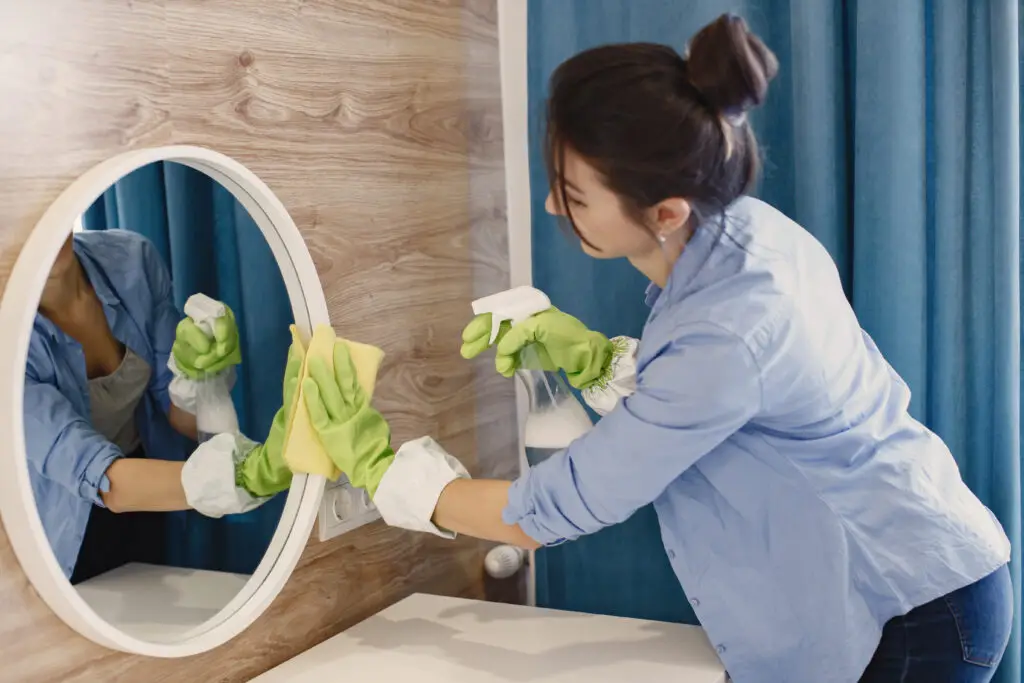
Mirrors are fantastic for brightening a room, making spaces feel larger, and, of course, for checking your reflection. But a streaky, smudged mirror can be incredibly frustrating, often looking worse than before you cleaned it. Achieving streak-free results every time isn’t a secret art; it simply requires the right technique and products.
Common causes of mirror streaks
If you’ve ever cleaned a mirror only to be met with frustrating streaks, you’re not alone. Several common culprits are usually to blame:
- Residue from Previous Cleaners: Old cleaning product residue left on the glass can reactivate and streak when new moisture is applied.
- Dirty Cleaning Cloths: Using a cloth that’s not perfectly clean or contains fabric softener residue will just spread dirt and leave fibers behind.
- Lint from Paper Towels: Standard paper towels, while convenient, often shed tiny fibers that cling to glass, creating a hazy, streaky appearance.
- Too Much Cleaning Solution: Over-saturating the mirror means more liquid to evaporate, increasing the chances of streaks.
- Cleaning in Direct Sunlight: The sun’s heat causes cleaning solutions to dry too quickly, leaving streaks before you have a chance to wipe them away thoroughly.
- Dust and Dirt: Not removing loose dust and particles before applying liquid cleaner can turn the dust into muddy streaks.
- Hard Water Spots: Mineral deposits from hard water can leave stubborn spots and streaks that regular cleaners might not fully dissolve.
Best products to clean a mirror
You don’t need a huge arsenal of products. Simplicity often yields the best results.
- Microfiber Cloths: These are your best friends for mirror cleaning. They are highly absorbent, lint-free, and great at trapping dirt and buffing surfaces to a shine. Have at least two on hand: one for cleaning, one for drying/buffing.
- High-Quality Squeegee: For larger mirrors (like bathroom mirrors or full-length doors), a squeegee can provide unparalleled streak-free results. Look for one with a sharp, high-quality rubber blade.
- Distilled Water: Using distilled water, especially if you have hard tap water, can prevent mineral streaks.
- Rubbing Alcohol or White Vinegar: These are powerful, inexpensive, and effective degreasers that evaporate quickly.
- Commercial Glass Cleaner (Ammonia-Free): If you prefer a ready-made solution, choose an ammonia-free glass cleaner. Ammonia can etch mirror backings over time and produce fumes.
- Cotton Swabs or Toothpicks: For getting into tight corners or around edges.
Step-by-step mirror cleaning process
Follow these steps for a gleaming, streak-free mirror every time:
1. Dust first
Before applying any liquid, gently dust the mirror surface and frame with a dry microfiber cloth or a soft duster. This removes loose dust, hair, and debris that would otherwise turn into muddy streaks.
2. Prepare your solution
- For General Cleaning: Mix equal parts warm water and white distilled vinegar in a spray bottle. For extra sparkle and faster drying, add a splash of rubbing alcohol.
- For Tougher Grime: Add 1-2 drops of mild dish soap to the water/vinegar/alcohol solution (use sparingly – too much soap causes streaks!).
- Commercial Cleaner: If using a commercial cleaner, spray it directly onto a clean microfiber cloth, rather than directly onto the mirror. This prevents overspray and drips.
3. Apply cleaner
Do NOT spray directly onto the mirror, as this can lead to drips and also seep behind the mirror and damage the silvering over time. Instead, spray your chosen cleaning solution onto a clean microfiber cloth until it’s damp, but not soaking wet.
4. Wipe the mirror
- Using your damp microfiber cloth, wipe the entire mirror surface. Work in overlapping S-patterns from top to bottom, or in small, circular motions.
- Pay attention to any smudges, fingerprints, or toothpaste splatters.
5. Squeegee (Optional, for large mirrors)
- If using a squeegee, make sure the mirror is thoroughly wet with cleaner.
- Starting at the top corner, pull the squeegee straight across in one continuous, overlapping stroke.
- After each stroke, wipe the squeegee blade clean with a dry section of your microfiber cloth before the next pull.
- Continue working your way down the mirror.
6. Buff dry
Immediately after wiping or squeegeeing, use a second, perfectly dry and clean microfiber cloth to buff the entire mirror surface. Pay extra attention to the edges and corners where moisture can linger. Buff until completely dry and streak-free.
7. Clean the edges and frame
Use a damp cotton swab or a corner of a damp cloth to clean any dust or grime from the mirror’s edges where it meets the frame. Wipe the frame itself.
Natural alternatives for mirror cleaning
Many common household items can provide excellent results without harsh chemicals.
- White Vinegar & Water: The classic, reliable choice. Its acidity helps cut through grease and hard water.
- Rubbing Alcohol: Excellent for quick drying and tackling oily residue like hairspray or makeup smudges. Mix with water for a spray solution.
- Dish Soap (Minimal): For very dirty mirrors, a tiny drop of clear dish soap in warm water can emulsify grime effectively. Be sure to rinse very thoroughly.
- Black Tea: Brew a strong cup of black tea, let it cool completely, and use it in a spray bottle. The tannic acid in the tea helps break down dirt and leaves a streak-free shine.
- Newspaper (Black & White Sections Only): Many swear by crumpled newspaper for buffing mirrors. The ink helps polish, and the paper is lint-free. Just ensure it’s plain black and white print to avoid ink transfer.
How often should you clean your mirrors?
The frequency depends on the mirror’s location and how much use it gets.
- Bathroom Mirrors: These are prone to toothpaste splatters, hairspray residue, and humidity, so they often need cleaning weekly or even daily for quick touch-ups.
- Entryway/Hallway Mirrors: These might only need a quick clean monthly or when you notice fingerprints or dust.
- Bedroom/Decorative Mirrors: If they don’t get touched often, a clean every 1-3 months is usually sufficient to remove dust.
- Full-Length Dressing Mirrors: Often need cleaning monthly due to regular contact and dust accumulation from clothing.
Regular, quick touch-ups can prevent the need for more intensive cleaning sessions.
Ready to see your reflection clearly and enjoy truly sparkling mirrors? Don’t let streaks dim your view! Contact Maid Cleaning For You today for professional cleaning services that leave every surface, including your mirrors, gleaming and streak-free!